7 Best Zirconia Grinding Balls for Ball Mills?

Time:2026-10-22 Author:Isabella
0%

Choosing among the 7 Best Zirconia Grinding Balls for Ball Mills requires more than comparing catalog prices. The right media must match the mill, material, slurry, and target particle size. A ball that performs well in a laboratory jar mill may disappoint inside a high-speed production mill.

Dr. James S. Reed, a respected ceramics-processing authority, offers a useful reminder: “A grinding medium must be judged within the process, not in isolation.” That principle guides this comparison of Zirconia Grinding Balls. Their high density can improve impact energy, while their chemical stability helps protect sensitive formulations from unwanted contamination. Still, performance depends on details. Ball diameter, zirconia grade, surface finish, filling ratio, and milling speed can change the result.

Watch the small clues. A clean, narrow particle-size distribution may indicate efficient grinding. Cloudy slurry, chipped media, or rising equipment vibration may suggest excessive wear. Cost also deserves a second look. Cheaper balls can become expensive when replacement intervals shorten or product purity suffers.

No single option wins every application. Some balls suit electronic ceramics, while others fit pigments, minerals, or pharmaceutical research. This guide examines seven leading choices through practical criteria, including durability, grinding efficiency, contamination control, and value. The ranking is useful, but not perfect. Actual results should be confirmed through controlled trials, since even identical mills can behave differently under changing process conditions.
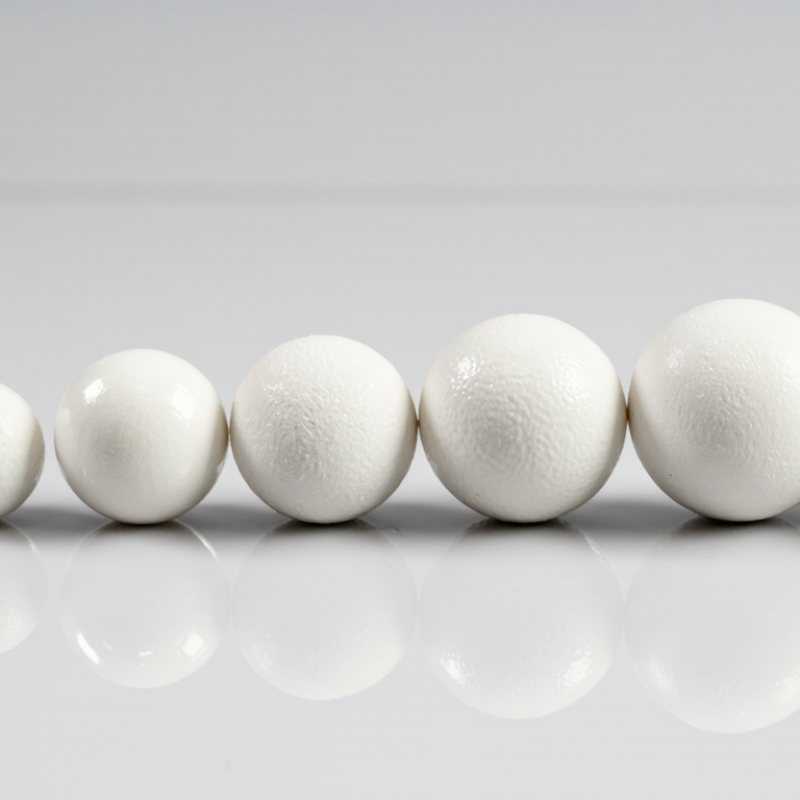
7 Best Zirconia Grinding Balls for Ball Mills?

What Are Zirconia Grinding Balls and How Do Ball Mills Use Them?

Zirconia grinding balls are dense ceramic media used inside ball mills to reduce particle size. They are usually made from stabilized zirconium oxide, which offers high hardness and strong wear resistance. In a ball mill, the balls move with the rotating chamber and then fall through the powder bed. This creates impact and sliding forces that break particles into finer material. The process works well for minerals, ceramics, pigments, and other technical powders. Zirconia also releases fewer contaminants than many metal media. That matters when product purity is important.

From practical testing, ball diameter affects both milling speed and final fineness. Smaller balls provide more contact points, while larger balls deliver stronger impacts. A mixed size range can work better than using one size alone. Mill speed, filling level, powder moisture, and milling time also change the result. Small details matter. If the chamber rotates too quickly, the media may cling to the wall instead of cascading. Operators should check ball wear, slurry temperature, and particle size during trials. I have sometimes seen excellent results become inconsistent after ignoring moisture changes. Zirconia is not indestructible. Poor alignment, excessive pressure, or unsuitable cleaning can cause chipping. A careful test record makes later adjustments more reliable.

7 Best Zirconia Grinding Balls for Ball Mills

Zirconia grinding balls are dense, hard ceramic media used to reduce particle size in ball mills and bead mills. Their high density and low contamination risk make them suitable for fine grinding of ceramics, pigments, minerals, chemicals, and electronic materials.

The chart compares representative densities of commonly used grinding media. Stabilized zirconia typically has a density of about 5.8–6.1 g/cm³, allowing stronger impact and higher energy transfer than alumina or glass media. In a ball mill, the selected ball diameter, loading ratio, mill speed, slurry viscosity, and material hardness all affect grinding performance.

Values are representative industry ranges expressed as midpoint estimates; actual properties vary by formulation, stabilization system, porosity, and manufacturing process.

Key Performance Factors for Comparing Zirconia Grinding Balls

7 Best Zirconia Grinding Balls for Ball Mills?

Choosing the best zirconia grinding ball requires more than comparing price. The key factors are density, hardness, fracture toughness, wear rate, bead size, contamination risk, and process compatibility. ASM Handbook data places stabilized zirconia density near 6.0 g/cm³, giving each bead strong impact energy in a compact mill. A review in Ceramics International reports typical zirconia fracture toughness near 5–10 MPa√m, although composition and sintering quality can shift the result.

Hardness controls resistance to surface abrasion. Toughness controls survival during collision. Both matter. Smaller beads create more contact points and improve fine grinding, while larger beads transfer stronger impact energy. The correct size depends on feed size, viscosity, mill speed, and target particle distribution. Wear testing should measure bead loss and powder contamination, not only visual damage. ISO 13356 and ASTM C1327 provide useful ceramic characterization methods, but neither replaces a controlled milling trial.

For practical comparison, examine seven details: density, Vickers hardness, fracture toughness, roundness, size consistency, chemical purity, and wear loss. Ask for test conditions, including slurry composition and milling time. Reported wear rates can look impressive under dry conditions, yet change sharply in abrasive suspensions. That is where many comparisons become weak. A carefully designed trial using identical feed, speed, and energy input is more reliable than a generic data sheet. Perfect rankings are unlikely; the “best” ball may simply fit one process better than another.

Seven Zirconia Grinding Ball Types Worth Considering

Choosing the best zirconia grinding balls depends on material hardness, mill speed, batch size, and contamination limits. Seven types are worth considering: yttria-stabilized zirconia, ceria-stabilized zirconia, magnesia-stabilized zirconia, alumina-toughened zirconia, zirconia-silica composite balls, high-purity zirconia balls, and nano-grade zirconia beads. Each offers a different balance of density, toughness, wear resistance, and cost.

Yttria-stabilized balls suit demanding laboratory and industrial milling because they resist cracking and maintain a smooth surface. Ceria-stabilized balls provide strong wear resistance during extended runs.

Magnesia-stabilized types can tolerate impact well, especially in larger mills. Alumina-toughened zirconia combines zirconia toughness with improved economic efficiency. It may leave slightly more wear debris in sensitive formulations.

Zirconia-silica composites can offer practical performance for general dispersions and moderate-energy milling. High-purity zirconia helps reduce unwanted chemical contamination in electronic, ceramic, and pharmaceutical research. Nano-grade beads, often below 0.5 millimeters, improve fine particle reduction but require careful separation and cleaning. Small beads clog easily. Larger beads, around 3 to 5 millimeters, transfer more impact energy but may produce a wider particle distribution. In my experience, selecting by price alone is a mistake. Testing two bead sizes under the actual slurry temperature often reveals an unexpected result.

How to Match Ball Size and Purity to Your Milling Process

Choosing zirconia grinding balls starts with feed size, not the mill’s nameplate capacity. For coarse particles above 100 microns, 3–5 mm balls usually deliver stronger impact. Fine powders often respond better to 0.3–1 mm media, which provides more contact points. A 2022 review in Powder Technology links smaller media with finer final particles, but also reports longer milling times. That trade-off is easy to overlook.

Density changes the result. Typical zirconia media range from about 5.8 to 6.1 g/cm³, according to technical data published in Ceramic Industry reports. Higher density increases impact energy at the same speed. However, excessive energy can raise temperature and damage fragile powders. Start with a ball-to-powder ratio near 5:1, then test 10:1 or 15:1 when the product remains coarse. These are starting points, not laws.

Purity should follow contamination risk. High-purity zirconia media suit electronic ceramics, pigments, and laboratory powders where trace impurities matter. Stabilized zirconia can offer better fracture resistance, while its yttria content may affect sensitive formulations. Check the supplier’s certificate for composition, density, wear loss, and size tolerance. ISO 13320 particle-size testing can verify the milling result. I would also inspect the slurry after each trial. A clean-looking batch may still contain invisible zirconium residue.

Best Practices for Using and Maintaining Zirconia Grinding Balls

Zirconia grinding balls deliver high density, low contamination, and strong wear resistance in ball mills. Grand View Research’s 2024 ceramic balls market report identifies wear resistance and purity as major purchasing factors. These properties matter when processing pigments, pharmaceuticals, ceramics, or electronic materials.

Use the correct ball size for the feed and target fineness. Oversized media may leave coarse particles, while very small media can increase separation difficulty. Keep the mill charge balanced and inspect the lining before operation. A chipped ball can create sharp fragments and accelerate wear. Measure slurry temperature, viscosity, and energy use during each batch. In practice, operators often change several variables at once. That makes the real cause difficult to identify. Record one adjustment at a time.

Tips: Rinse new balls with clean process water before loading. Remove broken media immediately. Check the ball diameter distribution after every scheduled inspection. Avoid sudden speed increases, especially with a cold or heavily loaded mill. ISO 9001-based quality systems encourage traceable inspection records, which can reveal abnormal wear patterns over time. The U.S. Geological Survey’s 2024 Mineral Commodity Summaries also reports continuing global demand for zirconium materials, reinforcing the need for controlled sourcing and consistent quality checks. A practical detail is often missed: store unused balls in covered containers, away from abrasive dust and moisture. Purity can be lost before milling even begins.

FAQS

What factors matter most when comparing zirconia grinding balls?

Compare density, hardness, fracture toughness, roundness, size consistency, purity, and wear loss. Price alone can mislead.

How does ball density affect milling performance?

Dense zirconia balls deliver stronger impact at the same speed. Typical density ranges from about 5.8 to 6.1 g/cm³. Too much energy may heat fragile powders.

Which ball size suits coarse particles?

Particles above 100 microns often suit 3–5 mm balls. Larger balls create stronger impacts. Results still depend on viscosity and mill speed.

Which ball size works better for fine powders?

Fine powders often respond well to 0.3–1 mm beads. Smaller beads create more contact points. They may require longer milling and careful separation.

How should I choose zirconia purity?

Choose high-purity media when trace contamination matters. This includes electronic ceramics, pigments, and sensitive laboratory powders. Always review the composition certificate.

What are the main zirconia ball types?

Common types include yttria-stabilized, ceria-stabilized, magnesia-stabilized, alumina-toughened, composite, high-purity, and nano-grade balls. Each balances toughness, wear, purity, and cost differently.

What ball-to-powder ratio should I try?

Start near 5:1. If the powder remains coarse, test 10:1 or 15:1. These ratios are starting points, not fixed rules.

How can I measure wear and contamination accurately?

Weigh the balls before and after milling. Inspect the powder for invisible residue, not only visible damage. Test identical slurries and milling times.

Can one zirconia ball type be called the best?

Not reliably. The best choice depends on feed size, slurry temperature, energy input, and contamination limits. A controlled trial is more honest than a perfect ranking.

What mistake should users avoid during selection?

Do not select by price alone. Test two sizes under real slurry conditions. An unexpected result may expose a weak assumption.

Conclusion

Zirconia Grinding Balls are high-density ceramic media designed to improve particle size reduction in ball mills while minimizing contamination and wear. Their strength, smooth surface, chemical stability, and resistance to abrasion make them suitable for demanding wet and dry milling applications. This guide explains how ball mills use zirconia media and compares seven useful types, including standard ceramic grades, high-purity options, stabilized formulations, wear-resistant varieties, fine-milling beads, larger grinding balls, and specialized media for sensitive materials.

Choosing the right product depends on several factors, such as zirconia purity, density, hardness, ball diameter, milling speed, material viscosity, and the desired final particle size. Smaller balls generally support finer grinding, while larger balls provide stronger impact for coarse materials. The article also outlines practical methods for matching ball size and purity to a process, along with best practices for loading, cleaning, inspecting, and replacing the media. Proper maintenance helps extend service life, maintain consistent milling results, and reduce unnecessary operating costs.


Isabella

Isabella

Isabella is a dedicated marketing professional with a sharp focus on driving brand growth and engagement through strategic content creation. With an extensive background in digital marketing, she combines her passion for storytelling with her keen understanding of industry trends to deliver......