Ceramic Packing Manufacturers & Suppliers

Technical Whitepaper & Industrial Engineering Guide for Mass Transfer, Heat Exchange, and Harsh Chemical Environments (2026 Edition)

Featured Catalog Part I

Industrial Tower Packing & High-Performance Media

Direct access to factory-spec chemical ceramics, random packing media, and precision filter structures engineered for high acid resistance and thermal endurance.
Wholesale Inert Alumina Packing Balls Exporters
Wholesale Inert Alumina Packing Balls Exporters, Exporter
View Specifications
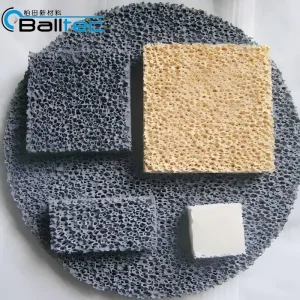
High-Quality Ceramic Foam Filter High Strength Heat Resistant Honeycomb
High-Quality Ceramic Foam Filter High Strength Heat Resistant Honeycomb Porous Zirconia Ceramic Foam Filter Manufacturers, Exporter
View Specifications
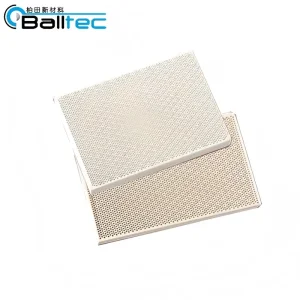
Wholesale Infrared Ceramic Burner Plate
Wholesale Infrared Ceramic Burner Plate Special Porous Ceramic Plate for Infrared Burner Gas Heater Ceramic Plate Gas Water Heaters Infrared Cooker Electric Ceramic Manufacturer, Supplier
View Specifications
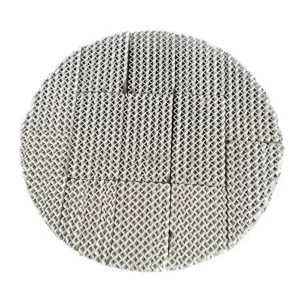
High-Quality Wear & Heat Resistant Ceramic Structured Packing
High-Quality Wear & Heat Resistant Ceramic Structured Packing Manufacturers, Supplier
View Specifications
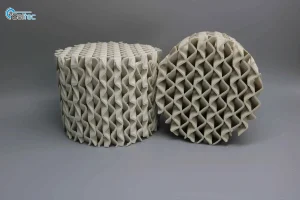
Wholesale High Performance Ceramic Corrugated Plate Packing
Wholesale High Performance and Low Pressure Drop Ceramic Corrugated Plate Packing Supplier, Factories
View Specifications
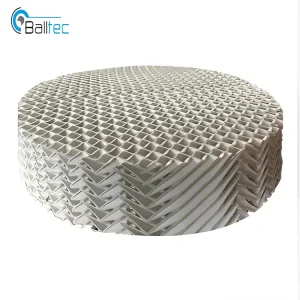
Wholesale Ceramic Corrugated-Plate Structured Packing
Wholesale Ceramic Corrugated-Plate Structured Packing Ceramic Structured Packing Factory, Exporters
View Specifications
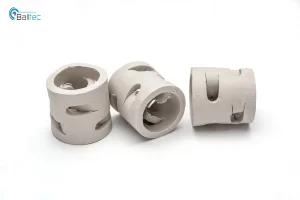
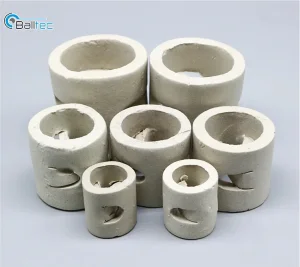
Ceramic Pall Ring for Drying and Dehydration
High-Quality Factory Price Scrubber Random Tower Packing Ceramic Pall Ring for Drying and Dehydration in Chemical Industry Factory, Factories
View Specifications
500Y Ceramic Corrugated Structured Packing
Wholesale Ceramic Packing Factory Supply High Quality 500Y Ceramic Corrugated Structured Packing Factories, Exporter
View Specifications
Industry Insights & Market Fundamentals

Macro Industrial Landscape: The Role of Ceramic Packing in Modern Chemical Infrastructure

In global mass transfer operations, distillation columns, absorption scrubbers, and thermal exchange systems, industrial ceramics represent the ultimate barrier against extreme chemical degradation, high-temperature oxidation, and mechanical crush loads. As global chemical processing directives prioritize decarbonization, increased thermal efficiency, and lower VOC emission targets, chemical engineers are systematically moving away from conventional metallic tower packings toward ultra-dense, highly vitrified ceramic packing solutions.

Ceramic tower packings—encompassing random packings such as Raschig Rings, Pall Rings, and Intalox Saddles, as well as highly engineered Corrugated Structured Packings (e.g., 250Y and 500Y variants)—serve as the foundational physical matrix for liquid-gas interfacial contact. Unlike metal tower packings subject to micro-pitting and stress corrosion cracking in halogenated or sulfuric media, high-purity aluminosilicate and zirconia-doped ceramics display near-zero reactivity across the entire pH spectrum (pH 0 to 12), excluding hydrofluoric acid.

99.6%
Acid Resistance Rating (ASTM C279 Standards)
1400°C
Continuous Thermal Degradation Threshold
45%
Pressure Drop Reduction via Corrugated Architecture
>15 kN
Single-Ring Compressive Crush Strength

The contemporary global market for industrial ceramic packings is driven by three main sectors: the modernization of mega-scale sulfuric acid plants ($H_2SO_4$ drying and absorption towers), the rapid expansion of Regenerative Thermal Oxidizers (RTO) for VOC abatement, and the upgrading of syngas wash towers in coal-to-chemical conversion projects. Leading Tier-1 manufacturers located in industrial ceramics clusters such as Pingxiang, Jiangxi Province, China (home to Pingxiang Baitian / Ball-tec New Materials Co., Ltd.) leverage integrated supply chains to produce engineered mass transfer media that optimize Height Equivalent to a Theoretical Plate (HETP) while minimizing overall plant pressure drop.

Metallurgical & Material Physics

Material Science & Chemical Composition Analysis

Vitrification Kinetics and Phase Composition

The operational stability of ceramic packing under aggressive chemical environments depends directly on its internal phase composition. Premium ceramic packing manufactured by Pingxiang Baitian relies on controlled kaolin-feldspar-quartz triangular formulations combined with high-purity reactive alumina ($\alpha\text{-}Al_2O_3$). During high-temperature sintering ($1280^\circ\text{C}$ to $1380^\circ\text{C}$), a dense mullite matrix ($3Al_2O_3 \cdot 2SiO_2$) develops alongside an insoluble, glassy phase with minimal free quartz content.

  • Acid Resistance (ASTM C279 Type III Standards): Achieves >99.5% weight retention following boiling 48-hour testing in 20% $H_2SO_4$.
  • Water Absorption Rate: Maintained under 0.5% (typically <0.2%), preventing liquid absorption into pore networks and avoiding spalling under rapid pressure drop cycle events.
  • Mohs Hardness: Measured between 7.0 and 8.0, offering extreme mechanical resistance against abrasion from particulate-laden slurry gas streams.
  • Thermal Shock Endurance: Withstands repeated temperature spikes from $20^\circ\text{C}$ to $800^\circ\text{C}$ without micro-fracturing or strength loss.

Chemical & Physical Parameter Matrix

Property Parameter Standard Chemical Grade High Alumina Packing (92-99%) Zirconia-Toughened Ceramic
$Al_2O_3$ Content (%) 23.0 - 30.0% 92.0 - 99.5% 15.0 - 45.0%
$SiO_2$ Content (%) 65.0 - 72.0% < 0.5% 10.0 - 30.0%
$ZrO_2 + HfO_2$ Content (%) N/A N/A 40.0 - 65.0%
Bulk Density ($g/cm^3$) 2.30 - 2.45 3.60 - 3.85 4.50 - 5.20
Specific Heat ($kJ/kg \cdot ^\circ\text{C}$) 0.88 - 0.95 1.05 - 1.15 0.65 - 0.75
Primary Industrial Use RTO Heat Exchangers, Scrubbers Fertilizers, Petrochemical Beds Molten Metal Filters, Extreme Wear
Hydrodynamics & Mass Transfer Mechanics

Product Engineering: Random Packing vs. Corrugated Structured Packing

A critical decision for chemical plant managers and vessel designers when procuring tower packings is selecting between Random Tower Packing and Corrugated Structured Tower Packing. Each configuration presents specific advantages depending on gas-liquid flow dynamics, column pressure limits, solids-loading handling, and operational capital expenditure.

Random Ceramic Packing (Pall Ring / Raschig / Saddle)

Random packing elements are dumped directly into column shells, forming a randomly oriented porous mass. Modern ceramic Pall rings incorporate inner window tabs that significantly enlarge internal surface area and liquid-gas contact zones while maintaining high bed voidage (>75%).

  • Pros: Low capital cost, simple installation, excellent handling of dirty fluids with suspended solids without clogging.
  • Cons: Higher operational pressure drop per theoretical stage ($\Delta P / \text{NTS}$), increased risk of liquid channeling requiring frequent re-distributor plates.
  • Key Applications: Primary acid scrubbers, $H_2SO_4$ stripping towers, direct contact coolers.

Corrugated Structured Ceramic Packing (125Y, 250Y, 500Y)

Structured ceramic packing consists of parallel corrugated ceramic sheets stacked vertically with opposing inclination angles (typically $45^\circ$ or $60^\circ$). This geometry guides gas and liquid along geometric pathways, guaranteeing uniform fluid distribution across the column radius.

  • Pros: Exceptionally low pressure drop per meter ($\Delta P/Z$), exceptionally low HETP (as low as 250–350 mm), minimal liquid hold-up, high processing capacity.
  • Cons: Higher initial investment cost, requires careful handling during tower loading to avoid edge fracture.
  • Key Applications: Deep vacuum distillation, nitric acid concentration, fine chemical separation.
Applied Systems Engineering

Global Application Frameworks: Turnkey Industrial Solutions

1. Regenerative Thermal Oxidizers (RTO) & Heat Exchange Beds

In industrial VOC air pollution abatement systems, RTO units use ceramic packing beds (saddles or structured honeycomb blocks) as thermal storage media. Incoming volatile gas streams are preheated by the ceramic matrix before entering the combustion chamber, achieving thermal recovery efficiencies up to 97%. Baitian inert ceramic saddles exhibit high specific heat capacity and low expansion coefficients, resisting thermal breakdown under rapid 90-second flow reversal cycles.

2. Sulfuric Acid ($H_2SO_4$) Drying & Absorption Towers

Sulfuric acid production relies on massive absorption towers operating with 98% concentrated acid at elevated temperatures ($80^\circ\text{C}$ to $120^\circ\text{C}$). Ceramic Pall Rings and 250Y Structured Ceramics constructed from high-silica body formulations withstand highly aggressive acid mist environment without silicon leaching. This long-term physical stability prevents bed collapse and packing compaction that can otherwise shut down plant operations.

3. Molten Metal Filtration & Foundry Applications

Zirconia and alumina porous ceramic foam filters represent a specialized class of ceramic packings used in metallurgy. Placed in gating systems, these high-strength honeycomb matrixes filter non-metallic dross, slag inclusions, and oxidized impurities from molten steel, iron, and aluminum alloys up to $1650^\circ\text{C}$, ensuring zero inclusion defects in critical automotive castings.

Procurement Assurance & Supply Chain Infrastructure

Global Sourcing, Quality Control & Compliance Architecture

Global engineering procurement companies (EPCs), refinery plant managers, and chemical distributors require suppliers who deliver reliable product quality, predictable lead times, and comprehensive technical documentation. Pingxiang Baitian (Ball-tec) operates within strict ISO-managed manufacturing standards to streamline worldwide logistics and supplier qualification.

ISO Quality Integration

Full operational compliance with ISO 9001:2015 (Quality), ISO 14001:2015 (Environmental), and ISO 45001:2018 (Occupational Health). Batch-traced mill certificate sheets provided with every export container shipment.

Export Bulk Packaging

Heavy-duty jumbo bags (1.0–1.2 metric ton capacity) with moisture-proof PE liners, or fumigated wooden crates reinforced with plastic shrink wrap, designed to withstand long ocean transits and minimize shipping breakage.

ASTM & HG/T Compliance

Rigorous pre-shipment laboratory testing covering ASTM C279 (chemical-resistant masonry), HG/T 4369 (ceramic random packing standards), and ISO 3290 precision geometric tolerances.

Innovation Horizon

Technology Roadmap: Next-Generation Ceramic Mass Transfer Media

The industrial ceramics sector is moving rapidly toward functional integration, smart bed monitoring, and ultra-low-carbon production processes. R&D initiatives at Baitian ceramic labs focus on three key technological advancements:

Additive Manufacturing & 3D Printed Geometric Packing

Stereolithography (SLA) and binder jetting technologies allow for zero-draft, complex internal channel geometries impossible to achieve via traditional extrusion or press molding. These custom micro-channel architectures maximize gas turbulence while maintaining near-laminar pressure drop characteristics.

Catalytic Substrate Integration

Direct washcoating of $TiO_2$, $V_2O_5$, or precious metals ($Pt/Pd$) onto ceramic structured corrugated surfaces combines physical mass transfer separation and selective catalytic reduction (SCR) of $NO_x$ within a single vessel shell, eliminating the need for downstream reactor units.

Hydrogen Tunnel Kilns & Zero-Carbon Sintering

Transitioning high-temperature sintering kilns from natural gas to green hydrogen firing systems reduces the embodied carbon footprint of industrial ceramics by up to 80%, satisfying global Scope 3 emissions reporting standards for international chemical buyers.

Technical Help & Buyer FAQ

Frequently Asked Questions: Technical Sourcing & Engineering Guidance

Q1: How do I calculate the required volume of ceramic packing for a chemical absorption column?
Column packing volume is calculated based on the inner column diameter ($D$) and the required packing height ($Z$), using $V = \frac{\pi}{4} \cdot D^2 \cdot Z$. The required packing height $Z$ is determined by multiplying the Height Equivalent to a Theoretical Plate (HETP) by the total number of theoretical stages ($NTS$) needed for separation efficiency: $Z = HETP \times NTS$. Engineering factors such as liquid distribution, wall margins, and bed settling allowances should also be included.
Q2: What causes thermal shock fracture in ceramic random packings, and how can it be avoided?
Thermal shock fracture occurs when rapid temperature changes ($\Delta T > 200^\circ\text{C}/\text{min}$) create steep internal temperature gradients. This leads to uneven expansion between the outer surface and inner core of the ceramic body, exceeding its tensile strength limit. To prevent failure, select high-alumina or mullite-phase ceramic packings with low coefficients of thermal expansion, and implement controlled temperature ramp rates during plant startup and shutdown cycles.
Q3: How does ceramic packing perform when exposed to hydrofluoric acid (HF) or strong caustic soda ($NaOH$)?
Standard silicate-based ceramic packings are vulnerable to chemical attack by hydrofluoric acid ($HF$) and strong hot concentrated alkalis ($NaOH > 20\%$ at temperatures $>80^\circ\text{C}$), as these compounds dissolve the silicate glass matrix phase ($SiO_2$). For HF or strong caustic applications, specify 99.5% pure high-alumina ceramics, carbon-graphite packings, or specialty zirconia materials containing zero free silica.
Q4: What is the main cause of column flooding in packed towers, and how does packing geometry affect it?
Flooding occurs when upward gas velocity prevents descending liquid from flowing freely down the column bed. Liquid accumulates, filling void space, dramatically increasing pressure drop and disrupting separation efficiency. Selecting packings with higher bed void fraction ($\epsilon > 75\%$), such as Pall Rings over Raschig Rings or using low-resistance Corrugated Structured Packing, raises the hydrodynamic flooding velocity threshold, allowing higher gas throughput.
Q5: What are the key installation precautions for loading ceramic packing into large towers?
To prevent mechanical breakage during loading, ceramic packing should never be dry-dumped from the top flange of tall towers. Use wet-loading methods (filling the vessel with water to cushion the fall of ceramic elements) or lowered chute loading systems. Ensure packing is loaded evenly across the entire column area to prevent liquid channeling along column walls.
Q6: What certifications and quality documentation should accompany ceramic packing shipments?
A complete technical export package should include ISO 9001 Quality System certifications, Chemical & Physical Analysis Test Reports detailing $Al_2O_3$ and $SiO_2$ percentages, ASTM C279 Acid Resistance compliance reports, Water Absorption and Bulk Density test logs, and Crush Strength test certificates for each production batch.
Featured Catalog Part II

Advanced Ceramic Packing, Media & Precision Grinding Spheres

Explore our technical range of specialized tower packings, structured elements, and high-density grinding media engineered for high performance under heavy wear and corrosive conditions.
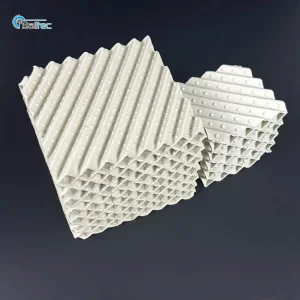
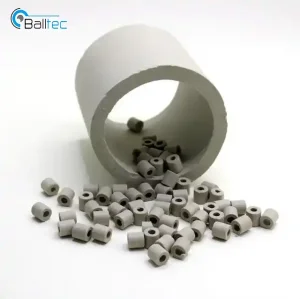
China Ceramic Corrugated Structure Tower Packing & Bellow Packing
China Ceramic Corrugated Structure Tower Packing & Ceramic Bellow Packing for Tower Manufacturers, Factory
View Specifications
Industrial Ceramic Raschig Ring Acid Resistant Random Packing
Wholesale Factory Price Industrial Ceramic Raschig Ring Acid Resistant Random Packing Manufacturers, Exporters
View Specifications
Ceramic Pall Rings Tower Packing for Distillation Column
High-Quality Ceramic Pall Rings Tower Packing for Distillation Column Packing Manufacturer, Exporters
View Specifications
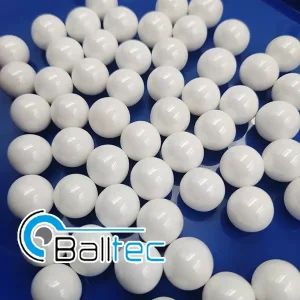
China ZrO2 Bead for Grinding High Efficiency
China ZrO2 Bead for Grinding High Efficiency Fine Powder Processing Manufacturers, Suppliers
View Specifications
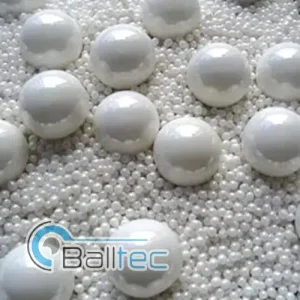
Zirconium Oxide Grinding Bead Excellent Wear Resistance
High-Quality Zirconium Oxide Grinding Bead Excellent Wear Resistance Grinding Media Manufacturer, Suppliers
View Specifications
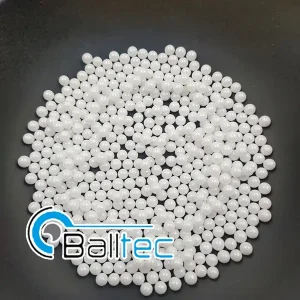
ZrO2 Grinding Bead for High Speed Grinding
High-Quality ZrO2 Grinding Bead for High Speed Grinding and Wear Resistant Use Factories, Exporter
View Specifications
Zirconium Oxide Bead for Grinding Ultra Fine Polishing
High-Quality Zirconium Oxide Bead for Grinding Ultra Fine Polishing and Powder Reduction Suppliers, Exporter
View Specifications
Zirconium Oxide Ball for Grinding High Density
Wholesale Zirconium Oxide Ball for Grinding High Density Stable Grinding Applications Supplier, Factories
View Specifications
All Ceramic Packing Products