Follow 


Factory-direct engineering components verified to ISO 3290-1 Grade G3/G5 standards for severe duty, high-speed, and anti-corrosion applications.
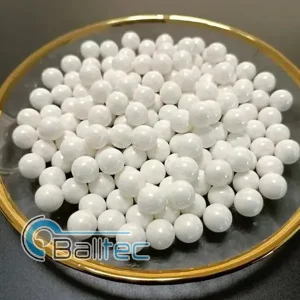
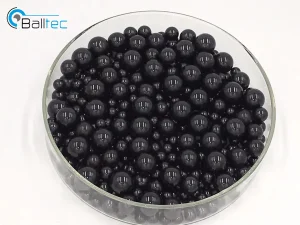
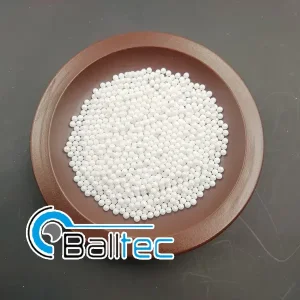
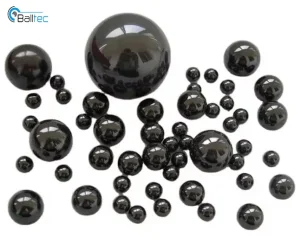
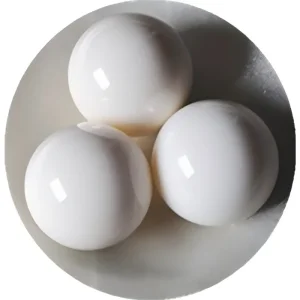
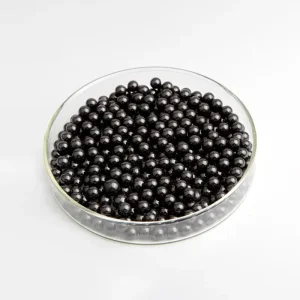
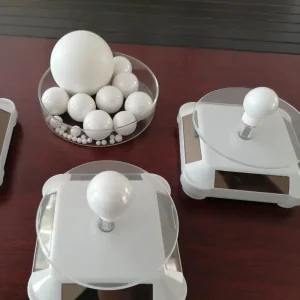
The shift from classic metallic rolling elements to advanced structural ceramics represents a major leap forward in tribological engineering, energy efficiency, and operational safety.
As main traction motors operate at speeds exceeding 20,000 RPM, traditional steel bearings suffer from electrical arcing (fluting) and rapid thermal breakdown. Hybrid ceramic bearings utilizing Si3N4 balls eliminate electrical erosion due to their high volume resistivity (>1014 Ω·cm) while lowering operational centrifugal forces by 60%.
In ultra-high vacuum (UHV) environments and chemical mechanical planarization (CMP) equipment, traditional lubricants outgas and contaminate wafers. Precision ceramic balls operate reliably under unlubricated dry-friction conditions, showing immunity to aggressive etching gases (Cl2, fluorine radicals) and chemical slurry corrosion.
Modern cryogenic turbopumps for rocket propulsion and auxiliary power units (APUs) demand materials capable of maintaining structural integrity at temperatures exceeding 800°C or under liquid hydrogen temperatures (-253°C). Ceramic balls maintain consistent mechanical properties without phase degradation or galling.
Selecting the optimum ceramic material requires matching mechanical, thermal, and electrical properties against operational stress states. Below is the comparative engineering baseline.
| Material Property / Metric | Silicon Nitride (Si3N4) | Zirconia (ZrO2 - Y-TZP) | Alumina (Al2O3 - 99.9%) | Bearing Steel (100Cr6) |
|---|---|---|---|---|
| Density (g/cm³) | 3.20 – 3.25 | 6.00 – 6.05 | 3.92 – 3.98 | 7.85 |
| Hardness (HV10 / GPa) | 1500 – 1700 / 16 GPa | 1200 – 1300 / 12 GPa | 1600 – 1800 / 17 GPa | 700 – 800 / 7.5 GPa |
| Elastic Modulus (GPa) | 310 – 320 | 200 – 210 | 370 – 390 | 208 |
| Fracture Toughness (MPa·m1/2) | 6.0 – 8.0 | 9.0 – 13.0 | 3.5 – 4.5 | 20 – 25 |
| Thermal Expansion (10-6/K) | 3.2 | 10.5 | 8.0 | 11.5 |
| Max Operating Temp (°C) | 1000 °C (air) | 500 °C | 1400 °C | 150 °C – 200 °C |
| Electrical Resistivity (Ω·cm) | >1014 (Insulator) | >1010 (Insulator) | >1014 (Insulator) | 10-5 (Conductor) |
| Poisson's Ratio | 0.26 | 0.31 | 0.23 | 0.30 |
Producing high-grade structural ceramic balls demands meticulous control from raw powder preparation to sub-micron surface finishing.
High-purity raw powders (e.g., sub-micron alpha-phase Si3N4 powder mixed with sintering aids such as Y2O3 and Al2O3) undergo ultrasonic wet ball milling to ensure uniform particle dispersion. Slurries are spray-dried into spherical granules with tailored flowability and bulk density.
Granules are molded using high-pressure Isostatic Pressing at hydrostatic pressures exceeding 200 MPa. This uniform multi-directional compaction eliminates internal density gradients, mitigating micro-voids and warping during densification.
Components undergo high-temperature densification in a controlled Nitrogen gas atmosphere (1.0–10 MPa N2) at temperatures up to 1850°C. Gas Pressure Sintering suppresses silicon nitride thermal decomposition, resulting in full theoretical density (>99.9%).
Sintered blanks undergo coarse grinding, fine grinding, and sub-micron diamond paste lapping. Spherical precision is governed by laser interferometers and roundness measuring systems to confirm compliance with ISO 3290-1 Grade G3 (sphericity ≤ 0.08 µm, surface roughness Ra ≤ 0.012 µm).
Systematic procurement evaluations prevent application failures. Engineering teams must evaluate operational parameters against the following failure mechanism matrix.
In high-speed spindle applications (DN factor > 2,000,000), the lower density of Si3N4 (3.2 g/cm³ vs. 7.8 g/cm³ for steel) significantly reduces outer ring ball loading and dynamic centrifugal contact stress, extending fatigue life exponentially.
When installing ceramic balls inside steel inner and outer rings (Hybrid Ceramic Bearings), engineers must calculate operating thermal growth. Because Si3N4 has a lower CTE (3.2 x 10⁻⁶/K) than bearing steel (11.5 x 10⁻⁶/K), internal radial clearance decreases at elevated temperatures.
For chemical pumps and metering valves handling hydrofluoric acid, hot alkalis, or organic solvents, material selection dictates survival:
Custom ceramic sphere engineering tailored to solve key operational bottlenecks across critical global industries.
Challenge: Metallic wear particles induce electrical shorting and yield loss during wafer fabrication. Dry-vacuum operation causes immediate galling on conventional steel components.
Solution: Grade G3 Silicon Nitride balls operating under dry friction or solid lubricants (PVD MoS2/DLC coatings). Zero metal particulate generation, non-magnetic compliance, and extended service intervals in high-vacuum robotic handlers.
Challenge: Dental turbine bearings run up to 400,000 RPM and must undergo repeated autoclave steam sterilization cycles (135°C, pressurized steam) without rusting or lubricant breakdown.
Solution: Ultra-miniature Si3N4 balls (0.8mm to 2.0mm diameter) manufactured to ISO 3290-1 Grade G3 tolerances. Maintains ultra-low noise levels (<55 dBA), zero corrosion during autoclave cycles, and low thermal buildup for patient comfort.
Challenge: High-pressure check valves operating in deepsea environment face severe sand erosion, hydrogen sulfide (H2S) sour gas corrosion, and high cavitation pressures.
Solution: Yttria-stabilized Zirconia (Y-TZP) check valve balls offering exceptionally high fracture toughness (up to 13 MPa·m1/2) to resist impact spalling, while ensuring 100% immunity to sour gas cracking and pitting corrosion.
Our engineering laboratory continuously advances structural ceramic materials to meet the demands of emerging industrial technology platforms.
Implementation of nano-composite grain refinement in GPS-Si3N4 to boost flexural strength beyond 1100 MPa and achieve sub-nanometer surface roughness (Ra < 0.005 µm) for quietest-in-class electric vehicle motors.
Integration of Binder Jetting additive manufacturing for custom hollow ceramic balls, yielding a 70% weight reduction relative to steel for extreme-speed aerospace applications.
Development of embedded conductive ceramic tracer pathways enabling real-time, non-destructive monitoring of subsurface fatigue propagation via eddy-current sensing.
Rigorous international compliance controls and responsive technical support engineered for OEM integration.
Every shipment is issued a certified Material Test Report (MTR) covering raw chemical powder composition (ICP-OES analysis), sintered bulk density (Archimedes method), surface micro-hardness (Vickers hardness testing), and 3D optical profilometer sphericity validation.
All materials fully comply with EU REACH regulations, RoHS III directives, and SVHC candidate lists. For food processing and pharmaceutical dosing applications, custom alumina and zirconia components meet FDA 21 CFR 177 standards and 3-A Sanitary Guidelines.
To support Lean Manufacturing and Just-In-Time (JIT) delivery, we maintain blanket inventory reserves across standard ISO metric and inch sizes (0.5mm to 50mm) with VMI (Vendor Managed Inventory) integration for enterprise OEM partners.
Direct technical answers to common queries raised by mechanical design engineers, quality auditors, and global procurement officers.
ISO 3290-1 classifies bearing balls based on geometry and surface texture tolerances. Grade G3 specifies a maximum allowable spherical deviation of 0.08 µm (0.000003") and a maximum surface roughness Ra of 0.012 µm. Grade G5 allows 0.13 µm sphericity deviation, while Grade G10 allows 0.25 µm. Higher-speed applications (such as machine tool spindles or dental turbines) mandate Grade G3 to minimize high-frequency vibration and extend operational fatigue life.
Silicon Nitride features a significantly lower mass density (3.2 g/cm³) compared to Zirconia (6.0 g/cm³), reducing centrifugal load at high RPMs. Additionally, Si3N4 exhibits higher elastic modulus (320 GPa vs. 200 GPa) and superior thermal stability up to 1000°C, making it the industry standard for high-speed machine tool spindles, EV traction motors, and aerospace turbomachinery.
Yes. Variable Frequency Drives (VFDs) induce high-frequency stray shaft currents that discharge through standard steel bearings, creating micro-craters (fluting) and early lubricant oxidation. Because Silicon Nitride ceramic balls possess an electrical volume resistivity exceeding 1014 Ω·cm, installing hybrid bearings breaks the current path and permanently prevents electrical erosion.
When subjected to rolling contact fatigue (RCF) under normal operating parameters, high-purity GPS-Si3N4 fails via benign, progressive micro-spalling similar to bearing steel. Sudden catastrophic shattering is avoided in properly densified ceramics due to their engineered microstructure and fracture toughness (6.0–8.0 MPa·m1/2).
Our application engineering team reviews technical drawings, dimensional specifications, target sphericity grades, quantity requirements, and operational conditions (temperature, load, media). Custom micro-diameters (down to 0.1 mm) or non-standard metric sizes are produced under controlled CIP and lapping schedules with full test validation reports provided prior to bulk shipment.
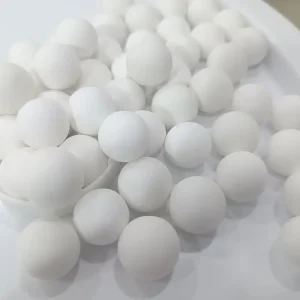
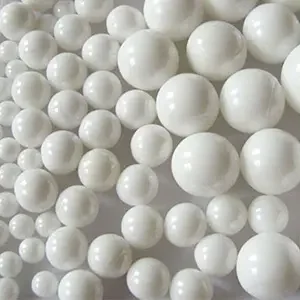
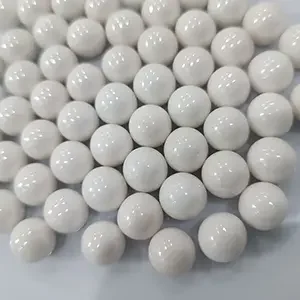
High-density zirconia beads, alumina tower packings, and specialized raw powder formulations engineered for ultra-fine particle size reduction and chemical processing.