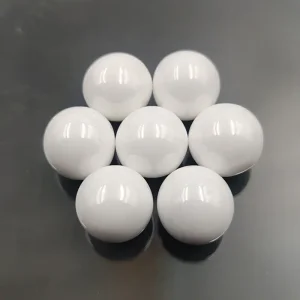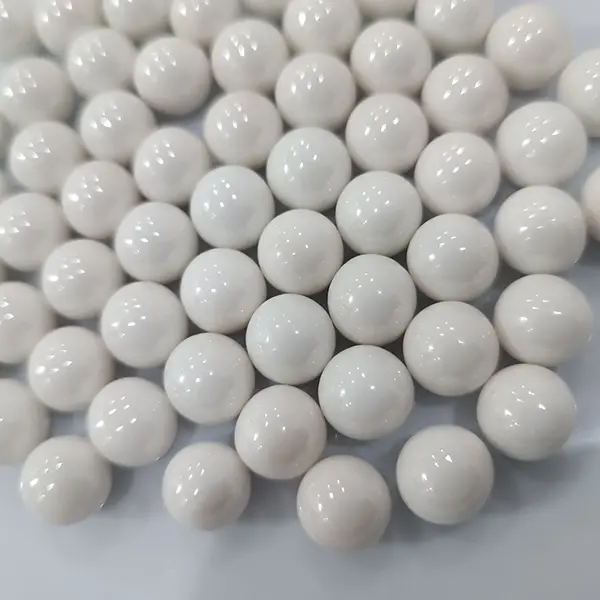
High-Quality ZrO2 Zirconia Bearing Ball High Precision Ball Supplier, Suppliers

The zirconia bearing ball is lighter than the steel ball, reducing the rolling and wear of the channel, the hardness is higher than the steel ball, the surface is smoother than the steel ball, the friction coefficient is smaller, the coefficient of thermal expansion is one quarter of the steel ball, can withstand large temperature changes, the steel ball will rust, but also need to add lubricating oil, but the zirconia ball will not rust, do not need to add lubricating oil when working, So now the slide rail and ceramic bearings are mostly used zirconia balls

Product Description

Product Description

Zirconia ceramic ball is a precision ceramic sintered at high temperature in a non-oxidizing atmosphere, with high strength, high wear resistance, high temperature resistance, corrosion resistance, acid, alkali resistance, can be used in seawater for a long time, and has a good electric and magnetic performance. At 800 ° C, the strength and hardness are almost unchanged, the density is low, almost 1/3 of the weight of the bearing steel, and the centrifugal force is small when rotating. Can achieve high speed operation. It also has self-lubricating properties, and it can be used in environments with high pollution without lubricating media. Become the preferred material for ceramic bearings and mixed ceramic ball bearings.

Ceramics used as bearing materials have silicon nitride and zirconia, both materials have high hardness, high temperature resistance, no rust excellent performance, but if you want to distinguish carefully, they are still different. The hardness of silicon nitride is higher, and the hardness means that the brittleness is greater, so it is not as good as zirconia in impact resistance, and zirconia beads have similar expansion characteristics to steel balls, and when the size of the beads changes inside the bearing, there will be a risk of problems, so this is one of the more tangled problems of ceramic bearing manufacturers.

High Strength & High Wear Resistance
High Temperature & Corrosion Resistance
Self-Lubricating & Non-Magnetic

Frequently Asked Questions (FAQ)

Q1 What are the key performance features of zirconia ceramic balls?
Zirconia ceramic balls feature high strength, high wear resistance, high temperature resistance, excellent acid and alkali corrosion resistance, good electrical and magnetic performance, and self-lubricating properties for polluted environments.
Q2 Can zirconia ceramic balls operate in extreme temperature conditions?
Yes, at temperatures up to 800 °C, the strength and hardness of zirconia ceramic balls remain almost unchanged, making them highly reliable for high-temperature applications.
Q3 How does the weight of zirconia ceramic balls compare to traditional bearing steel?
Zirconia ceramic balls have a low density, weighing approximately 1/3 of bearing steel. This low weight reduces centrifugal force during rotation, enabling high-speed operations.
Q4 Are zirconia ceramic balls suitable for marine environments?
Yes, due to their superior corrosion resistance, acid resistance, and alkali resistance, zirconia ceramic balls can be used in seawater for long periods without rusting.
Q5 What is the difference between silicon nitride and zirconia ceramic balls?
Silicon nitride has higher hardness but greater brittleness, making it less impact-resistant than zirconia. Furthermore, zirconia ceramic balls feature expansion characteristics similar to steel balls, making thermal sizing easier to manage in bearing designs.
Q6 Do zirconia ceramic balls require additional lubrication during operation?
No, zirconia ceramic balls possess self-lubricating properties, allowing them to function efficiently in high-pollution environments without needing extra lubricating media.

Related Products