Industrial Grade Ceramic Technology

High Purity Alumina Grinding Bead Manufacturers & Exporters

Precision Engineering · Sub-Micron Milling Efficiency · Zero-Contamination Media Solutions

Featured Product Portfolio

High-Purity Alumina Milling Media Showcase (Top Series)

Engineered for extreme wear resistance, chemical inertness, and ultra-low energy dissipation across fine and nano-scale grinding applications.
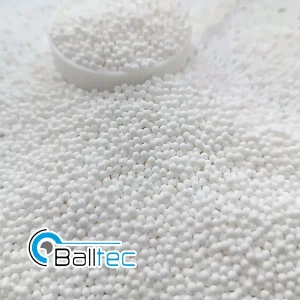
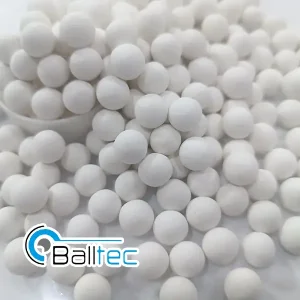
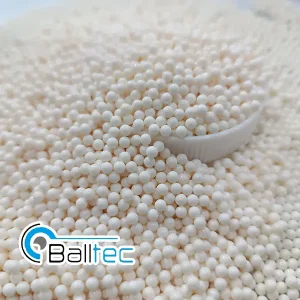
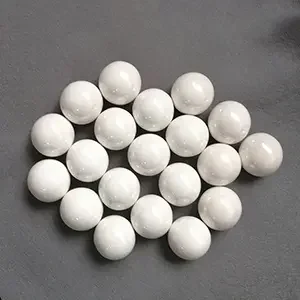
High-Quality High Purity Alumina Grinding Bead for Ceramic Glaze Milling
High-Quality High Purity Alumina Grinding Bead for Ceramic Glaze Milling Manufacturer, Suppliers
View Product Specifications
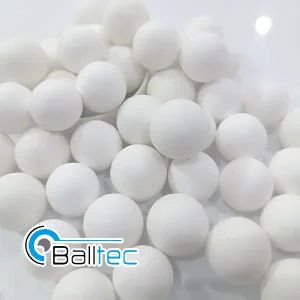
High-Quality Wear-Resistant High Purity Alumina Grinding Bead for Ink Production
High-Quality Wear-Resistant High Purity Alumina Grinding Bead for Ink Production Manufacturers, Exporter
View Product Specifications
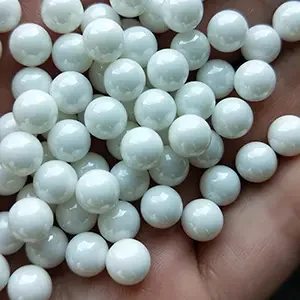
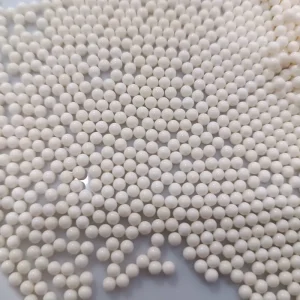
High-Quality High Alumina Al2O3 Alumina Micro Beads Ceramic Grinding Balls
High-Quality High Alumina Al2o3 Alumina Micro Beads / Ceramic Grinding Balls Factory, Exporter
View Product Specifications
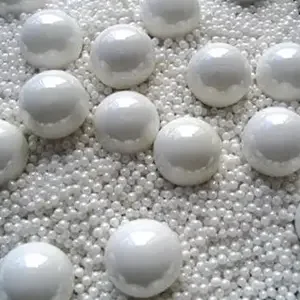
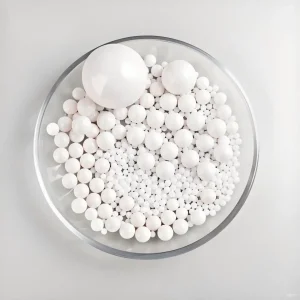
Wholesale Wear Resistant Low Wear Rate High Purity Al2O3 Alumina Media Beads
Wholesale Wear Resistant Low Wear Rate High Purity Al2O3 Alumina Media Beads Aluminium Oxide Ceramic Grinding Balls Ceramic Balls Manufacturer, Exporter
View Product Specifications
China 99.9% High-Purity Aluminum Oxide Ceramic Grinding Balls
China 99.9% High‑Purity Aluminum Oxide Ceramic Grinding Balls Suppliers, Factories
View Product Specifications
China High Density High Purity Alumina Milling Balls
China High Density High Purity Alumina Milling Balls Manufacturer, Exporter
View Product Specifications
China Ultra-Fine Grinding High-Purity Alumina Ceramic Balls
China Ultra‑Fine Grinding High‑Purity Alumina Ceramic Balls Manufacturers, Exporters
View Product Specifications
China Abrasion-Proof 99.99% High Purity Alumina Balls
China Abrasion‑Proof 99.99% High Purity Alumina Balls Manufacturers, Exporter
View Product Specifications
Industry Intelligence Report

1. Executive Summary & Macro Industrial Landscape

The global industrial transition toward high-precision microcrystalline grinding media, driven by energy efficiency standards and strict purity demands in modern processing plants.

In the contemporary landscape of advanced powder metallurgy, chemical processing, battery material synthesis, and technical ceramics, particle size reduction is no longer merely a mechanical step—it is a core determinant of final product performance. Modern ultra-fine and sub-micron wet and dry milling applications demand grinding media that deliver high kinetic kinetic impact energy while maintaining near-zero wear rates. High Purity Alumina (HPA) grinding beads, typically characterized by aluminum oxide ($\alpha-\text{Al}_2\text{O}_3$) content ranging from 99.5% to 99.99% (3N5 to 4N purity), stand at the pinnacle of ceramic grinding technology.

>15 GPa
Vickers Hardness (HV10)
3.65 - 3.98
Bulk Density (g/cm³)
<0.005%
Self-Wear Rate per Hour
99.99%
Max Alpha-Alumina Purity

Global industrial dynamics are experiencing a massive pivot. As regulatory frameworks around carbon neutrality tighten across North America, the European Union, and the Asia-Pacific region, process engineers are compelled to optimize the specific energy consumption (kWh/ton) of high-energy agitator bead mills, horizontal pin mills, and planetary ball mills. High-purity alumina media facilitate this transition by providing an optimized ratio of high density to fracture toughness. Unlike traditional silica sand, metallic balls, or low-grade fused ceramics, HPA beads prevent iron contamination, eliminate silica lattice dissolution in acidic slurries, and dramatically extend media replacement cycles.

Material Engineering & Physics

2. Material Science & Tribological Mechanics of $\alpha-\text{Al}_2\text{O}_3$ Media

The superior performance of high-purity alumina grinding beads stems directly from their tailored microstructural architecture. Through advanced cold isostatic pressing (CIP) or automated drip-forming technologies combined with high-temperature sintering ($1550^\circ\text{C} - 1680^\circ\text{C}$), raw chemical-grade alumina powder undergoes a complete phase transformation into hexagonal close-packed $\alpha-\text{Al}_2\text{O}_3$ crystallites.

Microstructure Refinement

By controlling grain growth during the solid-state sintering phase, grain boundaries are pinned to achieve sub-micron average crystal sizes ($< 1.5\ \mu\text{m}$). This minimizes internal voids, suppresses intergranular micro-fracturing under stress, and maximizes shear resistance during turbulent bead agitation.

Hydrothermal & Chemical Inertness

HPA beads feature zero open porosity and an unreactive surface chemistry. They remain completely stable when subjected to concentrated acidic, alkaline, or organic solvent suspensions, preventing chemical leaching and maintaining structural integrity across extreme pH spectrums (pH 1-14).

Optimized Energy Transfer

With a bulk density exceeding 3.65 g/cm³, HPA beads impart high kinetic kinetic energy ($E_k = \frac{1}{2} m v^2$) into the slurry. This allows rapid destruction of particle agglomerates, shortening milling cycles by up to 40% compared to standard ceramic media.

Engineering Insight: Tribological wear in bead mills occurs via two key mechanisms: micro-spalling from high-velocity impact and micro-abrasion from shear friction. Our 99.9% and 99.99% HPA formulations feature dopant-engineered grain boundaries (such as trace $\text{MgO}$ additions) that act as sintering aids, eliminating glass-phase boundaries and driving abrasive wear rates down to industry-leading lows.

Comprehensive Technical Specification Matrix

Property Parameter 99% Standard HPA 99.5% High-Density HPA 99.9% Ultra-Pure HPA 99.99% Nano-Grade HPA
$\text{Al}_2\text{O}_3$ Content (%) $\ge 99.0\%$ $\ge 99.5\%$ $\ge 99.9\%$ $\ge 99.99\%$
Bulk Density ($\text{g/cm}^3$) $\ge 3.62$ $\ge 3.68$ $\ge 3.80$ $\ge 3.92$
Vickers Hardness ($\text{HV}_{10}$) $\ge 13.5\ \text{GPa}$ $\ge 14.8\ \text{GPa}$ $\ge 15.5\ \text{GPa}$ $\ge 16.5\ \text{GPa}$
Water Absorption (%) $< 0.01\%$ $< 0.005\%$ $0.00\%$ $0.00\%$
Self-Wear Rate ($\text{g/kg}\cdot\text{h}$) $< 0.015$ $< 0.008$ $< 0.003$ $< 0.001$
Equivalent Diameter Range 0.5mm - 50mm 0.3mm - 30mm 0.1mm - 20mm 0.05mm - 10mm
Global Industry Applications

3. Macro Industrial Solutions & Use-Case Ecosystems

High Purity Alumina Grinding Beads serve as critical enabling components across high-tech manufacturing ecosystems. As industries advance toward nano-scale particle engineering, selecting the exact chemical purity and physical diameter of media dictates production yields, batch consistency, and operational cost structures.

Lithium-Ion Battery Materials & Energy Storage Sector

In the production of Lithium Iron Phosphate ($\text{LiFePO}_4$ / LFP), Lithium Nickel Manganese Cobalt Oxide (NCM), and silicon-carbon composite anodes, trace metal contamination—especially iron ($\text{Fe}$), copper ($\text{Cu}$), and zinc ($\text{Zn}$)—causes severe micro-short circuits and shortens battery cycle life. Utilizing 99.9% or 99.99% HPA beads guarantees absolute zero-metallic-wear contamination during high-energy wet milling of precursor powders down to $D_{50} < 300\ \text{nm}$, ensuring compliance with automotive-grade tier-1 battery cell standards.

Semiconductor Slurries & Electronic Ceramics

Chemical Mechanical Planarization (CMP) slurries, multilayer ceramic capacitors (MLCC), barium titanate ($\text{BaTiO}_3$), and ceramic substrate materials require ultra-fine particle size distributions with extremely sharp cut-offs. HPA micro-beads ($0.1\text{mm} - 0.3\text{mm}$) provide precise shear stresses that break down hard aggregates without introducing structural crystal defects or ionic impurities that alter dielectric constants or wafer surface flatness.

Automotive Refinish Coatings, Inkjet & Digital Inks

Modern automotive clearcoats, UV-curable inkjet formulations, and nano-pigments require intense chromatic clarity and transparency. Contamination from media wear dulls color vibrance and reduces dispersion stability, leading to pigment re-agglomeration. HPA beads ensure bright, stable dispersions with consistent color strength and scratch-resistant gloss characteristics.

Quality Assurance & Logistics

4. Manufacturing QA, Regulatory Compliance & Global Support

As a Tier-1 global exporter and direct factory manufacturer, operational integrity relies on absolute consistency from raw powder batch synthesis to global container loading. Our quality management framework operates under ISO 9001, ISO 14001, and ISO 45001 certifications, backed by comprehensive REACH, RoHS, and TSCA compliance documentation for smooth international customs clearance.

Advanced Chemical Audit

Every raw material lot undergoes Inductively Coupled Plasma Optical Emission Spectrometry (ICP-OES) analysis to verify chemical purity down to part-per-million (ppm) levels before entering production lines.

Automated Sphericity Screening

Utilizing high-speed optical camera sorters, beads are evaluated for roundness and surface defects. Off-spec spheres are removed to ensure uniform stress distribution and prevent mill screen blinding.

Custom Heavy-Duty Packaging

Export packaging options include UN-approved double-walled 25kg vacuum-sealed bags, fiber drums, and steel drums loaded onto moisture-protected, heat-treated fumigated wooden or plastic pallets.

Localized Logistics & Engineering Support: We maintain strategic warehousing buffers across major industrial hubs in North America, Europe, and Southeast Asia. Our technical support engineers provide on-site mill optimization, calculating ideal bead charge volume, rotational tip speeds, and media size segregation to minimize operating costs for our client partners.

Future Technology Roadmap

5. Next-Generation R&D Horizons & Sustainability

Looking ahead, the demand for sub-micron and nano-scale grinding media will expand alongside advancements in solid-state electrolytes, quantum dot displays, and green hydrogen synthesis catalysts. Our engineering team is currently advancing next-generation material platforms focused on three key innovations:

  • Sub-50 Micron ($\le 0.05\text{mm}$) Micro-Bead Spheroidization: Developing ultra-small micro-spheres designed for continuous pass nano-milling machines operating at tip speeds exceeding 16 m/s.
  • Zirconia-Toughened Alumina (ZTA) Hybrids: Microstructure engineering that combines the high hardness of $\alpha-\text{Al}_2\text{O}_3$ with the fracture toughness of phase-stabilized $\text{ZrO}_2$, creating media tailored for high-impact attritor mills.
  • Zero-Carbon Sintering Pathways: Transitioning high-temperature tunnel kilns to green-hydrogen and electric-arc thermal systems to minimize Scope 1 carbon emissions per metric ton of ceramic produced.
Extended Lineup

High-Purity Alumina & Advanced Media Catalog (Extended Series)

Explore our full line of corrosion-resistant spheres, micro-beads, high-density milling balls, and specialized grinding media engineered for complex processing environments.
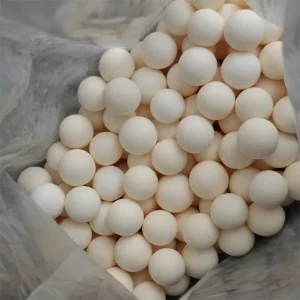
China Corrosion Resistant High-Purity Alumina Grinding Spheres
China Corrosion Resistant High‑Purity Alumina Grinding Spheres Manufacturers, Suppliers
View Product Specifications
High-Quality High Purity Alumina Grinding Beads 99% 99.9% 99.99%
High-Quality High Purity Alumina Grinding Beads/99%、99.9%、99.99% Alumina Beads Manufacturers, Factory
View Product Specifications
High-Quality 99% High Purity Alumina Al2O3 Grinding Ball Bead
High-Quality 99% High Purity Alumina Al2O3 Grinding Ball Bead Factories, Exporter
View Product Specifications
Wholesale 99.9% Al2O3 Grinding Bead Ceramic Grinding Media
Wholesale 99.9% Al2O3 Grinding Bead Ceramic Grinding Media Supplier, Factory
View Product Specifications
High-Quality 99.5% High Purity Alumina Grinding Bead for Pigment Dispersion
High-Quality 99.5% High Purity Alumina Grinding Bead for Pigment Dispersion Supplier, Exporters
View Product Specifications
High-Quality Precision Ground Ceramic Bearing Ball for Robotics Joints
High-Quality Precision Ground Ceramic Bearing Ball for Robotics Joints Suppliers, Factories
View Product Specifications
High-Quality Characteristics of Zirconia Ceramic Balls
High-Quality Characteristics of Zirconia Ceramic Balls Manufacturers, Suppliers
View Product Specifications
China Zirconium Oxide Bead for Grinding Durable Stable Grinding Media
China Zirconium Oxide Bead for Grinding Durable Stable Grinding Media Manufacturers, Factories
View Product Specifications
Technical Q&A Knowledge Base

6. Frequently Asked Questions & Technical Guidance

In-depth answers from our application engineers regarding media selection, wear optimization, and process integration.

What key parameters distinguish 99% vs 99.9% vs 99.99% High Purity Alumina Beads?
The core differences lie in microstructural grain size, bulk density, Vickers hardness, and chemical impurity thresholds. 99% Alumina beads are standard workhorses for industrial glazes and ceramic slip milling. 99.9% (3N) beads are engineered for high-tech applications such as electronic inks and technical ceramics where silica and iron contamination must be minimized. 99.99% (4N) beads utilize ultra-fine synthetic raw materials sintered under cleanroom conditions, achieving zero open porosity, a bulk density of up to 3.95 g/cm³, and micro-hardness above 16.5 GPa, making them ideal for lithium battery cell precursors, pharmaceutical dispersions, and semiconductor CMP slurries.
How do I determine the ideal bead diameter for my wet grinding mill?
The ideal media diameter is determined by your initial feed particle size ($D_{90}$) and target final discharge size. As a general engineering rule of thumb, the grinding bead diameter should be approximately 20 to 30 times larger than the average feed particle size. For instance, if feed particles are around $10\ \mu\text{m}$ and the target output is sub-micron ($< 0.5\ \mu\text{m}$), starting with $0.4\text{mm} - 0.6\text{mm}$ beads is recommended. For nano-grinding down to $50\ \text{nm}$, micro-beads of $0.05\text{mm} - 0.2\text{mm}$ should be loaded into high-energy agitating pin mills with fine-mesh screen separators.
How does High Purity Alumina media compare to Yttria-Stabilized Zirconia (YSZ) beads?
Yttria-Stabilized Zirconia ($\text{ZrO}_2$) features a higher density (~6.0 g/cm³) compared to High Purity Alumina (~3.7 - 3.95 g/cm³), imparting greater kinetic kinetic impact energy per stroke. However, HPA beads offer significant advantages in applications where zirconium ion contamination is prohibited, or where high cost-efficiency is essential. HPA beads deliver exceptional micro-hardness, higher thermal conductivity, and complete resistance to hydrothermal degradation (which can affect zirconia under continuous hot aqueous milling). Furthermore, HPA media present a lower capital expenditure per unit volume, reducing initial mill filling costs.
What measures are taken to guarantee zero metallic contamination during production?
Our high-purity alumina line features dedicated non-metallic processing equipment. Ball mills, slurry pipelines, spray drying towers, and automated classifiers are completely lined with high-density polyurethane (PU), rubber, or high-purity alumina ceramics. Powerful electromagnetic iron separators rated above 12,000 Gauss are integrated into multiple production stages. Sintering takes place in high-temperature cleanroom tunnel kilns using ultra-pure alumina saggars, preventing cross-contamination from airborne metal particles or refractory brick dust.
What export documentation and batch traceability support do you provide?
Every shipment is accompanied by a comprehensive Certificate of Analysis (COA) specifying chemical composition (ICP-OES verified), bulk density, particle size distribution, sphericity percentage, and self-wear rate testing results. We assign a unique batch tracking code to every drum/pallet. Full documentation packages—including SDS (Safety Data Sheet), Certificate of Origin (COO), REACH/RoHS compliance reports, and ISO quality management certifications—are provided to international clients prior to vessel departure.
All High Purity Alumina Grinding Bead Products