Follow 


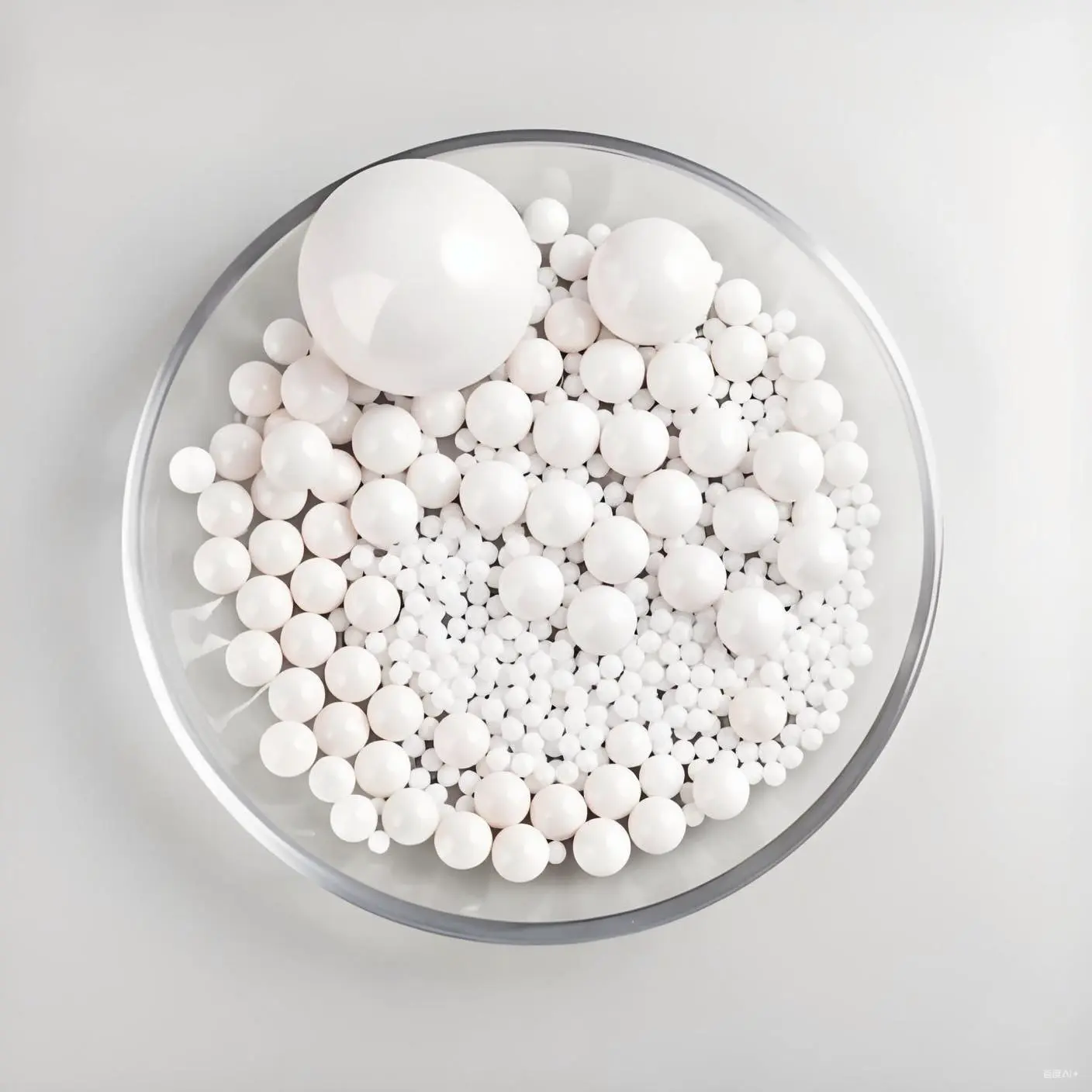
Its core advantages for pigment dispersion lie in four targeted performance traits:
With total impurities strictly controlled (Fe₂O₃ ≤0.05%, SiO₂ ≤0.3%, Na₂O ≤0.1%, other trace elements ≤0.05%), the grinding bead eliminates the risk of impurity-induced color defects—such as iron oxide (Fe₂O₃) dulling bright organic pigments (e.g., phthalocyanine blue), silica (SiO₂) reducing the transparency of carbon black, or alkali metals (Na₂O) altering the hue of inorganic pigments (e.g., titanium dioxide). Unlike low-purity alumina beads (impurities ≥3%) or zirconia beads (which may leach zirconium to shift pigment tone), our 99.5% purity bead ensures pigments retain their designed color value (ΔE ≤0.3, measured via spectrophotometer) and tinting strength (variation ≤2%) across batches.
Boasting a Vickers hardness (HV) of 1650–1750 and bulk density of 3.70–3.75 g/cm³, the bead generates strong shear and impact forces to break down pigment agglomerates—reducing pigment particle size from 5–30μm (raw pigment) to 0.5–2μm (optimal for dispersion) in 25% less time than standard ceramic beads. Its ultra-low wear rate (≤0.006% per 1000 hours of milling) minimizes bead debris in pigment pastes, eliminating the need for post-dispersion filtration (a major source of pigment loss) and reducing pigment waste by 12%–18%.
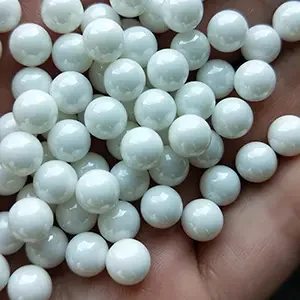
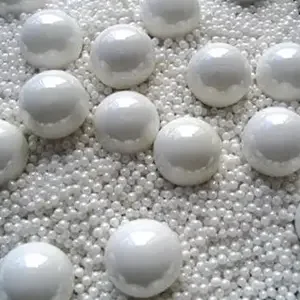
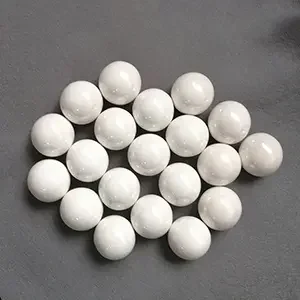
With a sphericity of ≥0.98 (deviation ≤0.03mm) and tight size tolerance (±0.08mm), the beads roll smoothly in dispersion equipment (e.g., horizontal bead mills, vertical attritors, high-shear mixers). This ensures even contact with pigment particles, avoiding over-dispersion (which reduces tinting strength) or under-dispersion (which causes color streaks in final products). A paint manufacturer using our beads achieved a pigment particle size distribution (PSD) with span ≤1.2 (span = (D90-D10)/D50), ensuring consistent color in architectural coatings.
The 99.5% high-purity alumina material is chemically inert to all common pigment dispersion components—including organic solvents (e.g., xylene, ethanol), water-based binders (e.g., acrylic latex), dispersants (e.g., polycarboxylates), and pH modifiers (pH 4–10). It resists corrosion from acidic/alkaline dispersion media and does not react with reactive pigments (e.g., iron oxide, chrome yellow), maintaining performance over 400+ dispersion cycles without altering pigment chemistry.
| Specification Category | 99.5% High Purity Alumina Grinding Bead (Pigment Dispersion Grade) | Unit | Test Standard |
|---|---|---|---|
| Chemical Composition | |||
| - Al₂O₃ | ≥99.5 | % | ASTM C464 |
| - Fe₂O₃ | ≤0.05 | % | ASTM C464 |
| - SiO₂ | ≤0.3 | % | ASTM C464 |
| - Na₂O | ≤0.1 | % | ASTM C464 |
| - Other Trace Elements | ≤0.05 | % | ICP-MS (ASTM D7343) |
| Physical Properties | |||
| - Bulk Density | 3.70–3.75 | g/cm³ | ASTM C20 |
| - Vickers Hardness (HV) | 1650–1750 | MPa | ASTM C1327 |
| - Flexural Strength | ≥350 | MPa | ASTM C1161 |
| - Sphericity | ≥0.98 | — | ISO 13317-1 |
| - Size Range (Common Sizes) | 0.3–15 (optimal for pigment dispersion: 0.8–5mm) | mm | ISO 13317-1 |
| - Size Tolerance | ±0.08 | mm | ISO 13317-1 |
| Performance Metrics | |||
| - Wear Rate | ≤0.006 | %/1000h | Internal Dispersion Test (pigment paste: 50% pigment, 50% acrylic binder) |
| - Pigment Contamination Risk | No detectable impurities (detection limit: ≥0.1ppm) | ppm | ICP-MS (ASTM D7343) |
| - Maximum Dispersion Temperature | 250 | ℃ | ASTM C1171 |
| - Color Impact on Pigments | ΔE ≤0.3 (vs. pigment dispersed with ultra-pure alumina beads) | — | CIELAB Spectrophotometer (ASTM E2194) |
| - Particle Size Distribution (PSD) after Dispersion | Span ≤1.2 (for organic blue pigment, initial PSD: D50=15μm) | — | Laser Diffraction (ISO 13320) |
Our 99.5% High Purity Alumina Grinding Bead is tailored to solve pigment dispersion challenges across key sectors:
Used for dispersing pigments in water-based and solvent-based coatings—e.g., titanium dioxide (white) in architectural latex paint, iron oxide (red/brown) in industrial maintenance coatings, and metallic pigments (aluminum flake) in automotive topcoats. The bead’s low impurity ensures consistent color (ΔE ≤0.3) across coating batches, and its high wear resistance reduces downtime for bead replacement. A European coating manufacturer eliminated "color drift" in its exterior wall paints, improving customer satisfaction by 30%.
Applied in dispersing pigments for flexographic inks (e.g., carbon black in packaging inks), digital printing inks (e.g., phthalocyanine green in UV-curable inks), and screen printing inks (e.g., cadmium-free yellow in textile inks). The bead’s uniform sphericity achieves a fine PSD (D50=0.8–1.5μm), ensuring sharp print resolution and fast drying. A Chinese ink producer reduced ink "blocking" (pigment agglomeration in printheads) by 40%, meeting ISO 2846-1 ink performance standards.
Used for dispersing pigments in plastic masterbatches—e.g., organic red in polyethylene (PE) masterbatches, carbon black in polypropylene (PP) masterbatches, and fluorescent pigments in polyvinyl chloride (PVC) masterbatches. The bead’s chemical inertness avoids reaction with plastic resins (e.g., no yellowing of PE), and its low wear ensures no contamination of food-contact plastics. A North American masterbatch producer achieved FDA compliance for food-contact plastic colorants, expanding into the packaging market.
Employed in dispersing pigments in makeup products—e.g., iron oxide (brown) in foundation, mica (shimmer) in eyeshadow, and ultramarine (blue) in nail polish. The bead’s ultra-low impurity (Fe₂O₃ ≤0.05%) meets EU Cosmetics Regulation (EC) No 1223/2009 (restricting heavy metals), and its smooth surface avoids pigment abrasion (which reduces shimmer in mica). A Korean cosmetics brand enhanced the color payoff of its eyeshadows, increasing product sales by 25%.
Used for dispersing inorganic pigments in ceramic glazes (e.g., chrome oxide green in sanitary ware glazes) and glass colorants (e.g., cobalt oxide blue in decorative glass). The bead’s high temperature resistance (up to 250℃) withstands the high-viscosity dispersion of glaze pigments, and its inertness ensures no color shifting during glass firing. A ceramic glaze manufacturer reduced "color streaks" in its glazed sanitary ware by 50%, meeting EN 998 ceramic performance standards.