Follow 


Industrial Whitepaper & Engineering Procurement Guide: Precision Micro-Ceramic Hydrodynamic Counterbalancing Technology for Global Heavy Transport, Off-Highway Fleets, and Commercial Vehicles.
Direct factory-engineered micro-spheres, high-purity alumina, and stabilized zirconia products for enterprise fleet maintenance, chemical processing, and ultra-fine dispersion applications.
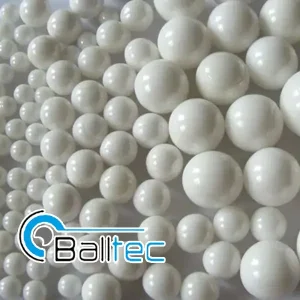
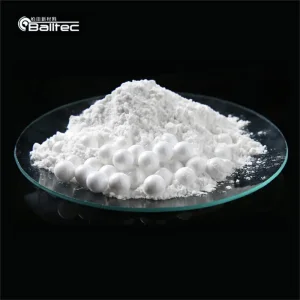
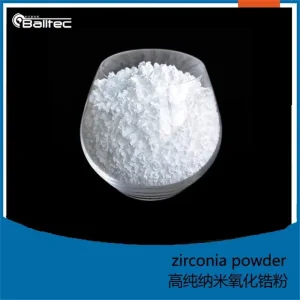
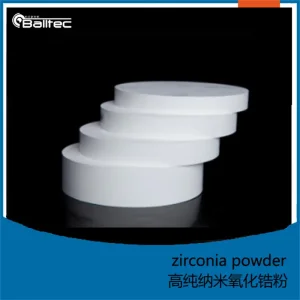
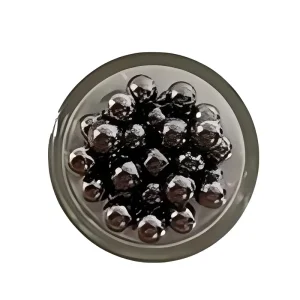
Understanding how free-flowing micro-ceramic spheres inside pneumatic tires continuously neutralize dynamic imbalance, reduce harmonic resonance, and stabilize heavy transport assemblies.
When a vehicle accelerates past critical speed thresholds (typically 25–35 MPH), wheel assembly imbalance causes vertical vibration. Centripetal acceleration forces micro-beads outward, migrating precisely opposite the heavy spot to balance forces dynamically.
Fixed wheel weights balance a tire only at a single wear state. As tread degrades, non-uniform mass loss creates secondary harmonic frequencies. Sintered ceramic beads continuously adapt to dampen chassis vibration dynamically throughout tire lifespan.
Using ultra-smooth, spherical micro-beads with optimized electrostatic dissipation prevents clump formation. The free-rolling media operates within the tire's air cavity following fluid dynamic principles to maintain instantaneous force balance.
How commercial fleet operators, tire service chains, and defense transport networks deploy factory-direct tire balancing beads to solve high maintenance costs and operational downtime.
In long-haul semi-truck operations, steer tire cupping and vibration lead to premature replacement cycles. Standard spin-balancing requires taking vehicles off the road every 20,000 miles. Ceramic balancing beads remain permanently inside the tire cavity, lowering total maintenance touchpoints per vehicle.
Mining rigs, agricultural tractors, and construction vehicles operate in extreme conditions where wheel weights easily knock off. Industrial micro-ceramic beads provide internal stability unaffected by exterior mud build-up, deep ruts, or high-torque rotation.
| Evaluation Vector | Traditional Lead/Steel External Weights | Factory-Direct Micro-Ceramic Beads | Fleet Financial Benefit |
|---|---|---|---|
| Installation Labor | Requires specialized spin-balancer and skilled technician (15-20 min/wheel). | Direct drop-in bag placement during tire mounting (2 min/wheel). | 85% Reduction in Labor Time |
| Durability & Retention | Weights fall off during curb strikes, off-road driving, or clip fatigue. | Sealed inside air cavity; zero risk of detachment or loss. | Zero Weight Replacement Cost |
| Wear Adaptability | Static balance point; becomes inaccurate as tread wears down. | Continuous dynamic redistribution throughout tire operating life. | 25% Average Tread Life Extension |
| Environmental Compliance | Lead banned in EU, California, and multiple global jurisdictions. | Chemically inert, non-toxic sintered ceramic spheres. | 100% Regulatory Risk Avoidance |
Why ceramic compositions outperform traditional glass and metallic beads in mechanical crushing strength, surface friction coefficients, and chemical stability within pneumatic tire inner liners.
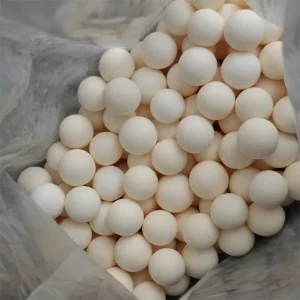
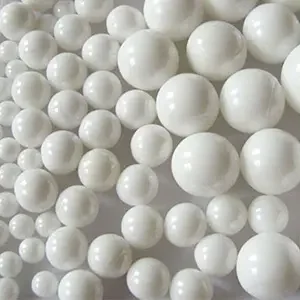
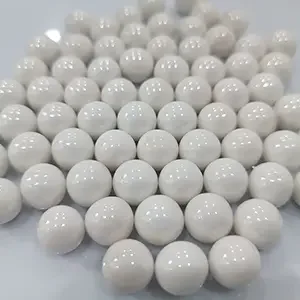
Manufactured via high-temperature sintering, our ceramic balancing beads feature a microcrystalline structure density ranging from 3.6 g/cm³ to 6.0 g/cm³. This high specific gravity allows maximum mass concentration with minimal spatial displacement within the pneumatic chamber.
Inner rubber liners are vulnerable to mechanical abrasion. Our proprietary polishing process achieves a roundness tolerance of >95% and ultra-smooth surface finish, ensuring the beads roll without pulverizing or degrading butyl inner liners.
Moisture from compressed air lines can cause cheap glass beads to freeze or stick together. Our ceramic beads are treated with a specialized fluoropolymer silicone coating that repels moisture and neutralizes static charge accumulation.
| Property Parameter | High-Purity Alumina Micro-Bead | Yttria-Stabilized Zirconia (Y-TZP) Bead | Standard Tempered Glass Bead |
|---|---|---|---|
| Specific Density (g/cm³) | 3.60 – 3.80 | 6.00 – 6.05 | 2.40 – 2.50 |
| Mohs Hardness Grade | 9.0 | 9.0 | 6.0 |
| Crush Strength (N/Bead) | > 2,500 N (2.0mm) | > 4,500 N (2.0mm) | < 450 N (Dusting Risk) |
| Water Absorption Rate | < 0.01% | 0.00% (Non-porous) | > 0.15% |
| Sphericity Tolerance | ≥ 95% | ≥ 98% | 80 - 85% |
Exploring the technological convergence between intelligent tire sensors, autonomous logistics fleets, and nano-engineered dry-lubricated ceramic counterweights.
Modern commercial trucks rely on internal Tire Pressure Monitoring System (TPMS) sensors. Factory-engineered balancing beads are sized precisely (typically 0.8mm to 2.0mm) to prevent ingress into valve cores while offering anti-static properties that protect sensitive internal RF electronics.
Future development roadmaps focus on nano-structured ceramic surface coatings that eliminate static electrification entirely. This ensures instant fluid redistribution even under extreme sub-zero arctic transport routes down to -50°C.
Driverless Class 8 long-haul trucks operate continuously without manual driver feedback regarding vibration. Self-correcting internal ceramic balancing media represents a cornerstone technology for zero-unscheduled-maintenance autonomous axles.
From raw powder preparation to automated optical sorting, our production base enforces strict ISO quality protocols for high-volume enterprise procurement.
Our manufacturing plant leverages laser-based particle size analyzer systems and automated vibrating screen classification. Every production lot undergoes rigorous screening to guarantee zero oversized contaminants and tight size distribution tolerances (+/- 0.05mm).
We provide global distributors and fleet service suppliers with flexible packaging configurations, including water-soluble drop-in bags, pre-measured application pouches, bulk 25kg bags, and 1-ton super-sacks for high-capacity fleet depots.
Adhering to strict environmental frameworks while helping fleets minimize carbon emissions through improved rolling resistance and reduced fuel consumption.
Regulations across Europe, Japan, North America, and Australia strictly prohibit lead-based wheel weights due to environmental lead poisoning risks when weights dislodge on roadways. Ceramic dynamic beads offer a 100% eco-friendly compliant alternative.
By dampening parasitic vertical chassis vibrations, micro-ceramic balancing beads optimize rolling efficiency. Long-distance fleet studies show an average 2.2% to 3.5% reduction in diesel fuel consumption, directly offsetting corporate carbon footprints.
Manufactured under ISO 9001:2015 quality management systems, ISO 14001:2015 environmental standards, and ISO 45001 occupational health compliance. Product lines are fully REACH, RoHS, and OSHA non-hazardous certified.
Explore our full line of ultra-fine grinding micro-beads, high-purity zirconia powders, bearing balls, and chemical tower packing media.

Detailed answers to technical questions concerning tire balancing bead selection, dosage calculations, inner liner protection, and enterprise factory ordering protocols.
Traditional wheel weights provide static, fixed-mass balancing targeted at a single point in the wheel assembly's lifespan. As the tire tread wears non-uniformly, fixed weights become out of balance. Micro-ceramic balancing beads are installed directly inside the tire cavity, using centripetal force and hydrodynamic motion to continuously move opposite heavy spots, compensating dynamically for tread wear, mud accumulation, and structural shift throughout the life of the tire assembly.
No. High-quality ceramic balancing beads manufactured by Baitian are engineered with a smooth, polished micro-spherical surface (>95% sphericity) and high crush resistance (>2,500 N). Unlike jagged glass or metallic media, ceramic spheres roll freely over the inner liner without producing abrasive rubber dust or scraping the casing. Furthermore, their micro-bead sizing prevents clogging or damaging internal TPMS sensor valves.
Application dosage depends on tire profile, width, and overall diameter. Standard Class 8 steer tires (e.g., 295/75R22.5) generally require 8 to 10 ounces per tire, while wide-base super singles (e.g., 445/50R22.5) require 14 to 16 ounces. For large agricultural and OTR mining tires, dosages are calculated based on total air cavity volume. Our engineering team provides custom dosage calculators for fleet procurement managers.
Ceramic micro-spheres possess significantly higher density (3.6 to 6.0 g/cm³) compared to tempered glass (2.4 g/cm³), meaning less physical media volume is required to achieve the same counterweight force. Additionally, glass beads tend to break down into micro-dust over time due to low crush resistance, causing severe inner liner abrasion and clumping when exposed to air compressor moisture. Ceramic beads are chemically inert, moisture-repellent, and virtually indestructible under operational tire pressures.
Baitian offers factory-direct bulk supply, including pre-measured water-soluble drop-in bags (which break open automatically inside the tire upon movement), individual self-dispensing bottles, 25kg moisture-proof woven sacks, and 1-ton bulk tote bags. Custom branding, OEM private-label packaging, and automated drop-shipping fulfillment are available for global fleet suppliers and distributor networks.