Wholesale Zirconium Oxide Grinding Ball for Precision Polishing and Particle Refinement Manufacturers, Exporter

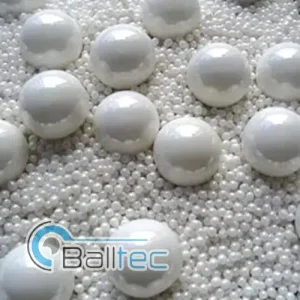
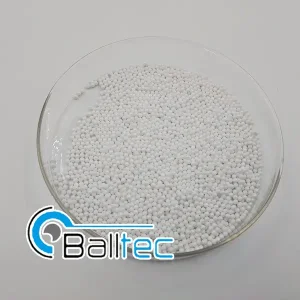
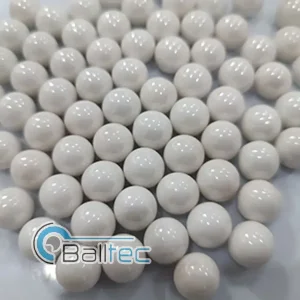
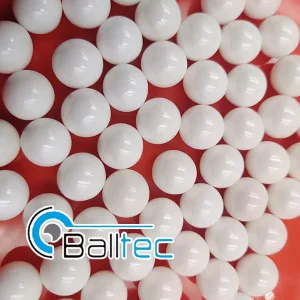
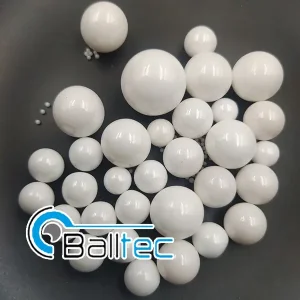
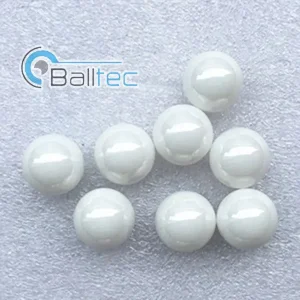
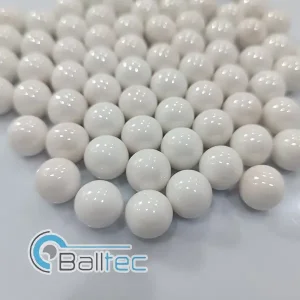
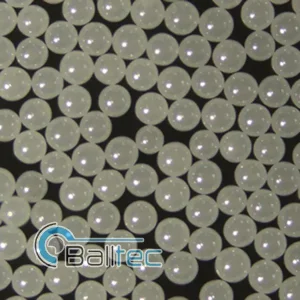
Zirconium oxide grinding balls (Y-TZP yttria-stabilized) are high-performance ceramic grinding media tailored for precision polishing and ultra-fine particle refinement. Featuring high density, extreme hardness and excellent fracture toughness, these balls outperform traditional glass and alumina grinding media. They deliver uniform grinding force, minimal media wear and zero contamination, perfectly meeting the ultra-fine processing demands of high-precision materials. Widely adaptable to vertical and horizontal bead mills, ball mills and dispersion equipment, they serve as core media for fine particle treatment across multiple high-end industries.

Product Description

Zirconium oxide grinding balls (Y-TZP yttria-stabilized) are high-performance ceramic grinding media tailored for precision polishing and ultra-fine particle refinement. Featuring high density, extreme hardness and excellent fracture toughness, these balls outperform traditional glass and alumina grinding media. They deliver uniform grinding force, minimal media wear and zero contamination, perfectly meeting the ultra-fine processing demands of high-precision materials. Widely adaptable to vertical and horizontal bead mills, ball mills and dispersion equipment, they serve as core media for fine particle treatment across multiple high-end industries.

Core Product Parameters

Parameter Item Technical Specification
Main Composition ZrO₂ + Y₂O₃ (95%+ Zirconia)
Bulk Density ≥6.0 g/cm³
Vickers Hardness ≥1200 HV
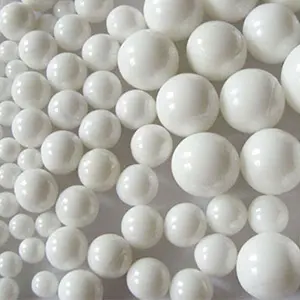
Particle Size Range 0.1–30 mm (customizable)
Wear Rate ≤0.01‰/24h
Working Temperature ≤1200℃

Key Performance Advantages

This zirconium oxide grinding ball boasts outstanding comprehensive performance for precision processing. Its ultra-low wear rate effectively avoids medium impurity contamination, ensuring high purity of polished and refined materials.

High Mechanical Strength
Prevents cracking and chipping during high-speed grinding, extending service life and reducing replacement frequency.
Chemical Inertness
Resists acids, alkalis and corrosion, seamlessly adapting to diverse complex grinding environments.
Uniform Spherical Structure
Ensures consistent grinding and polishing force, enabling precise control of particle size for ultra-fine refinement.

Precision Application Fields

Focusing on precision polishing and particle refinement, the product covers multiple high-precision manufacturing fields:

New Energy Materials
Refines lithium battery electrode materials to improve particle uniformity and battery stability.
Electronics & Ceramics
Performs ultra-fine grinding and surface precision polishing to enhance electrical performance.
Chemicals & Fine Powders
Widely used in high-end coatings, pigments, pharmaceutical fine powders, and cosmetic raw materials.

Frequently Asked Questions

Q1 What makes it superior to ordinary ceramic balls for precision refinement?

It has higher density and hardness, providing stronger grinding kinetic energy for finer particle refinement. Its ultra-low wear and non-contamination properties fully meet the high-purity requirements of precision materials, which ordinary alumina balls cannot achieve.

Q2 What particle fineness can be achieved after refinement?

Matching with professional grinding equipment, it can stably refine materials to sub-micron and even nano-scale, with extremely narrow particle size distribution, ideal for high-standard precision polishing and ultra-fine processing.

Q3 Is customized size available for special precision scenarios?

Yes. We support customized particle sizes from 0.1mm to 30mm and can adjust hardness and wear resistance parameters according to customer’s exclusive precision processing needs.

Q4 What types of grinding machinery are compatible with these media?

These grinding balls are widely adaptable to vertical and horizontal bead mills, traditional ball mills, and various high-speed dispersion equipment.

Q5 What are the maximum thermal and chemical limits of this product?

The grinding media can withstand working temperatures up to 1200℃ and features high chemical inertness, enabling effective resistance to acid, alkali, and corrosive environments.

Q6 How does the wear rate impact material purity during long-term operation?

With an ultra-low wear rate of ≤0.01‰/24h, the media minimizes self-wear during long grinding cycles, preventing impurity contamination and maintaining absolute product purity.

Related Products