High-Quality Polishing Yttria Zirconium Oxide Zirconia Ceramic Mill Grinding Media Ball Beads Factory, Exporters

Zirconia beads can not only be used for grinding and dispersing material slurries and powders but also as polishing abrasives in vibratory finishing machines, mainly for mirror polishing to achieve a bright and glossy finish on workpieces.

Product Description

Zirconia beads can not only be used for grinding and dispersing material slurries and powders but also as polishing abrasives in vibratory finishing machines, mainly for mirror polishing to achieve a bright and glossy finish on workpieces.

Mirror polishing requires high surface finish of the abrasives: the abrasive surface must be smooth without grinding force to avoid scratching the workpiece.

Common mirror polishing abrasives include high-frequency ceramic cylinders, zirconia grinding beads, steel beads, and disc beads.

Key Material Properties & Features

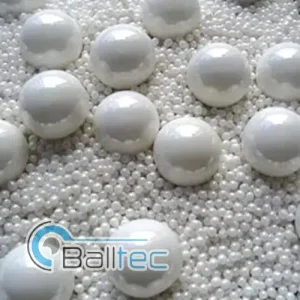
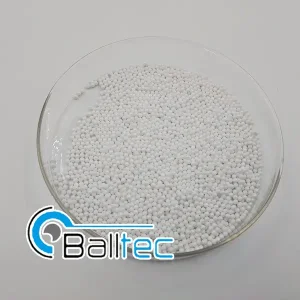
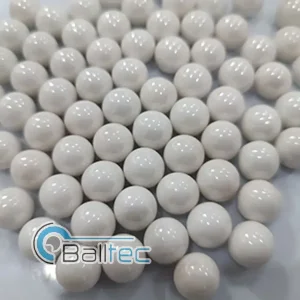
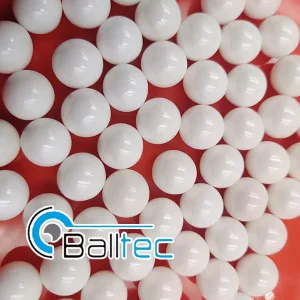
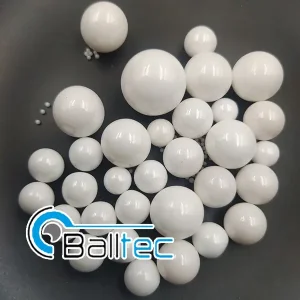
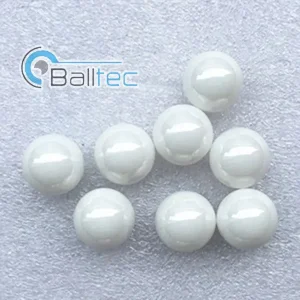
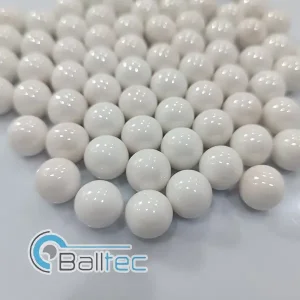
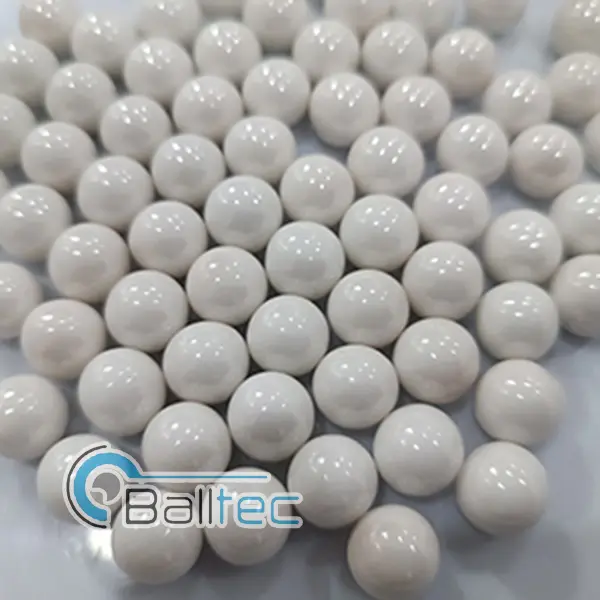
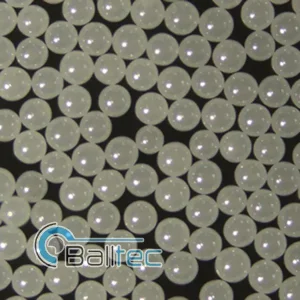
Zirconia beads are pearl white in color with a smooth surface. Among ceramic balls, they are high-strength abrasives with a Mohs hardness of 9 and a strength exceeding 1200 MPa. They are shatter-resistant, have a long service life, and are durable.

Versatile Applications

Jewelry Polishing
Zirconia beads can be used for polishing gold and silver jewelry. When placed in a barrel along with the corresponding brightening solution and water, they can polish jewelry to a high luster, eliminating the need for manual grinding and saving time and effort.
Jade Equipment
For precision polishing of jade equipment, finished jade articles are initially dull. By adding zirconia beads and brightening solution into a vibratory finishing machine, a mirror-like effect can be achieved.
Metals & Alloys
Zirconia beads are also suitable for mirror polishing of aluminum alloy wheel hubs and stainless steel products.

Selection & Operational Guidelines

The selection of zirconia bead specifications depends on the size of the workpiece. For workpieces with holes or grooves, the diameter of the beads should be 1/3 smaller than the holes/grooves.
With a high specific gravity of 3.6, zirconia beads are relatively heavy. When used in equipment, a high vibration frequency is required, and a larger quantity of beads should be added.
Compared with zirconia beads, high-frequency ceramic abrasives have a lower specific gravity, are prone to breakage, and lack wear resistance. For rapid achievement of high-quality mirror finishes with strict requirements, zirconia beads are recommended.

Product Specification Table

Specification Item Technical Parameter Test Method
Main Component ZrO₂ ≥ 95%, Y₂O₃ = 3-5% (stabilizer) X-ray Fluorescence (XRF)
Density 6.0-6.1 g/cm³ Archimedes Principle
Particle Size Range 0.1 mm - 20 mm (Customizable) Vernier Caliper / Laser Particle Analyzer
Mohs Hardness ≥ 9.0 Mohs Hardness Test Kit
Vickers Hardness (HV) ≥ 1250 Vickers Hardness Tester
Wear Rate < 0.003%/1000h Lab-Scale Vibratory Finishing Test
Surface Roughness (Ra) ≤ 0.01 μm Atomic Force Microscope (AFM)
Compressive Strength ≥ 2300 MPa Universal Testing Machine
Chemical Stability Resistant to pH 2-13 solutions; no reaction with organic solvents Immersion Test (24h, 25°C)
Sphericity ≥ 0.98 Optical Spherometer
Color Pearl White Visual Inspection

Frequently Asked Questions (FAQ)

Q1 What are zirconia beads primarily used for in surface finishing?

Zirconia beads are used for grinding, dispersing, and achieving high-luster mirror polishing on workpieces such as gold/silver jewelry, jade, aluminum alloy wheel hubs, and stainless steel in vibratory finishing machines.

Q2 How do I choose the correct size of zirconia beads for my workpiece?

The bead size depends on workpiece dimensions. For items containing holes or grooves, ensure the bead diameter is at least 1/3 smaller than the hole or groove size to prevent lodging or incomplete polishing.

Q3 Why are zirconia beads preferred over ceramic abrasives for mirror polishing?

Compared to high-frequency ceramic abrasives, zirconia beads possess higher density (6.0-6.1 g/cm³), extreme wear resistance, and superior hardness (Mohs 9). They do not break easily, allowing for faster and higher-quality mirror finishes.

Q4 What operational settings are needed when using zirconia beads?

Due to their high specific gravity (3.6), zirconia beads are relatively heavy. Operating vibratory machinery requires a higher vibration frequency and a larger load quantity of beads for optimal results.

Q5 Are zirconia beads chemically stable during wet polishing operations?

Yes, zirconia beads offer excellent chemical stability. They resist solutions ranging from pH 2 to 13 and do not react with organic solvents, making them suitable for use with various brightening solutions.

Related Products