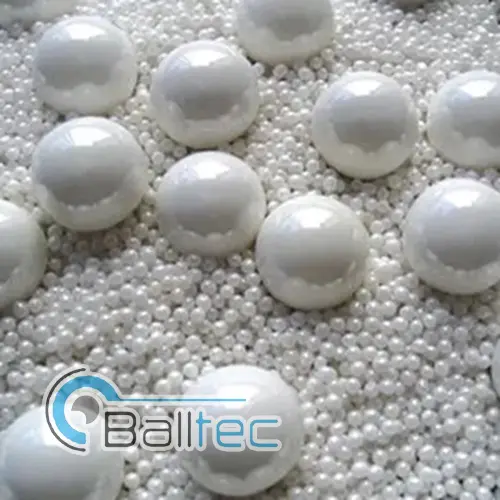
Wholesale Yttria-Stabilized Zirconia Grinding Media for Battery Material Processing Factory, Exporter
Lithium compounds in lithium batteries have specific requirements for particle size distribution, so nano-scale battery materials need to be used to improve battery performance.
Zirconia Grinding Beads for Nano-Scale Battery Materials
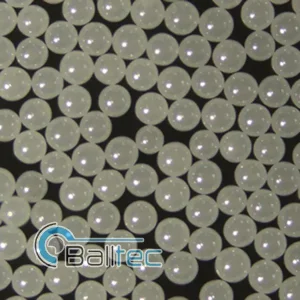
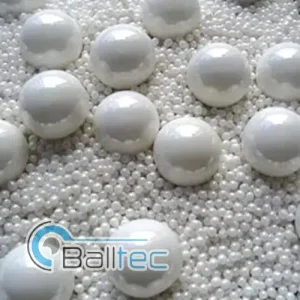
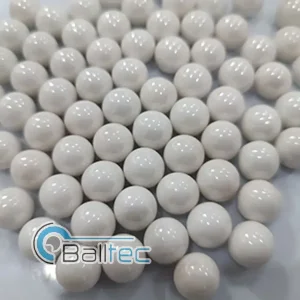
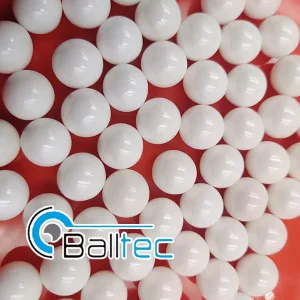
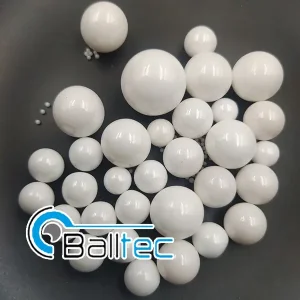
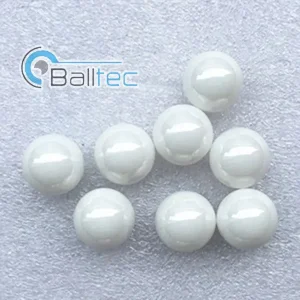
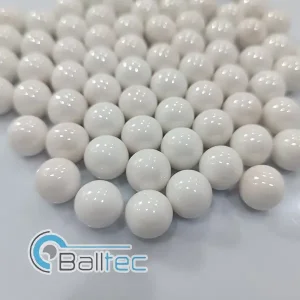
Lithium compounds in lithium batteries have specific requirements for particle size distribution, necessitating nano-scale battery materials to significantly improve overall battery performance. As a representative grinding medium for a new generation of nano-battery materials, zirconia grinding beads possess advantages such as high density, high strength, excellent wear resistance, and long service life, enabling nano-scale ultra-fine grinding and dispersion of new energy battery materials.
Grinding Principle & Selection Rule
Zirconia beads collide with and shear battery material particles under the drive of a sand mill, thereby reducing particle fineness. There is a precise 1000-fold ratio relationship between the target fineness of the battery material and the required zirconia bead diameter.
Application Breakdown: Cathode vs. Anode Materials
Cathode Materials (LFP)
Mainly used for LFP (Lithium Iron Phosphate) material processing.
Target Material Fineness: <350 nm
Required Bead Diameter: ~0.35 mm
Anode Materials (Silicon-Carbon)
Mainly used for silicon-carbon composite materials in anodes.
Target Material Fineness: <100 nm
Required Bead Diameter: ~0.1 mm
Manufacturing Method Comparison
To meet the stringent requirements of high fracture resistance and low wear rate during ultra-fine grinding, manufacturing process quality is vital to achieving a dense internal structure.
Rolling Method
Conventional Process
Operates on a principle similar to "snowballing". If not properly controlled, it may result in an incompact internal structure with internal pores, negative affecting overall crushing strength, Vickers hardness, and wear resistance.
Droplet Formation (Titration)
Advanced Process
Involves dropping slurry into a solution for precise one-step molding. Produces a highly uniform, dense internal structure ensuring higher crushing strength, superior Vickers hardness, optimal wear resistance, and automated quality control.
Product Specifications
Parameter
Specification Range
Material Composition
ZrO₂ ≥94%, Y₂O₃ (3–8 mol%)
Impurity Content
Fe₂O₃ ≤0.02%, SiO₂ ≤0.03%, Al₂O₃ ≤0.03%
Density
6.0–6.1 g/cm³
Hardness (Vickers)
≥1250 HV
Fracture Toughness
≥6 MPa·m¹/²
Wear Rate
≤0.002%/1000 hours
Diameter Range
0.1–10 mm (customizable)
Sphericity
≤0.005 mm
Surface Roughness (Ra)
≤0.05 μm
Max Operating Temperature
1200°C
Chemical Resistance
Inert to aqueous/non-aqueous slurries, electrolytes, and raw battery materials
Sintering Temperature
1600–1750°C
Frequently Asked Questions (FAQ)
1. Why are zirconia grinding beads used in lithium battery material processing?
Zirconia beads provide high density, high strength, excellent wear resistance, and long service life. They deliver high-energy collision and shearing forces in sand mills to achieve the nano-scale ultra-fine grinding required for modern battery performance.
2. How do you select the correct zirconia bead diameter based on target fineness?
There is a 1000-fold ratio relationship between target material fineness and bead size. For example, LFP materials targeting <350nm require ~0.35mm beads, whereas silicon-carbon anode materials targeting <100nm require ~0.1mm beads.
3. Why are beads made by the droplet formation (titration) method superior to rolled beads?
The droplet formation method forms beads in a single step, resulting in a dense, pore-free internal structure. This automated process delivers consistent physical properties, including higher crushing strength, higher Vickers hardness, and better wear resistance.
4. What is the material composition and purity of these zirconia beads?
The beads consist of ≥94% ZrO₂ stabilized with Y₂O₃ (3–8 mol%). Purity is tightly controlled with minimal impurities: Fe₂O₃ ≤0.02%, SiO₂ ≤0.03%, and Al₂O₃ ≤0.03%.
5. Are these zirconia grinding beads chemically resistant to battery slurries?
Yes, the beads are chemically inert to aqueous and non-aqueous slurries, electrolytes, and raw lithium battery materials, with a maximum operating temperature of up to 1200°C.
6. What is the wear rate and hardness rating of these zirconia beads?
These high-performance zirconia beads feature a Vickers hardness of ≥1250 HV and an ultra-low wear rate of ≤0.002% per 1000 hours, ensuring minimal contamination during long grinding cycles.