Follow 


Direct factory solutions optimized for extreme dew-point suppression, gas separation, oxygen generation, and high-durability wet milling applications.
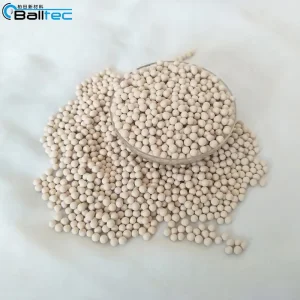
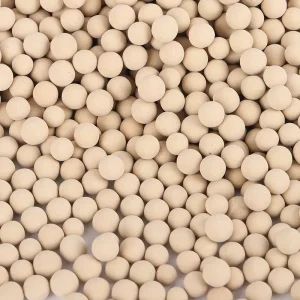
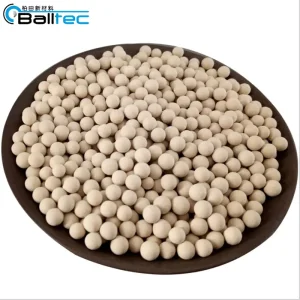
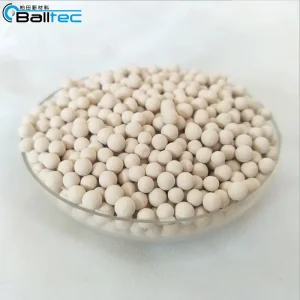
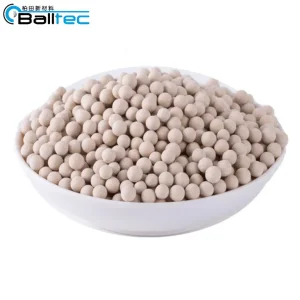
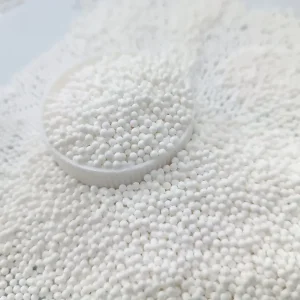
Industrial adsorption and separation technology forms the invisible backbone of modern petrochemical refining, cryogenic air separation, medical oxygen generation, and green hydrogen drying. At the core of these critical processes is the synthetic zeolite molecular sieve—a crystalline hydrated aluminosilicate engineered with sub-nanometer precision.
Modern molecular sieve factories have shifted from basic batch blending to hydro-thermal synthesis control. By adjusting Si/Al ratios and cation exchange processes (Na+, K+, Ca2+), crystal structures like LTA (Type A) and FAU (Type X) are customized to sub-angstrom tolerances (3Å to 10Å).
In high-pressure packed beds, physical breakdown creates micro-dust, causing channeling and severe pressure drops. Advanced factories utilize automated extrusion and spherical granulators bonded with high-purity clay matrices to deliver crush strength up to 100 N/bead.
Thermal Swing Adsorption (TSA) and Pressure Swing Adsorption (PSA) processes demand rapid desorption kinetics. Modern binderless or low-binder molecular sieves optimize heat capacity and mass transfer zones, reducing regeneration power consumption by 15-22%.
SEO & Engineering Insight: When selecting a molecular sieve manufacturer, analyzing static water adsorption capacity alone is insufficient. Procurement teams must evaluate mass transfer zone (MTZ) length, dynamic adsorption breakthrough curves, and mechanical attrition under cyclic pressure variations.
Understanding how molecular sieves operate requires examining their three-dimensional crystalline frameworks. Constructed from [SiO4]4- and [AlO4]5- tetrahedra linked by shared oxygen atoms, these porous networks create uniform pore apertures that screen molecules based on kinetic diameter and polar affinity.
Formed by replacing sodium ions in the Type 4A framework with potassium ions. This contracts the effective pore opening to approximately 3 Ångströms (0.3 nm). It selectively adsorbs water (kinetic diameter ~2.65 Å) while completely excluding larger hydrocarbons like ethylene, propylene, and butadiene, preventing co-adsorption and hazardous polymerization reactions.
The native sodium form of the Type A zeolite framework with an aperture of 4 Ångströms (0.4 nm). Ideal for dehydrating non-reactive gas streams (argon, nitrogen, compressed air) and removing trace polar contaminants including hydrogen sulfide (H2S), carbon dioxide (CO2), ammonia (NH3), and methanol.
Exchanging sodium for divalent calcium ions enlarges the functional pore window to 5 Ångströms (0.5 nm). It is widely applied in Pressure Swing Adsorption (PSA) systems to isolate normal-paraffins from branched iso-paraffins and enrich oxygen streams by selectively adsorbing nitrogen molecules.
Type 13X belongs to the Faujasite (FAU) crystal family, featuring a much larger pore opening of approximately 10 Ångströms (1.0 nm) and a super-cage cavity diameter of 13 Å. Designed for pre-purification units in cryogenic air separation plants, 13X efficiently traps heavy hydrocarbons, mercaptans, and CO2, while serving as a high-surface-area catalyst carrier for specialized chemical syntheses.
Advanced molecular sieve factories produce Li-exchanged X-zeolites tailored for high-efficiency VPSA oxygen concentrators. Li-X exhibits exceptionally high N2/O2 separation factors under low pressure, significantly reducing capital expenditure and compressor electricity demand in industrial and medical oxygen generators.
Comparative physical and chemical performance standards required for modern industrial gas processing, liquid dehydration, and catalyst bed installations.
| Zeolite Type | Pore Size (Å) | Cation Type | Bulk Density (g/ml) | Static Water Adsorption (RH75%) | Crush Strength (Bead 1.6-2.5mm) | Target Applications |
|---|---|---|---|---|---|---|
| 3A Zeolite | ~3.0 | Potassium (K+) | 0.68 – 0.74 | ≥ 21.5% | ≥ 35 N / bead | Cracked gas, Ethylene, Ethanol, Insulating Glass drying |
| 4A Zeolite | ~4.0 | Sodium (Na+) | 0.68 – 0.75 | ≥ 22.0% | ≥ 40 N / bead | Compressed air, Refrigerant drying, Hydrocarbon purifiers |
| 5A Zeolite | ~5.0 | Calcium (Ca2+) | 0.69 – 0.76 | ≥ 21.5% | ≥ 45 N / bead | PSA Oxygen, n-iso paraffin separation, H2 purification |
| 13X Zeolite | ~10.0 | Sodium (Na+) | 0.65 – 0.72 | ≥ 24.0% | ≥ 35 N / bead | Air separation pre-purification, CO2 & H2S sweetening |
| 13X-HP / Li-X | ~10.0 | Lithium (Li+) | 0.62 – 0.68 | ≥ 25.5% | ≥ 30 N / bead | Medical & Industrial VPSA/PSA Oxygen Concentrators |
For EPC contracts, refinery operations directors, and plant procurement managers, calculating the real cost of adsorbents goes beyond the initial price per metric ton. Low-grade adsorbents frequently result in early attrition, pressure drop spikes, unexpected shutdowns, and bed fluidization failure.
In thermal cyclic regeneration beds, mechanical vibration and gas velocity generate friction between molecular sieve beads. Premium factories utilize micro-porous spherical shaping techniques that maintain a dust-free structure, protecting downstream turbo-expanders and compressors from particulate damage.
A sharp adsorption front minimizes the unused bed depth (LUB - Length of Unused Bed). Highly active synthetic crystals shorten the MTZ, allowing operators to run longer adsorption cycles per vessel volume and defer thermal regeneration cycles, delivering substantial steam and power savings.
Repetitive heating up to 250°C–320°C in the presence of water vapor degrades low-grade zeolite frameworks, causing irreversible structural collapse into amorphous silica-alumina. Rigorous hydrothermal aging tests ensure long-term framework integrity over thousands of regeneration cycles.
The industrial ceramic cluster in Pingxiang, Jiangxi, China, represents a globally integrated center for synthetic zeolite chemical engineering. Factories operating under Industry 4.0 standards offer distinct supply chain advantages for international buyers.
Dosing raw materials—sodium silicate, aluminum hydroxide, and caustic soda—is fully computer-controlled. Real-time monitoring of crystallization temperature, aging time, and mixing speed guarantees zero batch-to-batch variation in crystal phase purity.
Strategic proximity to raw material deposits and chemical precursors eliminates supply disruption risks. This vertical integration buffers international buyers against global price spikes and ensures short lead times for multi-hundred-ton bulk orders.
State-of-the-art continuous rotary kilns powered by clean natural gas deliver uniform thermal activation. High-efficiency heat exchangers capture exhaust energy, reducing carbon emissions per ton of finished molecular sieve.
Modern molecular sieves operate across diverse global industrial environments, from desert natural gas facilities to polar air separation plants.
Prior to cryogenic liquefaction at -162°C, natural gas must be dried to < 0.1 ppm water content (dew point below -100°C) to prevent catastrophic ice formation and hydrate blockages in heat exchangers. Molecular Sieve 4A and customized 3A/4A bed combinations serve as the primary line of defense in LNG trains across the Middle East, Southeast Asia, and North America.
Distillation can only concentrate bio-ethanol up to its azeotropic limit (~95.6% purity). Molecular Sieve 3A engineered for vapor-phase dehydration selectively traps water molecules, yielding fuel-grade anhydrous ethanol (>99.9%) for global clean energy blend standards.
Portable medical oxygen concentrators and industrial steel manufacturing plants rely on 5A, 13X, and specialized Lithium-X molecular sieves. By selectively adsorbing nitrogen from ambient air under pressure, these systems stream continuous, high-purity oxygen (93%–95%+) on demand.
Double and triple-glazed architectural window units incorporate 3A molecular sieve matrix beads inside their aluminum spacers. By absorbing residual moisture and volatile organic compounds (VOCs) trapped during assembly, the adsorbent prevents interior condensation, fogging, and frost formation over decades of service.
Key questions answered by material scientists and international supply chain engineers.
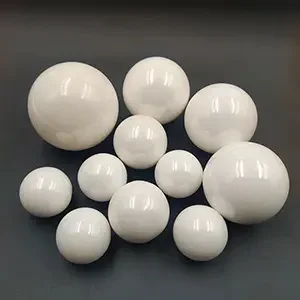
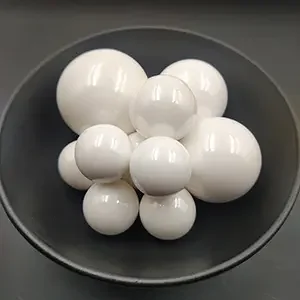
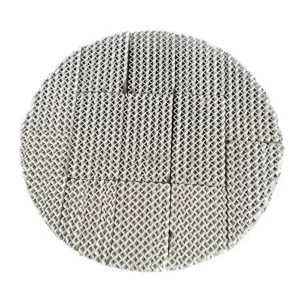
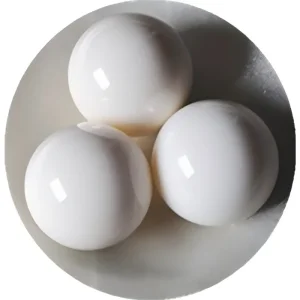
Explore our complementary product lines, including ultra-wear-resistant zirconia grinding beads, alumina balls, ceramic structured packings, and precision bearing components.
From custom Si/Al ratio synthesis to tailored bead sizes for complex industrial dryers, our engineering team delivers factory-direct reliability, comprehensive batch analysis reports, and responsive global logistics support.