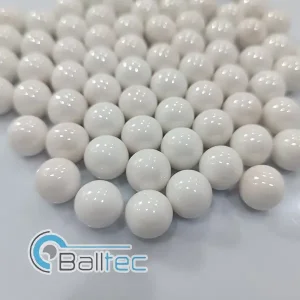
High-Quality Zirconia Ball for Grinding Stable Dispersion and Particle Size Reduction Suppliers, Exporter
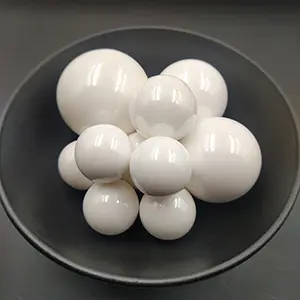
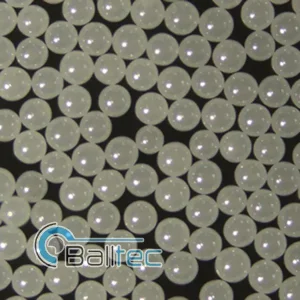
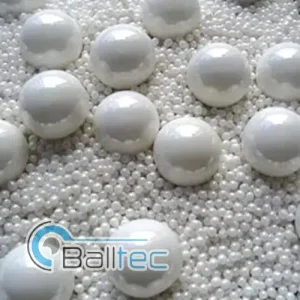
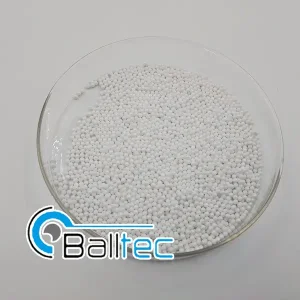
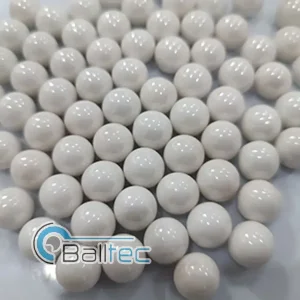
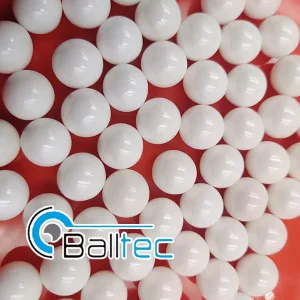
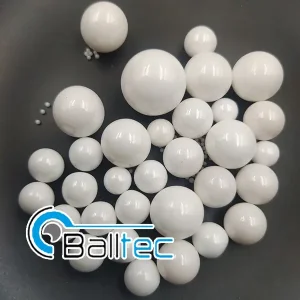
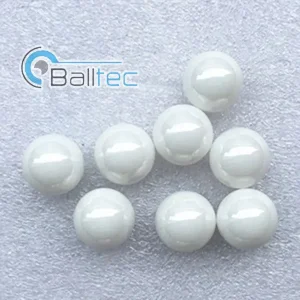
Yttria-stabilized zirconia balls are high-precision grinding media specially developed for material dispersion and particle size refinement. Adopting advanced isostatic pressing and high-temperature sintering technology, these beads feature a dense and uniform internal crystal structure, ultra-high hardness and excellent mechanical toughness. Different from ordinary alumina and glass grinding media, they deliver stable grinding force during high-speed milling, effectively break material agglomeration, achieve uniform particle size reduction, and avoid uneven fineness and material over-grinding. They ensure stable and consistent dispersion effects, ideal for high-standard fine material processing in modern industrial production.
Yttria-stabilized zirconia balls are high-precision grinding media specially developed for material dispersion and particle size refinement. Adopting advanced isostatic pressing and high-temperature sintering technology, these beads feature a dense and uniform internal crystal structure, ultra-high hardness and excellent mechanical toughness. Different from ordinary alumina and glass grinding media, they deliver stable grinding force during high-speed milling, effectively break material agglomeration, achieve uniform particle size reduction, and avoid uneven fineness and material over-grinding. They ensure stable and consistent dispersion effects, ideal for high-standard fine material processing in modern industrial production.
Core Technical Parameters
Item
Specification
Material Composition
95% ZrO₂ + 5% Y₂O₃ Stabilized
Volume Density
6.0–6.15 g/cm³
Vickers Hardness
1250–1350 HV
Sphericity
≥98%
Available Sizes
0.2mm–10mm
Advantages for Dispersion and Particle Refinement
These zirconia balls excel in stable dispersion and precise particle size reduction. Their high density provides powerful and uniform impact and shear force, which fully disperses aggregated powder particles without damaging complete material structures. Featuring ultra-low self-wear and crack resistance, they will not produce impurity powder during long-term operation, preventing secondary pollution to raw materials. Excellent chemical inertness adapts to acidic, alkaline and neutral slurries, maintaining stable grinding performance and ensuring narrow particle size distribution of finished products.
Industrial Application Scope
Tailored for dispersion and particle size reduction requirements, the zirconia grinding media is widely used in high-precision processing industries. It is perfectly suitable for ultra-fine grinding and uniform dispersion of coating pigments, ceramic powders, new energy electrode materials, chemical fillers and mineral micro-powders. Compatible with planetary ball mills and horizontal sand mills, it stably supports laboratory research and large-scale continuous industrial production.
Frequently Asked Questions
Q1: How do zirconia balls ensure stable particle size reduction?
High sphericity and uniform density provide consistent grinding force, avoiding local over-grinding or incomplete crushing to achieve uniform particle refinement.
Q2: Can these beads improve material dispersion effect?
Yes. Strong shear force effectively disperses agglomerated particles, while stable physical properties maintain long-term consistent dispersion results.
Q3: Are they suitable for long-cycle continuous milling?
Absolutely. High toughness and wear resistance prevent bead breakage and abrasion, adapting to uninterrupted industrial milling work.
Q4: What are the primary industrial applications for this grinding media?
They are widely used for ultra-fine grinding and uniform dispersion of coating pigments, ceramic powders, new energy electrode materials, chemical fillers, and mineral micro-powders.
Q5: What equipment is compatible with these zirconia beads?
They are fully compatible with planetary ball mills and horizontal sand mills, stably supporting both laboratory research and continuous industrial production.
Q6: What material composition and density specs do these balls have?
They consist of 95% ZrO₂ + 5% Y₂O₃ Stabilized with a volume density of 6.0–6.15 g/cm³ and a Vickers hardness of 1250–1350 HV.