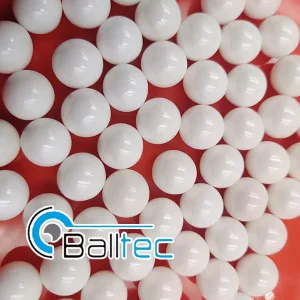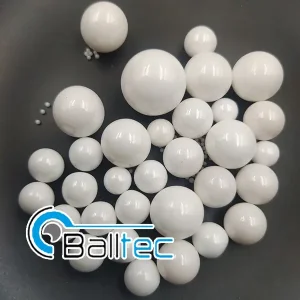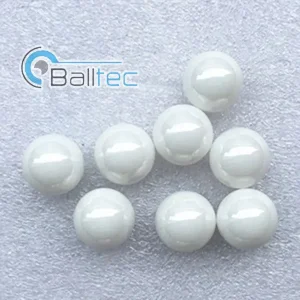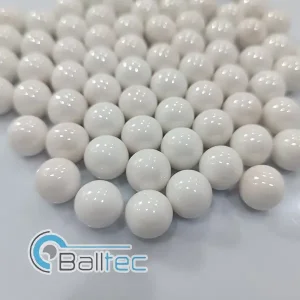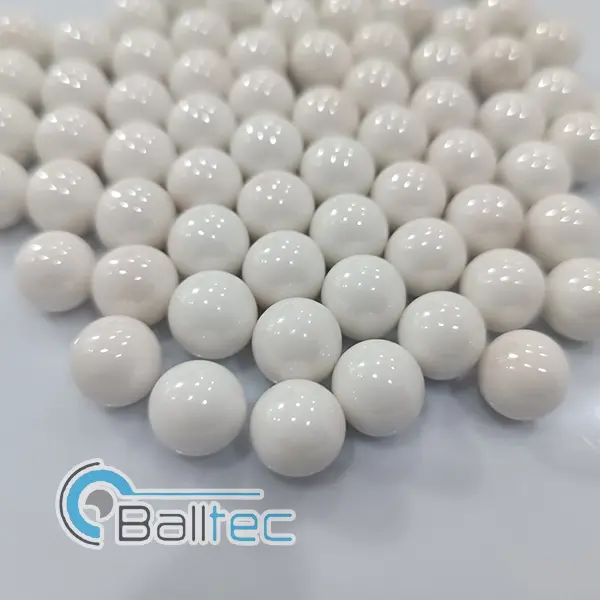
Wholesale Industrial Ceramic ZrO2 Zirconia Ceramic Ball & Zirconium Silicate Beads Grinding Media Factory, Exporters

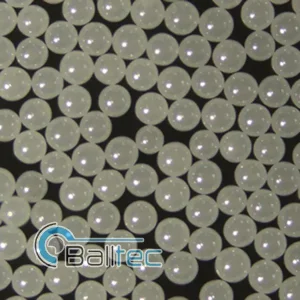
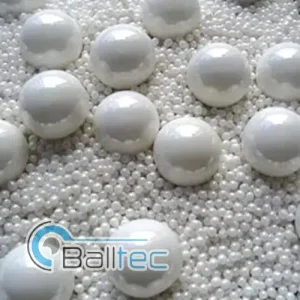
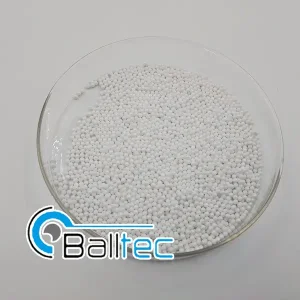
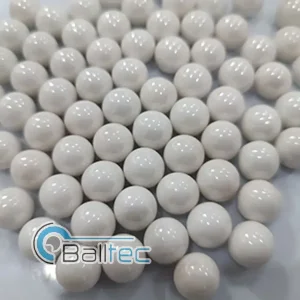
Zirconia beads are predominantly composed of zirconia, with specific types varying by composition—including yttria-stabilized zirconia beads, ceria-stabilized zirconia beads, and composite zirconia beads.

Product Description

Zirconia beads are predominantly composed of zirconia, with specific types varying by composition—including yttria-stabilized zirconia beads, ceria-stabilized zirconia beads, and composite zirconia beads.
Yttria-Stabilized Zirconia Beads
The full name of which is yttria-stabilized zirconia grinding beads, have the highest zirconia content among all zirconia bead types and are also the most commonly used. With a zirconia content of 95% stabilized by 5% yttrium oxide, these beads boast excellent hardness and toughness along with low wear rates, making them ideal for fine grinding applications. Current manufacturing technology enables the production of such beads with a diameter of 0.05 mm via electrolyte titration molding (refer to Sainuo yttria-stabilized zirconia beads). Zirconia beads with a 0.05 mm particle size are suitable for nanoscale grinding processes.
Ceria-Stabilized Zirconia Beads
Or cerium oxide-stabilized zirconia grinding beads, contain 80% zirconia and 20% cerium oxide, and are available in yellow, brown, and black colors. Featuring a relatively high specific gravity, these beads generate substantial kinetic energy during grinding, delivering significant advantages in processing high-viscosity materials. They are also compatible with high-shear sand mills.
Composite Zirconia Beads
Are manufactured by rolling a mixture of alumina and zirconia powders into spherical shapes followed by high-temperature calcination. Their composition includes 75% zirconia, 20% alumina, and 5% other additives. Thanks to their zirconia component, composite zirconia beads exhibit considerably lower wear rates compared to pure alumina beads, resulting in superior overall performance.
Zirconium Silicate Beads
Consist of 64% zirconia and 33% silica, with moderate density and hardness. They are suitable for grinding medium to low-viscosity materials.

Product Specifications

Property Yttria-Stabilized ZrO2 Ceramic Balls (95% ZrO2) Ceria-Stabilized ZrO2 Ceramic Balls (80% ZrO2) Zirconium Silicate Beads
ZrO2 Content 95% 80% 64%
Stabilizer 5% Y2O3 20% CeO2 SiO2 (33%)
Mohs Hardness 9.0 8.8 7.5-8.0
Density (g/cm³) 6.0-6.1 5.6-5.8 3.8-4.0
Vickers Hardness (HV) 1200-1400 1000-1200 600-800
Wear Rate (mg/kg) ≤0.03 ≤0.08 ≤0.5
Operating Temp Range (℃) -50 to 800 -50 to 700 -50 to 600
Particle Size Range (mm) 0.05-20.0 0.1-20.0 0.1-30.0
Color White Yellow/Brown/Black White/Gray

Frequently Asked Questions (FAQ)

1. What is the composition of Yttria-Stabilized Zirconia Beads?
Yttria-stabilized zirconia beads contain 95% zirconia stabilized by 5% yttrium oxide (Y2O3). They offer the highest zirconia content among all types, resulting in high hardness, high toughness, and low wear rates.
2. Which zirconia beads are best for high-viscosity materials?
Ceria-stabilized zirconia beads (containing 80% ZrO2 and 20% CeO2) are ideal for high-viscosity materials due to their high specific gravity, which generates significant kinetic energy during grinding.
3. What size range is available for nanoscale grinding applications?
Yttria-stabilized zirconia beads can be produced down to a particle size of 0.05 mm using electrolyte titration molding, making them suitable for nanoscale fine grinding processes.
4. How do Composite Zirconia Beads compare to pure alumina beads?
Composite zirconia beads (composed of 75% zirconia, 20% alumina, and 5% additives) exhibit significantly lower wear rates and superior overall performance compared to pure alumina grinding beads.
5. What are the key features of Zirconium Silicate Beads?
Zirconium silicate beads consist of 64% zirconia and 33% silica, offering moderate density (3.8-4.0 g/cm³) and Mohs hardness (7.5-8.0), making them suitable for medium to low-viscosity grinding.
6. What operating temperature ranges do these beads support?
Yttria-stabilized beads handle -50 to 800 ℃, Ceria-stabilized beads handle -50 to 700 ℃, and Zirconium Silicate beads handle -50 to 600 ℃ operating temperatures.

Related Products