Follow 


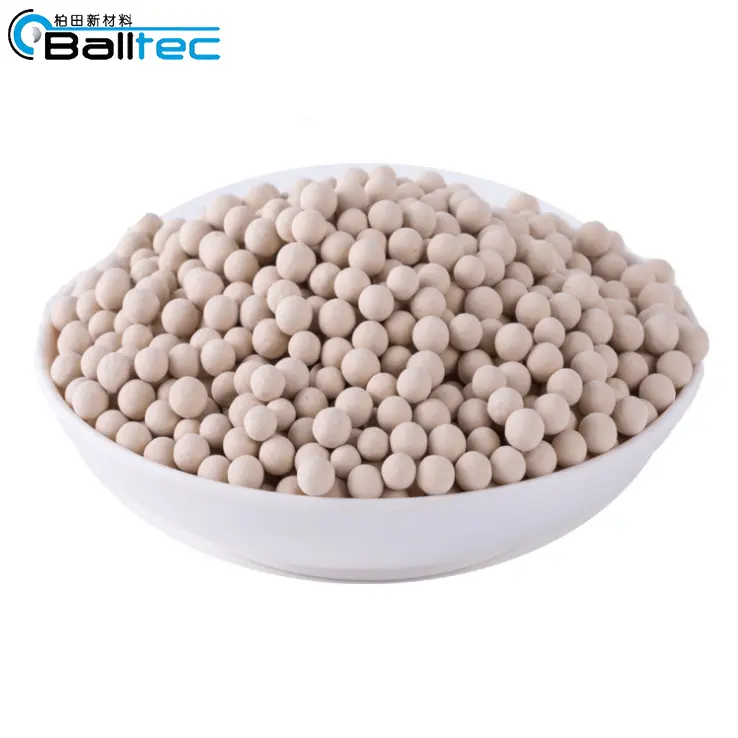
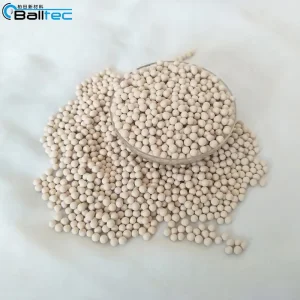
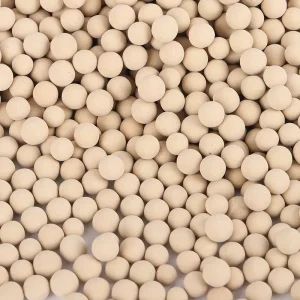
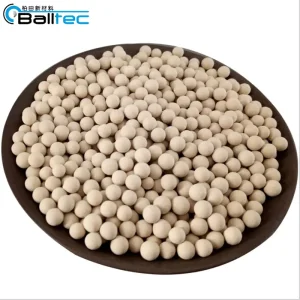
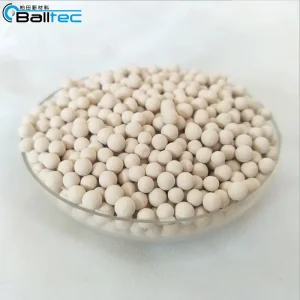
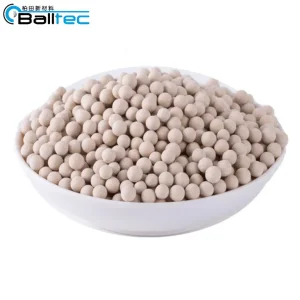
The main component of silica gel is SiO2. The components of molecular sieves can be SiO2, SiO2-Al2O3, SiO2-B2O3, or SiO2- other metal oxides. Molecular sieves are used to separate molecules of different molecular weights. Silica gel generally separates acidic compounds. The difference in acidity between the two is also significant. 4a molecular sieves have a drying effect and are also known as desiccants. Their structure is like a sponge, with numerous tiny holes arranged densely inside, interconnected and crisscrossing.
Molecules are small particles that make up substances and are invisible to the human eye. Although the shapes and sizes of various substances are different, it is extremely difficult to distinguish them from each other. However, 4a molecular sieve desiccant can handle this task. After calculation, the inner surface area of the holes on each gram of molecular sieve can reach more than 800 square meters. When different substances pass through the molecular sieve, only a portion of the smaller-volume molecules can flow freely, while other molecules either linger outside or are adsorbed in the holes and cannot escape, thereby achieving the purpose of screening molecules. This is also the origin of the name "molecular sieve".
Silica gel desiccant can reduce the moisture content in the air to about 0.4 grams per cubic meter. While using molecular sieve desiccant, the moisture content in the air can be reduced to below 0.01 grams per cubic meter. It can be seen that molecular sieves can make the environmental air drier. In addition, the adsorption capacity of molecular sieve desiccant is not greatly affected by relative humidity. Even at a relative humidity of 10%, it still has a high adsorption capacity.
| Parameter | Technical Index | Test Method |
|---|---|---|
| Pore Size | 4 Å (±0.2 Å) | Nitrogen Adsorption Method |
| Shape | Extruded (1.6mm/3.2mm pellets) or Spherical (2–5mm beads) | Visual Inspection |
| Specific Surface Area | 700–800 m²/g | BET Method |
| Water Adsorption Capacity (25°C, 100% RH) | ≥28 wt% | Gravimetric Method |
| Water Adsorption Capacity (25°C, 10% RH) | ≥18 wt% | Gravimetric Method |
| Crush Strength | Extruded: ≥80 N/cm; Spherical: ≥150 N/bead | Compression Test |
| Attrition Loss | ≤0.2 wt% | Abrasion Test |
| Max Operating Temperature | 300°C (adsorption); 600°C (regeneration) | Thermal Stability Test |
| SiO₂/Al₂O₃ Molar Ratio | 2.0–2.5 | XRF Spectroscopy |
| Moisture Content (as Delivered) | ≤1.0 wt% | Karl Fischer Titration |