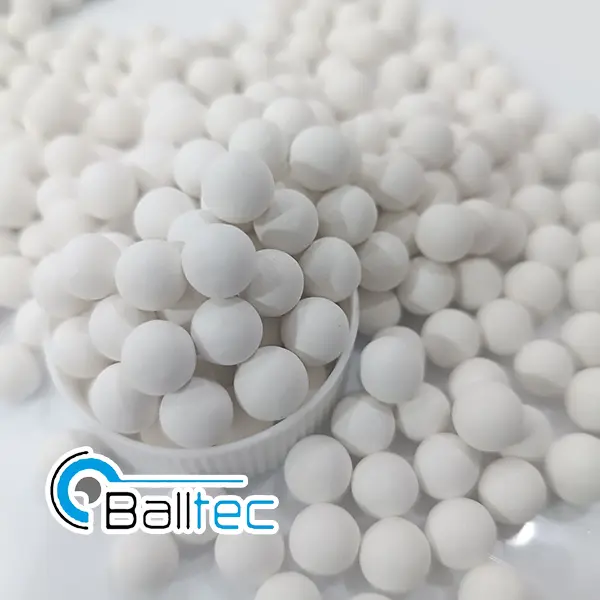
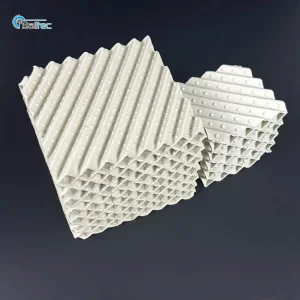
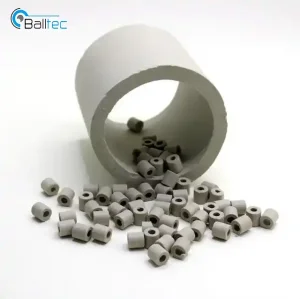
There is a wide variety of alumina balls, and different types are applicable to distinct scenarios. For instance, activated alumina balls can serve as desiccants, while inert alumina balls are used as bedding and filling materials in hydrocracking refining equipment and catalytic reforming equipment. The Media Department of Moku Network will elaborate on alumina packing balls, a type of alumina ball.
There is a wide variety of alumina balls, and different types are applicable to distinct scenarios. For instance, activated alumina balls can serve as desiccants, while inert alumina balls are used as bedding and filling materials in hydrocracking refining equipment and catalytic reforming equipment. Below is a detailed introduction to alumina packing balls, a specialized type of inert alumina ball.
What are Alumina Packing Balls?
Alumina packing balls, also known as inert alumina ceramic balls, owe their "inertness" to weak chemical reactivity and a lack of catalytic properties. Featuring an extremely dense texture, alumina packing balls have low water absorption and cannot act as desiccants like activated alumina balls. They are widely used across the petroleum, chemical, chemical fertilizer, natural gas, and environmental protection industries as catalyst covering and supporting materials in reactors and tower packings.
Manufacturing Process & Core Functions
Ultra-fine crystalline calcined alumina micropowder serves as the primary raw material for alumina packing balls. The advanced manufacturing workflow ensures exceptional structural integrity and physical stability:
1. Fully Automatic Production
Raw materials are thoroughly blended using automatic mixing equipment and shaped into precise spherical forms via high-precision ball forming machinery.
2. High-Temperature Sintering
The formed spheres undergo intense calcination at 1600℃ in a high-temperature tunnel kiln to achieve complete vitrification and high mechanical strength.
3. Protection & Distribution
Designed to increase the distribution points of liquids or gases while supporting and protecting underlying active catalysts with low mechanical strength.
Alumina packing balls feature high resistance to extreme temperatures, high operating pressures, and severe corrosion caused by acids, alkalis, and organic solvents, demonstrating outstanding long-term chemical and thermal stability.
20kg/50kg bags; 100kg/200kg fiber drums with moisture-proof lining
Prevents moisture contamination and transport damage
Frequently Asked Questions (FAQ)
What makes alumina packing balls chemically "inert"?
They are called inert because of their weak chemical reactivity and complete lack of catalytic properties. They do not react with surrounding chemical media or catalysts inside the reactor.
Can inert alumina packing balls be used as desiccants?
No. Unlike activated alumina balls, inert alumina packing balls have an extremely dense texture and very low water absorption (≤ 0.5%-3.0%), meaning they lack drying and desiccant capabilities.
What are the main functions of alumina packing balls in a reactor?
Their primary role is to act as covering and supporting materials for catalysts. They help increase gas or liquid distribution points while protecting active catalysts with low mechanical strength from damage.
Which industries primarily utilize inert alumina packing ceramic balls?
They are extensively used in petroleum, chemical processing, chemical fertilizer production, natural gas handling, and environmental protection applications.
What is the maximum operating temperature for these packing balls?
The operating temperature ranges up to 1000℃ - 1600℃ depending on the alumina content. Products with higher alumina purity offer greater high-temperature resistance.
What sizes and alumina content levels are available?
Alumina content ranges from 30% to 99% (common specs: 30%, 60%, 75%, 90%, 95%, 99%). Sizes range from 1mm to 100mm, with 5mm, 10mm, 15mm, and 20mm being the most common.