Wholesale High Performance and Low Pressure Drop Ceramic Corrugated Plate Packing Supplier, Factories

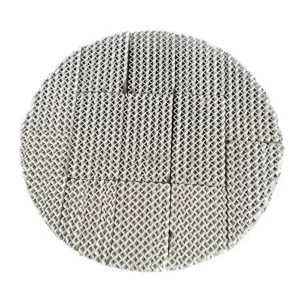
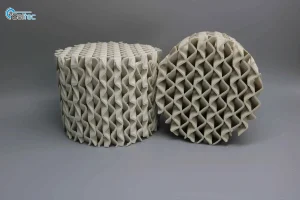
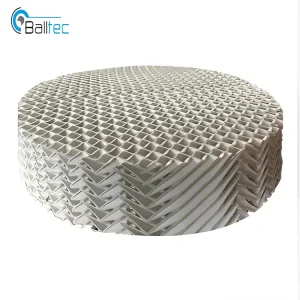
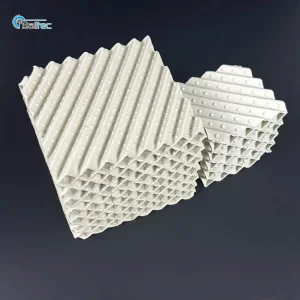
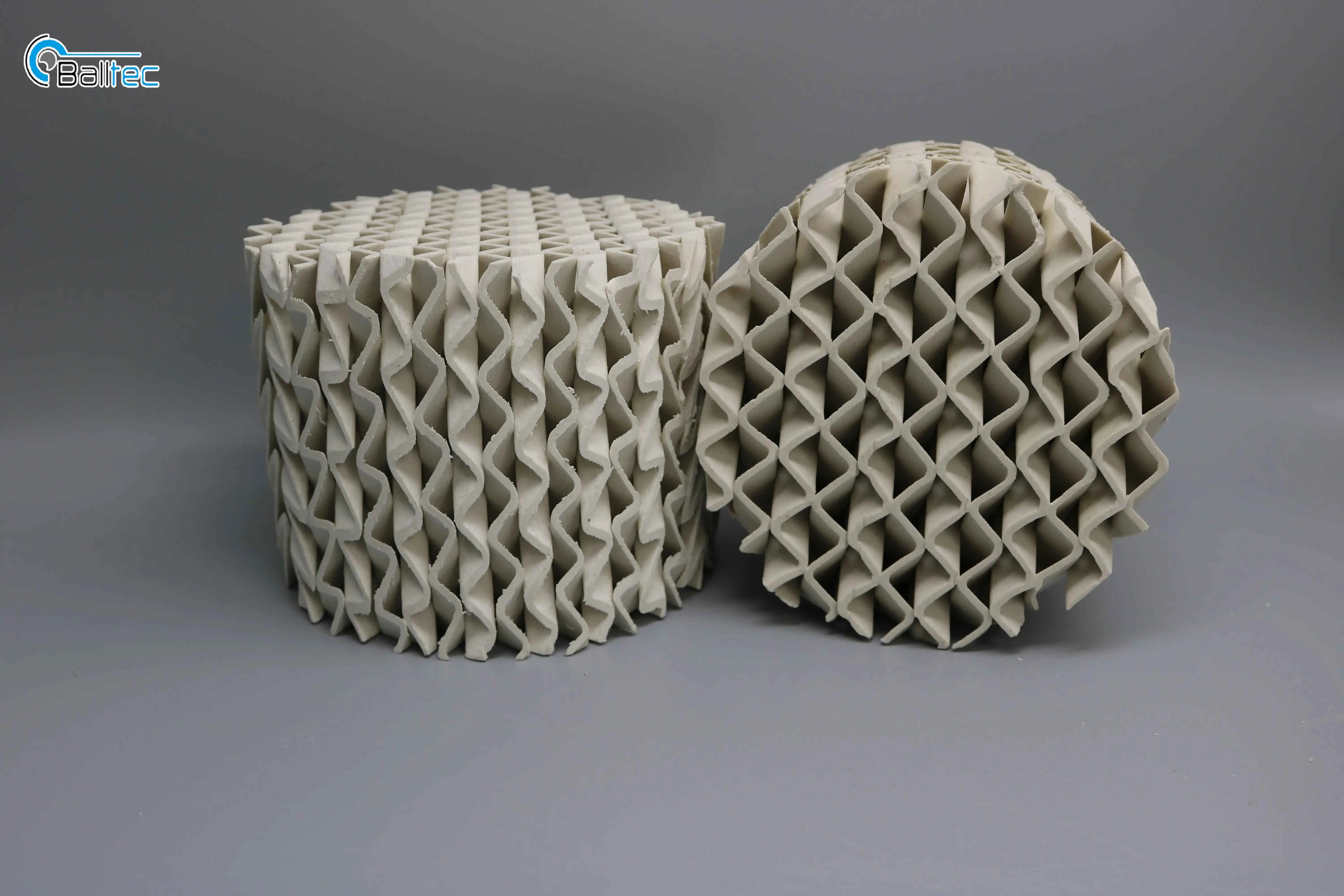
Ceramic corrugated packing is a new type of structured packing composed of many identical geometric packing units. Thanks to the unique structure of ceramic, it has excellent hydrophilic properties, which allows the formation of an extremely thin liquid film on its surface. The turbulent flow of the liquid film and the inclined and tortuous gas flow channels not only promote gas flow without obstructing it, enabling the ceramic packing to be comparable to metal packing, but also possess corrosion and high-temperature resistance properties that metal packing cannot match. 

Product Description

Product Overview

Ceramic corrugated packing is a new type of structured packing composed of many identical geometric packing units. Thanks to the unique structure of ceramic, it has excellent hydrophilic properties, which allows the formation of an extremely thin liquid film on its surface. The turbulent flow of the liquid film and the inclined and tortuous gas flow channels not only promote gas flow without obstructing it, enabling the ceramic packing to be comparable to metal packing, but also possess corrosion and high-temperature resistance properties that metal packing cannot match.

The surface structure has good wettability, which can accelerate liquid flow and minimize the liquid hold-up of the packing, thereby reducing the risks of overheating, polymerization, and coking. Ceramic corrugated packing consists of many similarly designed corrugated plates. When these corrugated plates are placed in parallel within a cylindrical tower, they are referred to as corrugated tower packing. This is a highly efficient packing, with a separation efficiency several times that of packed columns with the same void fraction. Compared with random tower packing, it offers lower pressure drop, larger operating flexibility, minimal scale-up effect, and maximum liquid handling capacity.

Main Features

High Wettability & Hydrophilic
Forms an extremely thin liquid film on the surface, accelerating flow and minimizing liquid hold-up to reduce overheating, polymerization, and coking risks.
High Separation Efficiency
Features a high and uniform void fraction and a large specific surface area, delivering separation efficiency several times higher than traditional random packing.
Particulate Interception
Effectively intercepts dust, fine particle impurities, heavy metals, and other solid particulate impurities from feedstock gas-liquid mixtures.

Application Scope

Currently, Ceramic Orifice Corrugated Packing is widely used across various industrial fields:

Oil Refining
Petrochemical Industry
Fine Chemical Industry
Natural Gas Processing
Environmental Protection
Chlor-Alkali Chemical Industry

Product Parameters

Parameter Name Specification Remarks
Material Cordierite, Mullite, Silicon Carbide, Aluminum Titanate Customizable according to working conditions
Corrugation Angle 30°, 45°, 60° Optimized for low pressure drop and high efficiency
Void Fraction 70%-90% Uniform distribution, low flow resistance
Specific Surface Area 100-500 m²/m³ Adjustable based on corrugation size
Operating Temperature Range -50℃ to 1200℃ Depends on material type
Pressure Drop 0.1-0.5 kPa/m Under normal operating conditions
Separation Efficiency 2-5 theoretical plates per meter Higher than traditional random packing
Plate Thickness 0.3-1.0 mm Ensures strength and light weight
Tower Diameter Adaptation 50 mm-10000 mm Suitable for both laboratory and industrial towers
Corrosion Resistance Resistant to strong acid, strong alkali, and organic solvents Except for hydrofluoric acid (HF)

Frequently Asked Questions (FAQ)

What is Ceramic Corrugated Packing?
It is a structured tower packing composed of parallel geometric corrugated ceramic plates. It features excellent hydrophilicity, creating an extremely thin liquid film for high-efficiency mass transfer in tower columns.
How does ceramic corrugated packing compare to metal structured packing?
While ceramic corrugated packing matches metal packing in high gas-flow capability, it provides superior high-temperature and corrosion resistance that metal materials cannot equal.
What temperature range can ceramic corrugated packing handle?
Depending on the specific material chosen (Cordierite, Mullite, Silicon Carbide, or Aluminum Titanate), it operates reliably across a wide temperature range from -50℃ to 1200℃.
Is ceramic corrugated packing resistant to corrosive chemicals?
Yes, ceramic corrugated packing is resistant to almost all strong acids, strong alkalis, and organic solvents, with the sole exception of hydrofluoric acid (HF).
Why does ceramic corrugated packing reduce coking and overheating risks?
Its superior surface wettability accelerates liquid flow and minimizes liquid hold-up inside the tower, preventing localized stagnation that leads to polymerization, overheating, and coking.

Related Products