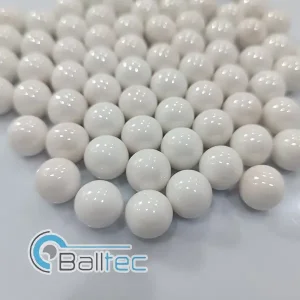
High-Quality Zirconia Bead for Grinding Ultra Fine Particle Grinding and Polishing Manufacturers, Exporters
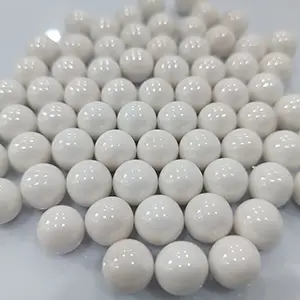
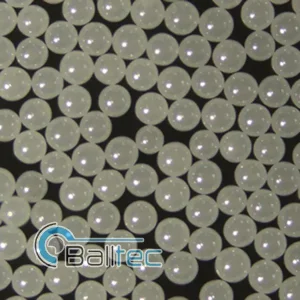
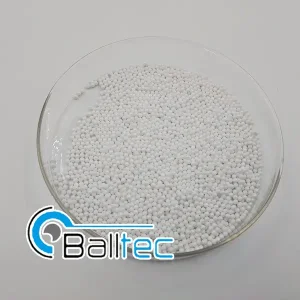
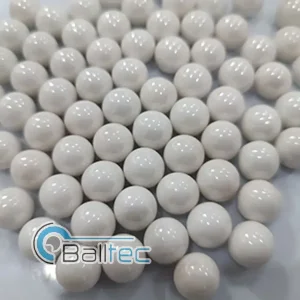
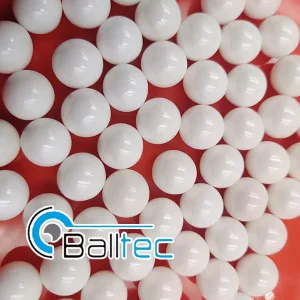
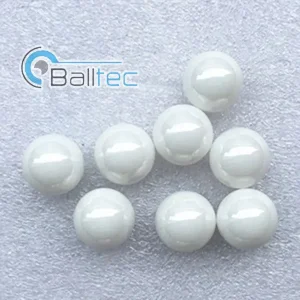
High-purity yttrium-stabilized zirconia beads are professional ceramic grinding and polishing media tailored for ultra-fine particle processing. Produced through isostatic pressing and high-temperature sintering, the beads feature high sphericity, dense uniform structure and excellent toughness. Different from ordinary grinding media, they deliver soft, uniform shear and friction force without causing over-grinding or material damage. They are highly suitable for ultra-fine pulverization, precise dispersion and surface polishing, enabling materials to achieve ultra-fine particle size, narrow particle distribution and smooth surface finish, which perfectly meets high-standard fine processing requirements for modern industrial materials.
High-purity yttrium-stabilized zirconia beads are professional ceramic grinding and polishing media tailored for ultra-fine particle processing. Produced through isostatic pressing and high-temperature sintering, the beads feature high sphericity, dense uniform structure and excellent toughness. Different from ordinary grinding media, they deliver soft, uniform shear and friction force without causing over-grinding or material damage. They are highly suitable for ultra-fine pulverization, precise dispersion and surface polishing, enabling materials to achieve ultra-fine particle size, narrow particle distribution and smooth surface finish, which perfectly meets high-standard fine processing requirements for modern industrial materials.
Technical Parameters
Item
Specification
Material
95% Yttrium-stabilized Zirconia
Vickers Hardness
1250–1350 HV
Bulk Density
6.0–6.15 g/cm³
Sphericity
≥98%
Available Sizes
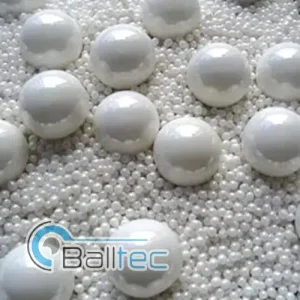
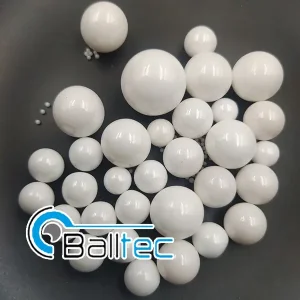
0.2mm–8mm
Core Advantages for Ultra-Fine Processing
These zirconia beads have unique advantages in ultra-fine grinding and precision polishing. High roundness ensures even force distribution on material surfaces, effectively eliminating particle agglomeration and achieving uniform nano and micron-level fineness. Ultra-low self-wear avoids impurity contamination, ensuring high purity of finished materials. Superior mechanical toughness prevents bead breakage and powder shedding during long-term fine grinding, providing stable and consistent polishing and grinding effects. It greatly improves product surface smoothness while enhancing production efficiency and finished product qualification rate.
Main Application Fields
Designed for ultra-fine particle grinding and surface polishing, the beads are widely used in high-precision industrial industries. They are ideal for nano-coatings, ink and pigment fine dispersion, electronic ceramic powder, new energy battery materials, cosmetic raw materials and optical material polishing. Compatible with sand mills, ball mills and rotary polishing equipment, it supports both laboratory ultra-fine test processing and large-scale industrial mass production.
Frequently Asked Questions
Q1: Why are zirconia beads ideal for ultra-fine grinding?
A: High sphericity and uniform grinding force avoid over-grinding, effectively refine particles to ultra-fine grade and maintain narrow particle size distribution.
Q2: Can these beads achieve high-precision surface polishing?
A: Yes. The smooth and tough bead surface provides soft and uniform friction, effectively removing burrs and uneven textures to obtain a high-gloss smooth surface.
Q3: Will the beads pollute fine materials?
A: No. Ultra-low wear performance ensures no debris shedding, maintaining high purity of ultra-fine finished products.
Q4: What equipment is compatible with these zirconia beads?
A: They are compatible with sand mills, ball mills, and rotary polishing equipment, supporting both laboratory testing and industrial mass production.
Q5: What sizes are available for ultra-fine processing?
A: The beads are available in precise specifications ranging from 0.2mm to 8mm to meet various grinding and polishing requirements.
Q6: What manufacturing process ensures their high density and durability?
A: They are produced through advanced isostatic pressing and high-temperature sintering, resulting in a dense, uniform structure with superior mechanical toughness.