Follow 


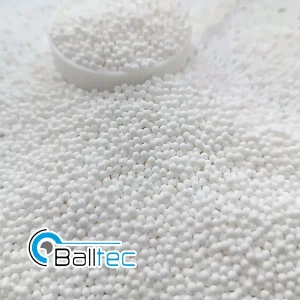
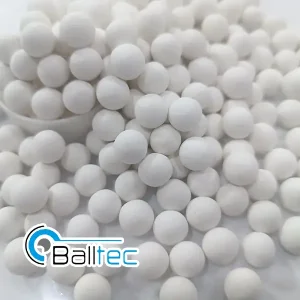
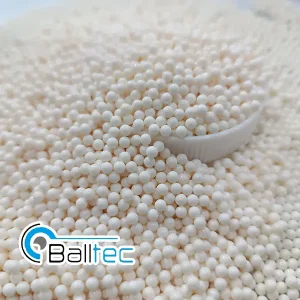
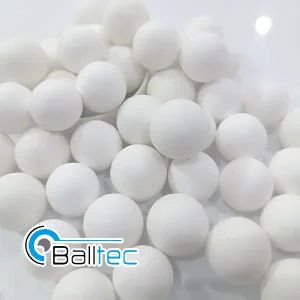
The performance of alumina grinding balls is determined by their alumina content (purity). Different purity levels correspond to different application scenarios, and their suitability for ultra-fine grinding is classified accordingly.
92% Al₂O₃ and above (95% & 99% grades): Fully suitable for ultra-fine grinding. Features extremely high hardness (Mohs hardness ≥ 9) and an ultra-low wear rate, ensuring zero contamination to ground materials. Grinds materials down to micron (1–10 μm) or submicron levels. Commonly used in ceramic glazes and lithium battery cathode/anode materials.
75%–90% Al₂O₃: Partially suitable for relatively coarse ultra-fine grinding. Hardness and wear resistance are slightly inferior to high-purity options, and trace impurities may be generated during long-term grinding. Suitable for materials with less demanding purity requirements like pigments and cement (typical target fineness: 10–50 μm).
The particle size of the grinding balls must match the initial particle size of the material. For ultra-fine grinding, small-diameter balls (e.g., Φ1–5 mm) should be selected to increase contact area and improve grinding efficiency. Using oversized balls will lower efficiency and may damage material structures.
| Item | Specification |
|---|---|
| Main Component (Al₂O₃ Content) | 90%, 92%, 95%, 99% |
| Mohs Hardness | ≥ 8.5 (92%-99% purity: ≥ 9) |
| Density | 3.6-3.9 g/cm³ (varies with purity) |
| Bulk Density | 2.0-2.3 g/cm³ |
| Wear Rate | ≤ 0.03% (95% purity, tested by standard method) |
| Particle Size Range | Φ0.1mm - Φ20mm (customizable) |
| Particle Size Tolerance | ±0.05mm (for micro beads ≤ Φ5mm); ±0.1mm (for beads > Φ5mm) |
| Compressive Strength | ≥ 1500 N (Φ5mm beads) |
| Chemical Stability | Resistant to acids, alkalis, and organic solvents (except strong hydrofluoric acid) |
| Operating Temperature | ≤ 800℃ |
| Packaging | 100kg metal drum, 500kg/800kg ton bag (customizable) |
The performance of alumina grinding balls is primarily determined by their alumina content (purity). Higher purity levels offer greater hardness and wear resistance suitable for ultra-fine grinding.
High-purity alumina balls (92% Al₂O₃ and above, especially 95% and 99%) are fully suitable for ultra-fine grinding, achieving fineness down to the micron or submicron level without contaminating materials.
The grinding ball diameter must match the initial material particle size. For ultra-fine grinding, smaller balls (such as Φ1–5 mm) should be selected to increase contact area and grinding efficiency.
The recommended maximum operating temperature for alumina grinding balls is ≤ 800℃.
Yes, they possess excellent chemical stability and are resistant to acids, alkalis, and organic solvents, except for strong hydrofluoric acid.
Standard packaging includes 100kg metal drums and 500kg/800kg ton bags, with custom packaging options available upon request.