Follow 


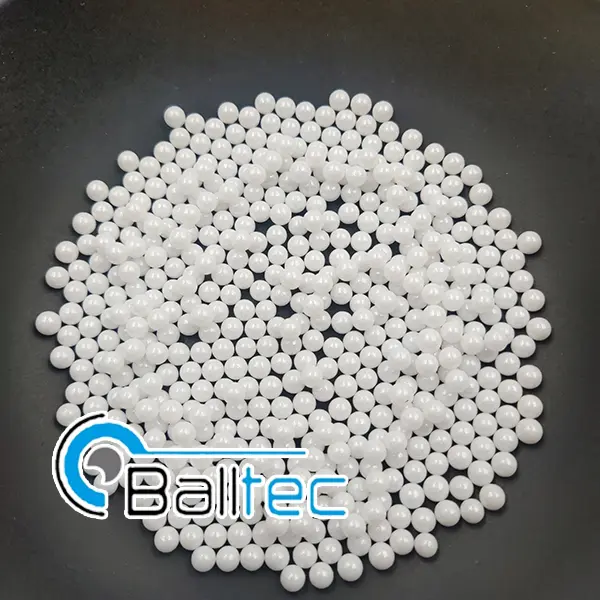
| Parameter | Specification |
|---|---|
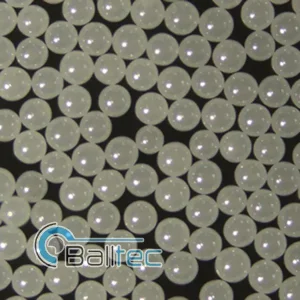
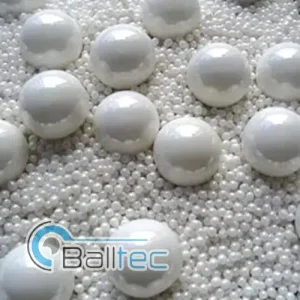
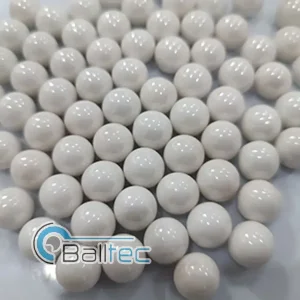
| Material | Yttrium-stabilized ZrO2 (ZrO2≥94.6%, Y2O3=5.4%) |
| Density | ≥6.0 g/cm³ |
| Mohs Hardness | 8.5 |
| Wear Rate | <50 ppm/h |
| Particle Size Range | 0.1-5.0 mm |
| pH Resistance | 1-14 |
Used for grinding lithium battery positive and negative materials, ensuring low impurity contamination and uniform particle size.
Perfectly suited for the ultra-fine grinding of MLCC ceramic powder and sapphire powder.
Excellence in pigment, paint, and pharmaceutical intermediate grinding, adapting seamlessly to high-speed sand mills.
Wear rate is far lower than traditional ceramic beads, extending service life and reducing operational costs.
High density provides strong kinetic energy for high-speed grinding, shortening processing time by 30%-50%.
Resists acid and alkali corrosion with no harmful dissolution, fully ensuring process material purity.
Yes, they are specifically designed for high-speed grinding, with high toughness and impact resistance to adapt to the high-speed operation of sand mills without breaking.
Under normal high-speed grinding conditions, their service life is 2-10 times that of ordinary ceramic beads, depending on the grinding material and working speed.
Yes, food-grade and pharmaceutical-grade options are available, complying with relevant safety standards with no harmful impurities or dissolution.
They are extensively utilized in new energy battery manufacturing, electronic MLCC ceramics, sapphire powder, high-grade pigments, paints, and pharmaceutical processing.
Their high density (≥6.0 g/cm³) provides exceptional kinetic energy during high-speed rotation, which optimizes grinding efficiency and reduces processing time by 30%-50%.
The beads feature yttrium-stabilized zirconia with a broad pH resistance range of 1-14, ensuring complete stability against strong acid and alkali environments without material contamination.