How to Choose the Best Alumina Grinding Media?

Time:2026-10-17 Author:Isabella
0%

Choosing the best Alumina Grinding Media is not a matter of selecting the highest alumina percentage. Real performance depends on the entire milling environment. Particle size, hardness, density, wear resistance, and chemical compatibility all influence the final result. A media ball that performs well in ceramic slurry may behave differently in minerals, coatings, or advanced materials.

Ceramic materials authority W. David Kingery emphasized, “The properties of a ceramic are determined by its processing history.” That principle remains highly relevant here. Manufacturing temperature, forming pressure, sintering quality, and polishing can change how grinding media performs inside a mill. Small defects matter. A rough surface can increase contamination. Poor roundness can create uneven impact and faster wear.

Look beyond the catalogue.

An experienced buyer should examine bulk density, true density, crushing strength, and documented wear data. Ask how the supplier measures abrasion. Request test results from a comparable mill, not only laboratory claims. Check whether the media contains additives that may affect product purity. Also consider bead diameter, because smaller media improve fine grinding, while larger media provide stronger impact.

There is no universal “best” option. That assumption is convenient, but incomplete. The correct choice depends on the feed material, mill design, operating speed, slurry viscosity, and acceptable contamination level. This guide explains those decisions in practical terms. It also highlights common purchasing mistakes, including relying on price alone, ignoring replacement intervals, and confusing high hardness with total process efficiency. The final recommendation should come from verified data and controlled trials, not attractive specifications.
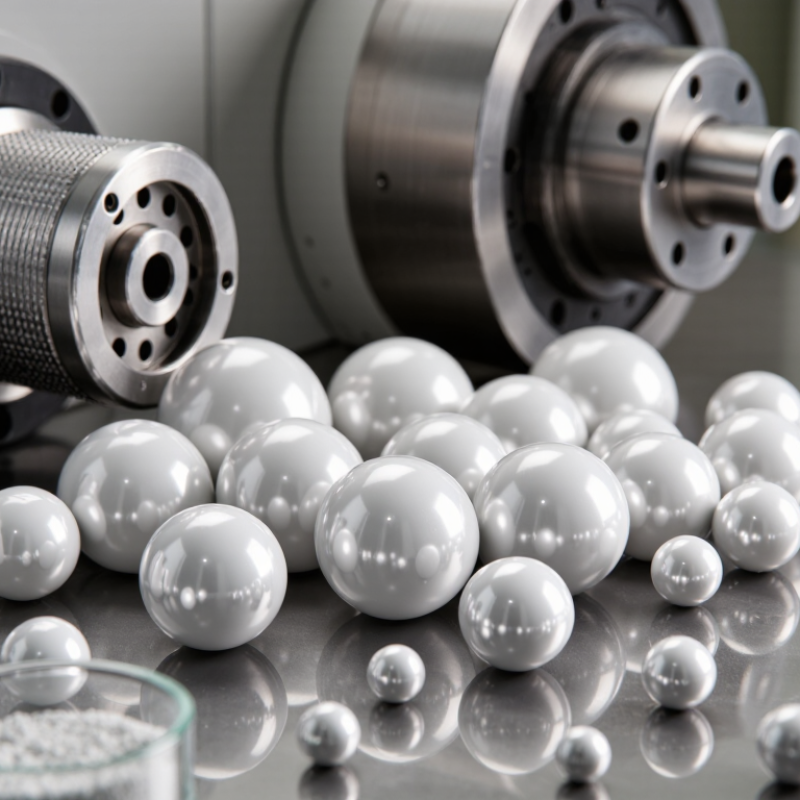
How to Choose the Best Alumina Grinding Media?

Define the Role and Key Properties of Alumina Grinding Media

How to Choose the Best Alumina Grinding Media?

Define the Role and Key Properties of Alumina Grinding Media

Alumina grinding media do more than reduce particle size. They transfer impact and abrasion energy inside a mill. Their role is to create steady, controlled contact between the media and the feed. This matters in ceramic slurries, mineral processing, and other contamination-sensitive applications. A suitable grade can shorten milling time while limiting unwanted impurities. Poorly matched media can crack, wear quickly, or leave the product too coarse. Small details matter.

Density influences grinding force, especially during high-speed or fine grinding. Higher density usually delivers stronger impact, but it can increase equipment load. Hardness helps resist wear, while toughness reduces chipping under repeated impact. These properties must work together. High hardness alone is not enough. Low porosity supports cleaner operation and reduces liquid absorption. A smooth, consistent surface also limits residue buildup. Media size controls the balance between impact and contact area. Large balls attack coarse particles; smaller ones reach finer spaces.

Selection should begin with feed hardness, target fineness, mill design, and slurry chemistry. Check alumina content, size tolerance, density, and wear rate from reliable test data. In practical trials, weigh the media before and after a fixed milling period. Inspect the slurry for visible chips and unexpected color changes. Do not rely on catalog figures alone. I have seen an apparently efficient charge perform poorly after temperature increased. That result needed review. Sometimes a mixed size range works better, but cleaning becomes more complicated. Wear measurements can reveal problems before product quality shifts.

How to Choose the Best Alumina Grinding Media?

Alumina content, density, and hardness are key factors when selecting grinding media. Higher alumina content generally provides greater density and wear resistance, making it suitable for high-energy milling and applications requiring low contamination.

Selection insight: 92% alumina media offers a practical balance of performance and cost, while 95% and 99% alumina media provide higher density, improved wear resistance, and better protection against product contamination.

Match Media Composition and Purity to Your Material

Choosing alumina grinding media starts with your material, not the mill catalog. Composition controls wear resistance, density, and possible contamination during milling. High-alumina media suits hard minerals, ceramics, and pigments requiring efficient impact. Lower-purity media may work for less demanding materials, but it can release more impurities. That difference matters.

Match purity to the cleanliness your process can prove and maintain. For white ceramics or electronic powders, trace iron or silica can alter color, conductivity, or firing behavior. Ask for a batch certificate showing alumina content, density, water absorption, and test methods. Do not rely on a purity percentage alone. Particle shape, size distribution, and surface condition also affect milling speed and product quality. In practice, dense, smooth media often lasts longer and produces fewer fines. However, “best” still depends on your feedstock and operating conditions.

Run a controlled trial with your actual feedstock, liquid, and milling time. Weigh the media before and after testing. Check slurry color, particle size, wear loss, and equipment noise. A small pilot can reveal problems that a specification sheet hides. One overlooked issue is cleaning. Media used with darker materials may require separate storage, even when its chemistry appears suitable. Record unexpected wear or slower output honestly. The first trial may still be wrong.

Select the Appropriate Size, Shape, and Density

How to Choose the Best Alumina Grinding Media?

Choosing alumina grinding media starts with the material, mill design, and target fineness. Size controls impact energy and contact frequency. Larger beads deliver stronger impact for coarse feed and tough particles. Smaller beads create more contact points for fine grinding. A mixed-size charge can bridge both stages, but it requires testing. Too many small beads may slow flow. Too many large beads may leave a rough final product.

Shape affects movement, wear, and available contact area. Spherical media usually roll smoothly and reduce dead zones in many mills. Cylindrical or irregular pieces can increase friction, although they may wear unevenly. Inspect the media after a trial run. Flat spots, sharp fragments, or unusual powder color can signal a mismatch. Small details matter. A perfect shape rarely exists for every process.

Density determines how forcefully the media moves through the slurry. Higher-density alumina can improve breakage when the feed is hard or heavily loaded. It may also increase liner and equipment stress. Lower-density media can suit softer materials and delicate formulations. Check slurry viscosity, solids content, and agitator speed together. Density alone never decides performance.

A practical selection begins with a controlled trial. Record feed size, milling time, temperature, energy use, and final particle distribution. Compare wear loss, not only the first production result. Results may change after several cycles. The convenient choice may still be wrong. Recheck it.

Evaluate Wear Resistance, Grinding Efficiency, and Contamination Risk

Choosing alumina grinding media starts with wear resistance, not price. Dense alumina commonly reaches 15–20 GPa in Vickers hardness testing, according to ASTM C1327 data ranges. Its density, often around 3.6–3.9 g/cm³, also improves impact energy inside the mill. However, hardness alone can mislead. A brittle bead may chip under high-impact conditions and create unexpected fines.

Run a controlled trial with the same slurry, speed, filling level, and grinding time.

Measure media weight before and after testing. A lower mass loss usually indicates better wear resistance. The European Commission’s Ceramics BREF identifies alumina ceramics as durable materials for abrasive processing, but real performance still depends on particle size and mill design. Small details matter. A 2–3 mm bead may improve fine grinding, while larger beads can handle coarse feed more effectively.

Grinding efficiency must be judged with product data. Track particle-size reduction, energy consumption, and residence time together. Do not rely only on a faster first result. Excessive speed can increase heat and media wear. Contamination risk deserves equal attention. Chemical-grade alumina may reduce unwanted metallic impurities, but trace elements can still enter through binders, dust, or damaged liners. ISO 3290-2 supports dimensional quality control for ceramic balls, yet it does not replace slurry testing. I would also test the final powder by ICP-OES, especially for electronic, pharmaceutical, or high-purity applications. One overlooked impurity can erase the savings from cheaper media.

Compare Operating Costs, Quality Standards, and Supplier Reliability

How to Choose the Best Alumina Grinding Media?

Operating cost begins with more than the purchase price. High-density alumina media can reduce milling time and improve energy efficiency. However, higher density may increase equipment wear in poorly adjusted mills. Track media consumption, power usage, downtime, and product contamination over several production cycles. A low-cost batch can become expensive when it breaks quickly.

Quality standards need practical verification. Request certificates showing alumina content, density, hardness, water absorption, and size tolerance. Confirm that test methods follow recognized ISO or ASTM procedures.

Inspect sample pieces for cracks, rough surfaces, and inconsistent dimensions. These details affect grinding efficiency and particle-size control. Lab results help, but they cannot fully reproduce your slurry, mill speed, or temperature.

Supplier reliability deserves equal attention. Ask for batch traceability, stable production records, clear packaging details, and realistic delivery times. A dependable supplier should explain replacement recommendations and handle quality complaints with evidence. Test a small shipment before approving a large order. It is not perfect, but it exposes hidden risks.

Some suppliers provide impressive documents yet respond slowly when problems occur. Keep written records of inspections, delivery performance, and media wear. That evidence supports better purchasing decisions and reveals whether quoted quality matches factory performance.

FAQS

What is the main role of alumina grinding media?

They transfer impact and abrasion energy inside a mill. This reduces particle size through controlled contact with the feed. Small details matter.

Which properties are most important when selecting alumina media?

Density affects impact force, while hardness improves wear resistance. Toughness helps prevent chipping during repeated impacts. Low porosity limits liquid absorption and residue buildup.

How does media size affect grinding performance?

Large balls work better with coarse particles. Smaller beads reach narrow spaces during fine grinding. A mixed size range may improve results, but cleaning becomes harder.

How can wear resistance be tested during a trial?

Weigh the media before and after a fixed milling period. Use the same slurry, speed, filling level, and grinding time. Lower mass loss usually indicates better wear resistance.

Why is hardness alone not enough?

Very hard media can still be brittle. Repeated impact may create chips and unwanted fines. High hardness is not the whole answer.

How should grinding efficiency be measured?

Track particle-size reduction, energy use, and residence time together. A faster first result may hide higher heat and wear. Check the final powder, not only the mill speed.

How can contamination risk be controlled?

Choose media with suitable alumina purity and inspect damaged surfaces. Test the slurry for chips, color changes, and trace impurities. One overlooked impurity can damage a high-purity process.

What quality information should a supplier provide?

Request alumina content, density, hardness, water absorption, and size tolerance. Confirm the testing methods are recognized and consistent. Inspect samples for cracks and rough surfaces.

How can operating cost be evaluated fairly?

Record media consumption, electricity use, downtime, and contamination across several production cycles. A cheaper batch may break quickly. Purchase price is only one part of cost.

Why should a small shipment be tested before a large order?

A small trial can reveal unstable dimensions, excessive wear, or poor delivery handling. Keep inspection and performance records. The documents may look excellent, but real performance still needs review.

Conclusion

Choosing the best Alumina Grinding Media requires more than selecting a high-alumina product. First, define its role in the grinding process and consider key properties such as hardness, chemical stability, density, and resistance to impact. The media’s composition and purity should match the material being processed to minimize unwanted contamination and maintain product quality.

Next, select a suitable size, shape, and density according to the mill design, feed size, and desired fineness. Evaluate wear resistance and grinding efficiency together, since media that lasts longer and transfers energy effectively can improve productivity and reduce maintenance. It is also important to compare total operating costs, including replacement frequency, energy use, and process downtime. Finally, review quality standards, consistency between batches, technical support, and supplier reliability. A well-matched Alumina Grinding Media solution can provide stable performance, cleaner processing, and better long-term value.


Isabella

Isabella

Isabella is a dedicated marketing professional with a sharp focus on driving brand growth and engagement through strategic content creation. With an extensive background in digital marketing, she combines her passion for storytelling with her keen understanding of industry trends to deliver......