Choosing the right Ceria Stabilized Zirconia Bead starts with the milling process, not the product label. Each application demands a different balance of density, hardness, toughness, bead size, and chemical purity. A bead that performs well in a laboratory jar mill may behave differently in a high-energy production mill. Small details matter. Slurry viscosity, circulation speed, rotor design, and temperature can change grinding efficiency.
Zirconia researcher Dr. Ronald C. Garvie introduced the memorable phrase “ceramic steel” when describing zirconia’s unusual toughness. His work reminds engineers that phase stability strongly influences ceramic performance. That principle remains relevant when comparing a Ceria Stabilized Zirconia Bead with other grinding media. Look for consistent ceria content, narrow size distribution, low porosity, and controlled roundness. Ask for technical data, wear testing, and batch traceability. Do not rely on appearance alone. A glossy bead can still produce excessive wear or contamination.
Real selection requires testing. Measure particle-size reduction, energy consumption, bead loss, and product contamination under actual operating conditions. Consider the material being processed. Hard minerals, pigments, coatings, and electronic powders may need different bead specifications. There is no perfect bead. Sometimes, the most expensive option is unnecessary. Sometimes, a cheaper bead creates hidden costs through downtime and filtration. A careful trial reveals more than a brochure. Review the results honestly, including failures, because imperfect assumptions often expose the most important selection criteria.
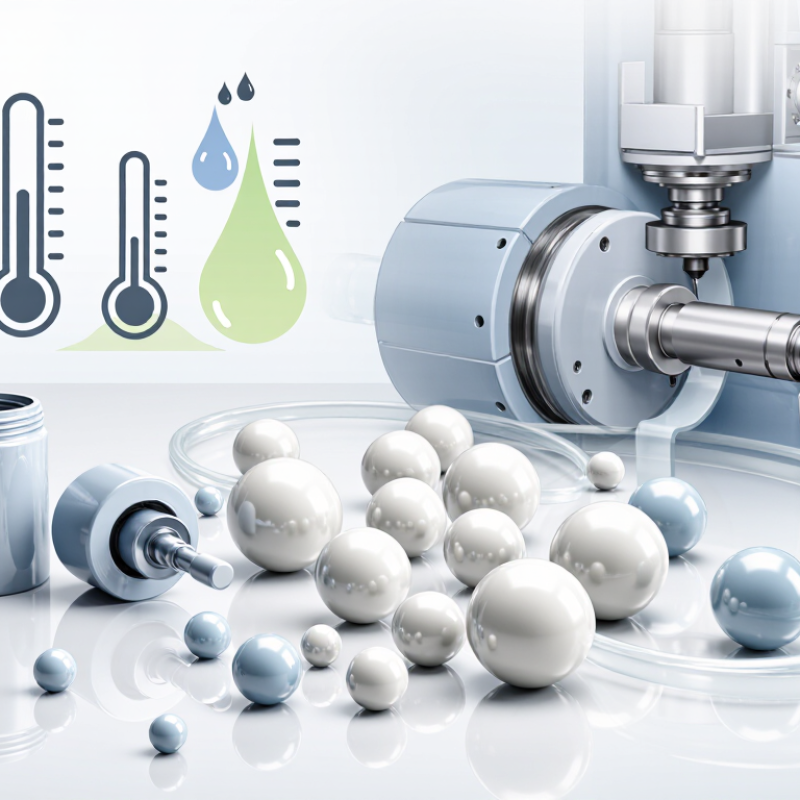
Ceria stabilized zirconia beads are engineered for demanding wet and dry grinding. Their main advantage is balanced toughness, density, and wear resistance. Unlike fully stabilized zirconia, ceria stabilization improves resistance to cracking during repeated impact. This matters inside high-speed mills, where beads collide thousands of times per minute. Technical studies in the Journal of the European Ceramic Society commonly report densities near 6.0–6.2 g/cm³ and fracture toughness around 6–10 MPa·m½. Actual values depend on composition, firing temperature, and porosity.
Particle size controls both output and operating stability. Smaller beads create more contact points and support finer particle reduction. Larger beads transfer stronger impact energy and may suit harder feed materials. Check the bead’s true density, roundness, surface finish, and size tolerance. ISO 13356 material guidance and ASTM C1327 hardness testing can help structure supplier comparisons. However, hardness alone is not enough. A very hard bead can still fail early if internal pores remain. This is where selection becomes less perfect than expected.
Tips: Match bead size to the target fineness and mill design. Ask for batch test data, not only a specification sheet. Inspect used beads under magnification; flat spots, chips, and cloudy surfaces reveal wear patterns. Start with a controlled trial, then adjust filling volume and separator speed. One overlooked detail is contamination. Clean handling can protect an otherwise reliable process.
Specific surface area by bead diameter
Smaller beads provide greater specific surface area and more contact points, which can improve fine particle-size reduction and dispersion. Larger beads deliver higher impact energy and are generally preferred for coarse or highly viscous materials. The values shown are calculated for spherical beads using a typical ceria-stabilized zirconia density of approximately 6.0 g/cm³; actual values vary with composition and manufacturing tolerances.
Choosing ceria stabilized zirconia beads starts with the product, not the catalog. Bead size controls contact frequency, flow, and final particle size. Smaller beads create more contact points and usually improve fine grinding. They can also reduce throughput and increase screen blockage risks. Larger beads transfer stronger impact and suit coarse feed or high-viscosity slurries. The match is rarely obvious. A narrow particle-size target may need smaller beads, but only if the mill can separate them reliably. Check the separator gap before changing media. A bead that is too small can escape or pack around the screen. Small is not free.
Density changes how force enters the chamber. Ceria stabilized zirconia is denser than many ceramic alternatives. It can deliver efficient impact at moderate agitator speed. This may shorten processing time, yet excessive energy can raise temperature and accelerate equipment wear. Start with a practical trial. Record bead size, filling ratio, slurry viscosity, rotor speed, temperature, and product fineness. Compare energy use per kilogram, not only the shortest batch time. For low-viscosity materials, smaller beads and controlled speed may prevent over-grinding. For viscous formulations, slightly larger beads can maintain circulation. Do not assume the densest option is always best. Results can shift. Repeat testing after bead conditioning, because fresh media may behave differently during early operation.
How to Choose the Right Ceria Stabilized Zirconia Bead?
Hardness is the starting point, but it should not control the decision alone. A harder ceria stabilized zirconia bead can resist surface damage during demanding milling. Yet excessive hardness may increase equipment wear or raise energy consumption. Measure hardness using a consistent method, such as Vickers testing, and compare results from several samples. Small details matter.
Wear resistance reveals how the bead behaves over time. In a practical trial, record bead weight before and after a fixed grinding period. Inspect the slurry for broken fragments and check whether the particle size distribution changes. Low wear usually supports cleaner products, steadier performance, and fewer bead replacements. I once focused too heavily on initial hardness and overlooked abnormal wear at the mill outlet. That was an avoidable mistake.
Grinding efficiency depends on more than bead strength. Bead size, density, mill speed, slurry viscosity, and filling level all influence energy transfer. Test the same material under controlled conditions, then compare product fineness, throughput, temperature, and power use. A bead that performs well in one formulation may disappoint in another. Do not trust a single short trial. Extended testing often exposes gradual wear, temperature buildup, or unstable flow. Reliable selection comes from measured evidence, not attractive specifications.
How to Choose the Right Ceria Stabilized Zirconia Bead?
Selecting bead quality begins with the material and mill design. For high-viscosity coatings, pigments, and ceramic slurries, dense ceria stabilized zirconia beads provide strong impact energy and low wear. A 2022 review in Ceramics International reported that zirconia-based grinding media generally offer higher fracture toughness than alumina media. That difference matters in narrow-gap mills, where broken beads can block screens.
Bead size must match the chamber and the target particle size. Beads around 0.3–0.6 mm suit many fine-grinding applications, but they need precise separators and stable pumping. Larger beads, such as 1.0–2.0 mm, can perform better in disc or basket mills handling abrasive minerals. The 2024 U.S. Geological Survey Mineral Commodity Summaries estimated global zirconium mineral concentrate output at roughly 1.5 million metric tons in 2023. Supply is substantial, yet purity and processing quality still vary. A cheaper bead may look acceptable, then release excess wear during long production runs.
Tips: Check density, roundness, crush strength, and wear rate. Ask for batch testing. Test under real viscosity and circulation speed. Do not judge beads by appearance alone. In practice, I would compare two grades for 24 hours, then measure bead loss and product contamination. The result may challenge the initial selection. Mill type, separator gap, and temperature can change the answer.
Price is only the starting point. A low-cost bead may reduce purchasing expense, but faster wear can increase replacement, cleaning, and downtime costs. In production trials, track bead consumption per ton, not price per kilogram. Also measure throughput, temperature, and final particle size. These figures reveal the real milling cost. A bead that lasts longer can still perform poorly if it slows the mill or raises product temperature.
Service life depends on bead density, hardness, size consistency, and the mill’s operating conditions. Smaller beads can improve fine grinding, but they may demand better separation and careful process control. Larger beads often tolerate heavier loads, though they may leave coarse particles behind. Inspect the bead after operation. Rounded surfaces, cracks, and unusual powder contamination provide useful evidence. Do not rely on a supplier’s lifespan estimate alone. Your slurry, agitator speed, and loading level may behave differently.
Tips: Run a controlled pilot test before changing the whole bead charge. Use the same material, solids content, and milling time. Compare energy use and particle-size results. Keep records for several batches. One test can mislead. In my experience, the best choice is rarely the cheapest or the longest-lasting bead. It is the option that delivers stable fineness, acceptable wear, and predictable operating cost. A small compromise may still be practical when maintenance access is limited.
They are used for demanding wet and dry grinding applications. They support particle reduction inside high-speed mills.
Ceria stabilization can improve resistance to cracking during repeated impacts. This matters when beads collide thousands of times per minute.
Typical density is about 6.0–6.2 g/cm³. Fracture toughness often ranges from 6–10 MPa·m½.
Smaller beads create more contact points and support finer particle reduction. Larger beads deliver stronger impacts for harder materials.
Check true density, roundness, surface finish, size tolerance, hardness, and internal porosity.
Weigh beads before and after a fixed grinding period. Inspect the slurry for broken fragments.
Higher hardness may resist surface damage during demanding milling. Excessive hardness can increase equipment wear or energy use.
Bead size, density, mill speed, slurry viscosity, and filling level affect energy transfer.
Use the same material and fixed grinding time. Record particle size, temperature, power consumption, and bead weight loss.
Handle beads cleanly and inspect the mill before loading. Remove damaged or visibly contaminated beads.
Choosing the right Ceria Stabilized Zirconia Bead starts with understanding how its composition and physical properties affect milling performance. These beads are valued for their high density, hardness, wear resistance, and ability to deliver efficient particle size reduction. Bead size should match the target particle size and mill design: smaller beads are generally suitable for fine grinding, while larger beads can provide stronger impact for coarse materials. Density also influences energy transfer, throughput, and the operating conditions required by the mill.
Material compatibility and equipment type are equally important. A bead with excellent wear resistance can help reduce contamination and maintain consistent grinding results, especially when processing demanding materials. Buyers should compare bead quality, uniformity, durability, and surface condition rather than focusing only on the initial price. Although premium beads may cost more, their longer service life, lower replacement frequency, and stable milling efficiency can improve overall operating value. The best selection balances performance, maintenance needs, material characteristics, and total cost over the full production cycle.