Top High Purity Aluminium Grinding Ball Suppliers

Time:2026-09-24 Author:Mason
0%

Selecting a supplier for High Purity Aluminium Grinding Ball products takes more than comparing prices. Buyers need clear evidence about material purity, batch consistency, ball dimensions, and surface condition. Small differences can matter. A certificate should identify the tested batch and explain the measurement method, not simply display a purity figure without context.

A useful quality principle, often attributed to quality expert W. Edwards Deming, is: “In God we trust; all others must bring data.” For supplier evaluation, that means asking for traceable test reports, documented inspection procedures, and practical answers about production controls. It also means checking whether sample balls match the dimensions and finish promised in a quotation. A clean sample on a desk is useful, but it cannot prove consistency across later shipments.

This guide introduces leading supplier-selection considerations, from technical documentation to communication and delivery reliability. It does not treat polished marketing language as proof. Ask precise questions. Compare like with like. Where available, review independent test results and confirm how reported purity is determined. One detail is easy to miss: even a credible supplier may use different reporting conventions, so figures need context before comparison. The shortlist should rest on evidence, not confident claims alone. And buyers should leave room for doubt; a neat checklist can miss a real production issue.
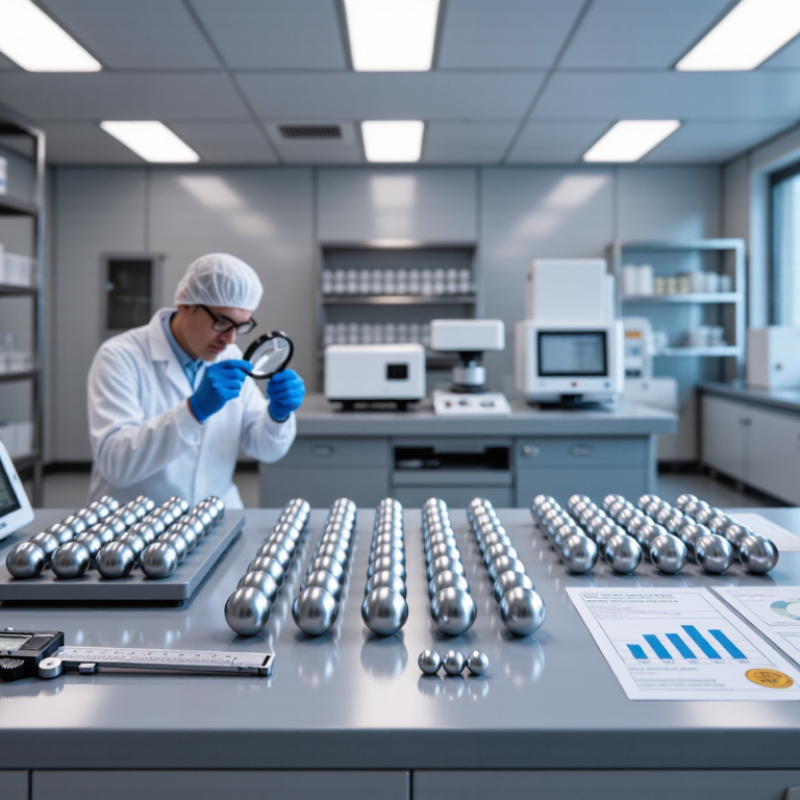
Top High Purity Aluminium Grinding Ball Suppliers

What High-Purity Aluminium Grinding Balls Are

What High-Purity Aluminium Grinding Balls Are

High-purity aluminium grinding balls are spherical media made predominantly from aluminium, with impurity levels controlled to meet a specified grade. Their exact composition varies, so buyers should check a material certificate rather than rely on the term “high purity” alone. The balls have a bright, metallic surface and are much lighter than steel media. They are also relatively soft.

That matters.

During milling, ball material can wear and enter the powder being processed. Aluminium media may suit applications where iron contamination is undesirable and aluminium carryover is acceptable. But they are not a universal substitute for harder ceramic or steel balls. Their lower hardness can affect grinding speed, particle size, and service life. A small trial batch can reveal more than a catalog description.

Storage and process conditions deserve attention, too. Aluminium can form a thin oxide layer, and compatibility depends on the powder, liquid, and milling environment. Ask suppliers for purity data, dimensions, hardness information, and guidance on suitable operating conditions. Even then, results may vary with mill design and load. I would avoid assuming that a cleaner-looking ball always produces a cleaner product.

Key Properties and Industrial Applications

High Purity Aluminium Grinding Ball Suppliers

In industrial purchasing, “aluminium grinding balls” often means high-purity alumina ceramic balls. Their main value is controlled chemical purity. High alumina content reduces contamination during intensive milling. It also supports stable performance in wet and dry processes.

These balls offer high hardness, strong wear resistance, and low water absorption. Their Mohs hardness can approach 9, depending on composition and firing quality. Dense structures help prevent cracking under repeated impact. Low porosity also limits slurry penetration. That matters in fine powder production.

Performance depends on more than purity. Diameter selection affects grinding speed, energy use, and final particle size. Small balls improve contact with fine particles. Larger balls provide stronger impact for coarse feedstock. Mixing sizes can work, but careless ratios may reduce efficiency. This deserves testing.

Common applications include advanced ceramics, ceramic tiles, mineral processing, pigments, and electronic material powders. High-purity balls are useful where iron or silica contamination could change color, conductivity, or sintering behavior. In a plant trial, operators should check ball wear, mill lining compatibility, slurry viscosity, and discharge quality. A supplier should provide traceable test data, including chemical analysis, density, water absorption, and wear results. Numbers alone are not enough. Actual process conditions may expose weaknesses hidden by laboratory reports.

Top High Purity Aluminium Grinding Ball Suppliers - Key Properties and Industrial Applications

Supply Specification Typical Purity Common Diameter Range Key Material Properties Performance Considerations Typical Industrial Applications
High-Purity Aluminium Grinding Balls 99.5%–99.99% aluminium 3–50 mm Low density, high electrical and thermal conductivity, non-magnetic, and naturally protected by a thin oxide film. Low media weight reduces impact energy and can help limit contamination when processing soft materials. Aluminium is relatively soft and may deform or wear faster than ceramic media. Soft-material blending, chemical powder processing, laboratory milling, and applications requiring low ferromagnetic contamination.
Extra-High-Purity Aluminium Balls 99.99% aluminium or higher 5–30 mm Very low levels of iron, copper, silicon, and other metallic impurities; excellent electrical and thermal conductivity. Suitable for contamination-sensitive processes. Surface condition, oxide-film stability, and dimensional tolerance should be verified before use. Advanced materials research, electronics-related powder handling, vacuum equipment support processes, and analytical laboratories.
Milled or Ground-Surface Aluminium Balls Typically 99.5%–99.99% aluminium 10–40 mm Controlled spherical geometry and a relatively uniform surface finish. Improved charge consistency and predictable contact behavior. Surface roughness can affect wear, powder adhesion, and milling efficiency. Dry blending, wet milling of low-hardness powders, pigment dispersion, and pilot-scale process development.
Precision-Tolerance Aluminium Balls Typically 99.9%–99.99% aluminium 1–25 mm Tight diameter tolerance, controlled roundness, and consistent mass from ball to ball. Useful where repeatable movement, packing density, or media-to-material ratio is important. Precision should be specified by diameter tolerance and sphericity. Laboratory equipment, calibration-related applications, small-volume milling, and specialized material-testing systems.
Large-Diameter Aluminium Grinding Balls Typically 99.5%–99.9% aluminium 40–100 mm Low density compared with steel, combined with good thermal conductivity and easy machinability. Provides lower impact force than steel media of the same size. Large balls require careful assessment of mill speed, liner material, and load capacity. Low-energy mixing, bulk powder conditioning, non-sparking process environments, and specialized blending equipment.
Oxide-Film-Controlled Aluminium Balls Typically 99.9%–99.99% aluminium 3–40 mm Aluminium surface is covered by a thin, adherent oxide layer that provides basic atmospheric corrosion resistance. Not suitable for all highly alkaline or strongly acidic environments. Cleaning, storage humidity, and process chemistry can influence surface performance. Controlled-atmosphere processing, chemical laboratories, non-ferrous material handling, and corrosion-conscious applications.
Custom-Size Aluminium Media Specified according to process requirements Custom dimensions available Material grade, diameter, surface finish, hardness, and tolerance can be tailored to the equipment and feedstock. Custom specifications should include chemical composition, allowable impurity limits, hardness, dimensional tolerance, packaging, and inspection requirements. Specialized research, process optimization, aerospace-material development, and proprietary powder-processing systems.
Note: Actual values may vary according to aluminium grade, manufacturing method, heat treatment, surface condition, and inspection standard. Product certification and chemical analysis should be requested for contamination-sensitive applications.

How to Evaluate Aluminium Grinding Ball Suppliers

Top High Purity Aluminium Grinding Ball Suppliers

How to Evaluate Aluminium Grinding Ball Suppliers

Choosing an aluminium grinding ball supplier takes more than comparing prices. Ask for a material certificate showing aluminium purity and traceable batch numbers. Check whether the supplier can explain how composition is tested, such as through laboratory analysis, and whether results are linked to the delivered lot. Clear records matter. A polished sample alone proves little.

Look closely at ball diameter, roundness, and surface condition. Request samples from a production batch, then inspect them for visible pits, cracks, or inconsistent sizing. Ask how manufacturing tolerances are measured and what checks happen before shipment. A useful supplier will answer with specific procedures, not vague assurances. Still, a sample may not reflect every shipment; that deserves attention.

Discuss packaging, lead times, and support for quality concerns before ordering. Aluminium balls can be damaged or contaminated if packaging is poorly suited to transport or storage. Confirm how the supplier handles documented defects and whether replacement terms are written down. Compare quotations only after checking these details. The cheapest offer may become costly if batches vary. I would also ask for references, though even a strong reference cannot guarantee your own results.

Leading Supplier Selection Criteria

Selecting a high-purity aluminium grinding ball supplier starts with verifiable material data, not a polished catalogue. Ask for batch-specific certificates showing Al₂O₃ content, impurity limits, density, water absorption, and hardness. Request test methods and sample results, too. A certificate without a traceable batch number tells you little. Check whether the supplier can provide retained samples and explain how it handles out-of-specification lots.

Manufacturing control matters. Ask how ball diameter, roundness, and surface defects are inspected, and request size-distribution data from recent production. The U.S. Geological Survey’s Mineral Commodity Summaries 2024 estimated global bauxite mine production at about 400 million metric tons in 2023. That figure describes the scale of the upstream aluminium supply chain; it does not verify ceramic-ball purity or quality. Keep those questions separate. For a practical trial, compare wear loss and contamination in your own mill, using the same feed, load, and operating time. Small differences can matter. Supplier claims still need checking. Delivery consistency, change-control records, and clear technical support should also be evaluated. I would not choose on price alone, though a supplier’s data may still leave gaps.

Quality Control, Certification, and Purchasing Considerations

High-purity aluminium grinding balls need more than a strong purity claim. Ask suppliers for batch-specific certificates of analysis, including alumina content, bulk density, hardness, and size distribution. Check how each value was measured, and request results from an independent laboratory accredited to ISO/IEC 17025 when verification matters. A certificate without test methods is hard to compare.

The USGS Mineral Commodity Summaries 2024 estimated global alumina production at about 140 million metric tons in 2023. That upstream scale does not prove a grinding ball’s quality; it makes traceable material sourcing and batch control especially important. Ask for the raw-material origin, production lot number, and records linking the finished balls to that lot. Still, paper can mislead. Compare samples for chips, surface cracks, and size variation before placing a large order.

Purchasing decisions should reflect the mill, not just the catalogue. Request wear-rate data from comparable operating conditions, including slurry chemistry, mill speed, and grinding time. A supplier’s test may not match your process exactly. Start with a controlled trial, weigh the balls before and after use, and check whether product contamination changes. Confirm packaging prevents moisture and impact damage, and clarify replacement terms for out-of-spec batches. Small details matter.

Alumina Grinding Media: Common Purity Grades

The values show commonly specified nominal alumina (Al₂O₃) content tiers for ceramic grinding media, not measurements from individual suppliers. Before purchasing, verify the exact composition and batch results on the supplier’s technical datasheet and certificate of analysis; also review dimensional tolerances, wear data, and relevant quality-system certifications.

FAQS

What are aluminium grinding balls usually made of?

The term often refers to high-purity alumina ceramic balls. Their controlled composition helps reduce contamination during milling. The wording can be confusing.

Why is high purity important in industrial grinding?

High alumina content limits unwanted iron or silica entering the powder. This can protect color, conductivity, and sintering behavior. Purity alone is not everything.

What physical properties should buyers expect?

These balls offer high hardness, strong wear resistance, and low water absorption. Their Mohs hardness can approach 9. Dense structures also resist repeated impact.

How does ball diameter affect grinding results?

Small balls create more contact with fine particles. Larger balls deliver stronger impact against coarse feedstock. Mixed sizes may help, but careless ratios can reduce efficiency.

Which industries commonly use high-purity grinding balls?

Common uses include advanced ceramics, ceramic tiles, mineral processing, pigments, and electronic powders. They suit processes sensitive to contamination.

What supplier documents should buyers request?

Request chemical analysis, density, water absorption, and wear results. Confirm the certificate matches the delivered batch number. A polished sample proves little.

How can buyers inspect sample quality?

Check diameter, roundness, and surface condition. Look for pits, cracks, and inconsistent sizing. Measure samples from a production batch, if possible.

What should be discussed before placing an order?

Confirm packaging, lead time, defect handling, and replacement terms. Poor packaging may cause cracks or contamination during transport. Written terms matter.

Can laboratory data guarantee production performance?

No. Actual slurry viscosity, mill lining, impact conditions, and discharge quality may expose hidden weaknesses. Plant trials remain useful. Results may still vary.

Conclusion

High Purity Aluminium Grinding Ball suppliers serve industries that need consistent grinding performance and reliable material quality. These balls are valued for their high aluminium content, low levels of impurities, and suitability for processes where contamination must be minimized. Their properties can support applications such as ceramic, chemical, and materials processing, depending on the operating conditions and required purity. Selecting a suitable High Purity Aluminium Grinding Ball supplier involves assessing product specifications, manufacturing capability, material traceability, and experience with relevant applications.

Buyers should compare suppliers’ quality-control procedures, test documentation, and available certifications, while confirming that product size, composition, and tolerances match their requirements. It is also important to clarify packaging, lead times, sample availability, and after-sales support before placing an order. A careful evaluation of these factors helps purchasers make an informed choice and build a dependable supply relationship without relying on price alone.


Mason

Mason

Mason is a seasoned marketing professional with a deep expertise in the company's offerings and a passion for driving brand awareness. With a strong background in digital marketing strategies, he has an innate ability to connect with diverse audiences and effectively communicate product benefits.......