7 Lithium Zeolite Buying Tips for Global Buyers

Time:2026-11-01 Author:Mason
0%

Global buyers evaluating Lithium Zeolite face a market where product details can matter as much as price. The International Energy Agency’s Global Critical Minerals Outlook 2024 reports that lithium demand grew by 30% in 2023, driven largely by electric vehicles and energy storage. That figure describes lithium overall, not lithium zeolite demand. The distinction matters. Buyers should assess the material for its intended use rather than assume broader lithium trends guarantee product suitability.

A reliable purchase starts with verifiable specifications. Confirm lithium content, exchange capacity, moisture, particle-size distribution, and bulk density against a current certificate of analysis. Ask which test methods support each result. Check whether the supplier can provide representative samples and explain how production batches are controlled. Small differences matter. A fine powder may behave differently from uniform beads in a packed column, while excess moisture can affect handling or performance. Request safety and handling documents, packaging details, and clear storage guidance before shipment.

The seven buying tips should also address application testing, technical support, lead times, export packaging, and total landed cost. Compare quotations carefully: a low unit price may exclude inspection, freight, or protective liners. Confirm that the quoted grade matches your process and operating conditions. Specifications can still leave questions unanswered. Buyers should test samples under realistic conditions and document acceptance criteria before placing large orders. This approach cannot remove every supply risk, but it makes supplier comparisons more transparent and decisions easier to review.
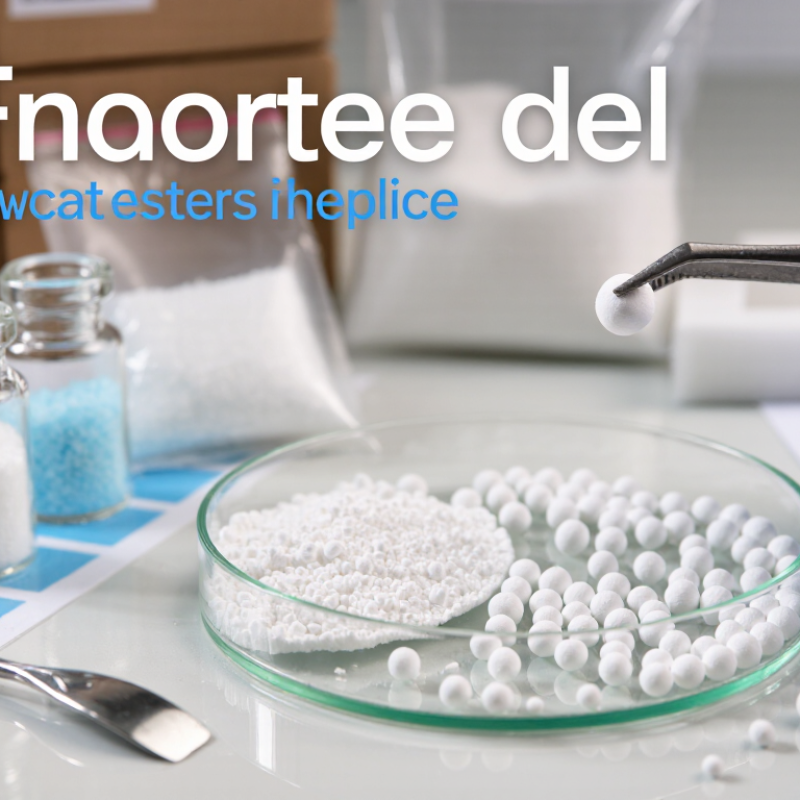
7 Lithium Zeolite Buying Tips for Global Buyers

Identify Li-LSX for PSA: Air Contains About 78% N₂ and 21% O₂

For PSA oxygen production, Li-LSX is selected to adsorb nitrogen from air while oxygen passes through as product. NOAA’s Global Monitoring Laboratory reports dry air at about 78.08% nitrogen and 20.95% oxygen; NASA’s Earth Fact Sheet gives closely matching figures. The balance is mostly argon. Small differences matter.

Ask suppliers for Li-LSX test data under conditions close to your process: feed pressure, temperature, humidity, and cycle time. Compare nitrogen working capacity and breakthrough curves, not just a maximum equilibrium-capacity figure. That figure alone can flatter a material. Check bead size, crush strength, and pressure-drop data too; weak or uneven beads can affect bed performance.

Water and carbon dioxide can compete for adsorption sites, so confirm the proposed pretreatment and test conditions. Ask for lot-to-lot specifications and independent test methods. A lab result may not predict a full-size bed perfectly. I would request a pilot test using representative air, especially when operating conditions vary by season or site. NOAA Global Monitoring Laboratory, “The Atmosphere”; NASA, Earth Fact Sheet, “Earth’s Atmosphere.”

Compare N₂ Capacity (mmol/g) and N₂/O₂ Selectivity at 25°C

A useful comparison starts with equilibrium N₂ uptake at 25°C, reported in mmol/g, and the N₂/O₂ selectivity measured at the same pressure. For Li-exchanged low-silica X zeolites, indicative screening values are roughly 1.3–1.8 mmol/g N₂ near 1 bar, with selectivity commonly around 5–7. Treat these as comparison ranges, not guaranteed specifications. Ruthven, Farooq and Knaebel’s Pressure Swing Adsorption (1994) explains why adsorption capacity and selectivity must be interpreted under stated operating conditions.

Ask for the full isotherm, not one attractive number. Check activation temperature, residual moisture, particle size, gas purity, and whether capacity is reported on a dry-mass basis. A powder tested after deep activation may outperform damp pellets on paper. That gap matters. Cavenati et al. reported 298 K adsorption measurements for nitrogen and oxygen on zeolite 13X in the Journal of Chemical & Engineering Data (2004), illustrating why temperature and test method belong beside every quoted value. Their material is not Li-LSX, so do not treat its numbers as a direct substitute.

Request a matched N₂/O₂ test at your process pressure, plus repeatability data across batches. A higher N₂ capacity can still disappoint if selectivity falls or diffusion slows in formed beads. I would not rank suppliers from one table alone; the comparison can look precise while missing the conditions that matter most.

7 Lithium Zeolite Buying Tips for Global Buyers - Compare N₂ Capacity (mmol/g) and N₂/O₂ Selectivity at 25°C
Buying Tip Data Dimension Reference Data or Calculation What to Request and Compare
1. Compare capacity at a defined pressure N₂ equilibrium capacity at 25°C N₂ capacity is sample- and pressure-dependent; there is no single universal value for “lithium zeolite.” Report the measured uptake in mmol/g at a stated N₂ partial pressure. Request the full adsorption isotherm, sample pretreatment, equilibrium criteria, pressure range, and whether capacity is reported on a dry or as-received basis.
2. Check the selectivity calculation N₂/O₂ adsorption selectivity For equilibrium selectivity at the same temperature and gas composition, use αN₂/O₂ = (qN₂/qO₂) ÷ (pN₂/pO₂). State the definition used. Request N₂ and O₂ isotherm data at matching conditions. Do not compare selectivity figures calculated with different definitions or pressures.
3. Match the test to air-separation conditions Temperature and gas partial pressure 25°C = 298.15 K. Dry air contains approximately 78.08% N₂ and 20.95% O₂ by volume; partial pressures depend on total pressure. Ask for both pure-gas and mixed-gas results where relevant, with total pressure and gas composition stated. Pure-gas data alone may not predict mixed-air performance.
4. Compare capacity units consistently N₂ uptake unit and mass basis 1 mmol N₂/g corresponds to approximately 28.014 mg N₂/g, using an N₂ molar mass of 28.014 g/mol. Confirm that values are in mmol/g and identify whether the denominator is dry adsorbent mass, pellet mass, or another basis. Convert units before ranking products.
5. Verify activation and moisture control Pretreatment and water exposure Adsorption measurements depend on activation temperature, time, residual moisture, and sample handling; values are not comparable unless these conditions are disclosed. Request the activation protocol, residual-moisture information, and guidance on storage and handling. Check whether the reported performance applies to the supplied form.
6. Check the physical form and usable performance Powder, bead, or pellet; pressure drop and working capacity Equilibrium capacity in mmol/g is not the same as working capacity in a cyclic process. Particle form and operating pressure swing affect practical performance. Compare particle size, crush strength, bulk density, and pressure-drop data. Request working capacity between stated adsorption and regeneration conditions if evaluating a cycle.
7. Require reproducible, traceable test data Test method, repeatability, and sample identification Meaningful comparison requires documented temperature, pressure, gas purity, instrument method, sample preparation, and uncertainty or repeatability information. Request a recent test report for the offered material and a representative sample. Treat unqualified capacity or selectivity figures as non-comparable until conditions are supplied.

Specify Bead Size (mm) and Crush Strength (N/bead) for Your System

For lithium zeolite, specify bead diameter in millimetres, plus the permitted size distribution—not just “standard beads.” A narrow, verified range helps prevent fines from filling gaps and raising pressure drop, while oversized beads can slow adsorption and regeneration. Request sieve-analysis results by production lot. For example, ask suppliers to report the percentage below and above your stated cut size, rather than relying on a nominal diameter alone.

IEA’s Global Critical Minerals Outlook 2024 reports that lithium demand grew by 30% in 2023. That market growth makes consistent incoming quality checks especially useful.

State crush strength in N/bead and require the test method, sample count, and reported statistic. ASTM D4179 describes single-pellet crush-strength testing for formed catalysts and carriers; confirm that its procedure is suitable for your bead shape and agree on any adaptation. Compare results only for beads of similar diameter: larger beads can show higher force simply because of their size.

Ask for both average strength and the low-end result, then check whether beads survive loading, vibration, and routine handling without excess breakage. Small details matter. A specification can still miss real operating conditions, so trial a representative batch in your actual bed depth and flow cycle before fixing acceptance limits.

Check Li⁺ Exchange, Si/Al Ratio, and Moisture (wt%) on the COA

7 Lithium Zeolite Buying Tips for Global Buyers

A certificate of analysis (COA) is useful only when its numbers match the material and test method you are buying. Check Li⁺ exchange capacity, its unit, and whether the result is reported on a dry or as-received basis. Ask for the test method if it is not listed. A percentage without a clear basis can mislead comparisons.

Tips

Compare Si/Al ratios only when the supplier uses the same calculation convention. This ratio can affect framework stability and adsorption behavior, but it does not predict performance alone. Review moisture in wt% alongside the measurement method and sample condition. Zeolite can pick up water during storage or transit; a damp sample may not reflect the shipped lot. Keep samples sealed. Small details matter.

Match the COA’s lot number to the quotation and packaging documents, and request a recent, representative test report. For moisture, ask whether the sample was tested before or after activation, since the difference can be substantial. Lower moisture is not automatically better for every process. I would treat each figure as a clue, not a verdict, and confirm critical specifications with a trial under actual operating conditions.

Match Adsorbent Performance to Typical PSA Output of 90–95% O₂

7 Lithium Zeolite Buying Tips for Global Buyers
Match Adsorbent Performance to Typical PSA Output of 90–95% O₂

A PSA unit’s 90–95% oxygen output depends on more than the zeolite. Check dynamic working capacity and nitrogen selectivity at the unit’s actual pressure, temperature, and cycle time. Ask for test conditions, not just a headline capacity. A high figure from a different test setup may mislead.

Match bead size and strength to the adsorber design. Uneven particles can increase pressure drop, while weak beads may create dust during handling and cycling. Review moisture limits, too; wet feed air can reduce useful adsorption performance. Small gaps matter. Request data on attrition and particle-size distribution, and confirm that the values reflect the material you will receive.

Assess performance at your required oxygen flow, not purity alone. Raising output can lower purity or oxygen recovery, depending on the system and operating conditions. Ask suppliers to evaluate samples against your feed-air quality and cycle settings. A neat datasheet is not a plant trial. I would also allow time for independent verification; this step can feel slow, but skipping it leaves assumptions untested. Lithium content alone does not predict delivered PSA performance.

PSA Oxygen Purity: Buyer Reference Points

These reference points span the typical 90–95% oxygen purity range cited for PSA systems; they are not guaranteed performance figures. When evaluating lithium zeolite, confirm the supplier’s purity and flow-rate data under your intended operating conditions, since actual output depends on system design and operation.

FAQS

What nitrogen capacity should I compare for lithium-exchanged low-silica X zeolite?

At 25°C and near 1 bar, indicative nitrogen capacity is about 1.3–1.8 mmol/g. N₂/O₂ selectivity commonly ranges from 5–7. These are screening ranges, not guaranteed specifications.

What test details should accompany an adsorption-capacity figure?

Request the full isotherm and test pressure. Check activation temperature, residual moisture, gas purity, particle size, and dry-mass basis. A dry powder may test better than damp beads. That gap matters.

Can I compare results from different zeolite types directly?

Not reliably. Results for another zeolite type are not a direct substitute for lithium-exchanged low-silica X. Compare materials under matched conditions.

What bead-size information should I request?

Specify bead diameter and an acceptable size range. Ask for sieve-analysis results by production lot, including the percentages below and above your limits. Nominal size alone is not enough.

How should bead crush strength be reported?

Request strength in N/bead, the test method, sample count, average, and low-end result. Compare beads of similar diameter. Larger beads may withstand more force simply because they are larger.

How can bead size and strength affect a PSA bed?

Excess fines can fill gaps and increase pressure drop. Oversized beads may slow adsorption and regeneration. Weak beads can break during loading or cycling. Small details matter.

What data helps assess oxygen output from a PSA unit?

Check dynamic working capacity and nitrogen selectivity at your actual pressure, temperature, and cycle time. Typical output may be 90–95% oxygen, but purity alone does not show oxygen recovery or flow.

Should supplier data be verified in the actual system?

Yes. Test representative material at your feed-air quality, bed depth, and cycle settings. Review moisture limits, attrition, and particle-size distribution. A datasheet can look precise. It may still miss plant conditions.

Conclusion

Choosing Lithium Zeolite for a PSA oxygen system starts with understanding the feed gas: air contains roughly 78% nitrogen and 21% oxygen. Li-LSX is commonly selected to preferentially adsorb nitrogen, but buyers should compare nitrogen capacity, measured in mmol/g, and nitrogen-to-oxygen selectivity at 25°C. These figures help indicate how effectively an adsorbent may separate the gases under specified test conditions.

Practical specifications matter as much as adsorption performance. Confirm that bead size and crush strength suit the system’s flow, pressure, and handling requirements. Review the certificate of analysis for lithium-ion exchange level, Si/Al ratio, and moisture content, since these properties can influence consistency and performance. Finally, assess the data against the intended PSA operating conditions and typical oxygen output of 90–95%, rather than relying on a single capacity value. A careful comparison helps buyers select a material suited to their process and quality requirements.


Mason

Mason

Mason is a seasoned marketing professional with a deep expertise in the company's offerings and a passion for driving brand awareness. With a strong background in digital marketing strategies, he has an innate ability to connect with diverse audiences and effectively communicate product benefits.......