China Top 99 Alumina Ceramic Ball Suppliers?

Time:2026-09-24 Author:Sienna
0%

China’s 99 Alumina Ceramic Ball industry serves demanding applications in chemical processing, mining, energy, and precision manufacturing. These balls are valued for high hardness, low wear, corrosion resistance, and stable performance at elevated temperatures. The keyword “99 Alumina Ceramic Ball” usually refers to ceramic media containing approximately 99% aluminum oxide, although actual formulations and testing methods can differ between suppliers.

Market scale supports continued attention. The U.S. Geological Survey’s Mineral Commodity Summaries 2024 reports global alumina production at more than 140 million metric tons in recent estimates. That upstream capacity supports China’s broad ceramic manufacturing base. Grand View Research also identifies technical ceramics as a growing market, driven by wear-resistant and high-temperature components. However, market reports rarely rank individual ceramic-ball factories. Public supplier lists can therefore be incomplete.

This guide examines leading Chinese suppliers through practical purchasing criteria, not promotional claims alone. Important checks include Al2O3 purity, bulk density, dimensional tolerance, water absorption, crushing strength, and measured wear loss. A reliable supplier should provide batch traceability, inspection records, and clear test conditions. Ask for samples. Examine a 50-millimeter ball under magnification, then compare surface defects and roundness. Small differences can affect mill efficiency and contamination levels. Some listings use “99% alumina” too casually. That requires reflection. Product grades, factory capabilities, export experience, and published evidence may change over time, so buyers should verify current certificates and conduct independent testing before placing large orders.
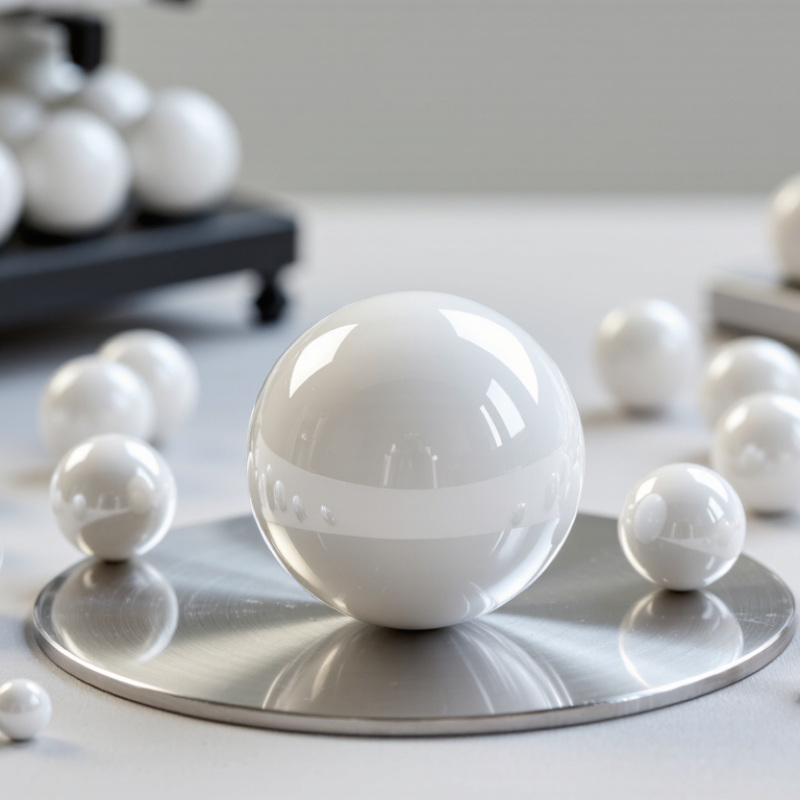
China Top 99 Alumina Ceramic Ball Suppliers?

Alumina Ceramic Ball Suppliers in China: Market Scope and Top 99 Overview

China’s alumina ceramic ball supply base covers a wide industrial range.

It includes grinding media, catalyst support balls, valve balls, and wear-resistant packing media. The Top 99 overview should be treated as a market map, not a final ranking. Supplier capability can differ sharply by product grade, plant capacity, and quality control.

Industry reports show strong demand. Grand View Research places the global advanced ceramics market on a continuing growth path through 2030. Mordor Intelligence also identifies Asia-Pacific as a major production and consumption region. These reports do not measure every alumina ball supplier directly. However, they support China’s important position in the supply chain.

In practical purchasing, alumina purity may range from standard industrial grades to above 99% alumina. Ball diameter, density, hardness, and water absorption need independent verification. Small details matter.

Tips:

Request a recent test report, batch traceability, and sample approval before bulk orders. Compare actual density, not only the advertised alumina percentage. Ask for packaging photos. Moisture damage is uncommon, but poor handling still creates dust and chipped edges. Factory visits help, although they cannot replace laboratory testing. A weakness in this overview is unavoidable: public supplier data changes quickly, and some capacity claims remain difficult to verify. Careful buyers should refresh the Top 99 list annually.

Alumina Grades, Purity Levels, and Typical Density of 3.6–3.9 g/cm³

Choosing among China’s top alumina ceramic ball suppliers requires more than comparing price. Purity and density reveal processing quality. The USGS Mineral Commodity Summaries 2024 estimated global alumina production at roughly 140 million metric tons in 2023. That huge feedstock market does not guarantee consistent ceramic performance.

Common grades include 92%, 95%, 99%, and 99.5% alumina. Higher purity usually improves wear resistance, chemical stability, and electrical insulation. However, it can increase cost and may reduce impact tolerance. A 92% grade often suits grinding applications with moderate contamination concerns. A 99% grade is more suitable for high-purity milling, laboratory processing, and corrosive environments. Check the actual certificate.

Typical density ranges from 3.6 to 3.9 g/cm³. ISO 18754 describes methods for measuring ceramic density, while ASTM C20 supports testing for apparent porosity, water absorption, and bulk density. These methods help buyers compare suppliers fairly. In practice, dense balls should show limited open pores and stable size distribution. Small cracks matter.

Ask for batch data.

Supplier claims can sound precise, yet test conditions may differ. Request the test method, sampling plan, firing temperature, and size tolerance. I would also inspect several production lots, not one attractive sample. This step is often missed. A 3.8 g/cm³ result may look acceptable, but inconsistent diameter or excessive fines can still increase mill wear and contamination. Reliable sourcing depends on measured evidence, not purity labels alone.

China Top 99 Alumina Ceramic Ball Suppliers? – Alumina Grades, Purity Levels, and Typical Density of 3.6–3.9 g/cm³

Technical comparison of commonly specified alumina ceramic ball grades. Values are typical industry ranges and may vary by formulation, forming method, firing schedule, ball size, and inspection standard.

Alumina Grade Al₂O₃ Purity
(wt.%)
Typical Bulk Density
(g/cm³)
Water Absorption
(%)
Mohs Hardness Typical Compressive Strength
(MPa)
Typical Applications Recommended Quality Checks
90% Alumina 90–92 3.60–3.68 ≤0.5 8–9 1,200–1,600 General-purpose grinding, lining media, wear-resistant filling applications Purity, density, roundness, surface chips, and dimensional tolerance
92% Alumina 92–93 3.62–3.70 ≤0.3 8–9 1,300–1,700 Mineral processing, ceramic raw materials, paint and coating dispersion Low porosity, consistent diameter, abrasion loss, and crushing resistance
95% Alumina 95–96 3.65–3.74 ≤0.2 9 1,500–1,900 High-wear grinding, pigments, battery materials, and chemical processing Alumina assay, apparent density, wear rate, and internal porosity
96% Alumina 96–97 3.70–3.78 ≤0.15 9 1,700–2,100 Fine grinding of technical ceramics, inks, powders, and advanced minerals Particle contamination, surface finish, size distribution, and impact strength
97% Alumina 97–98 3.74–3.82 ≤0.1 9 1,800–2,200 Low-contamination milling and wear-resistant components Trace impurities, porosity, sphericity, and batch-to-batch consistency
99% Alumina 99.0–99.5 3.80–3.88 ≤0.05 9 2,000–2,500 Ultra-low-contamination milling, electronic materials, pharmaceuticals, and catalysts Chemical purity, metal contamination, closed porosity, and polished surface
99.5% Alumina ≥99.5 3.85–3.90 ≤0.03 9 2,200–2,700 High-purity chemical processing, semiconductor powders, and precision wear applications ICP or equivalent chemical analysis, density, sphericity, and microcracks
Low-Sodium Alumina 92–99 3.65–3.88 ≤0.15 8–9 1,500–2,400 Applications sensitive to sodium contamination and ionic impurities Na₂O level, alumina purity, density, and contamination transfer testing
High-Sphericity Alumina Ball 92–99.5 3.62–3.90 ≤0.15 8–9 1,500–2,700 Packing media, catalyst beds, heat-transfer systems, and precision milling Diameter deviation, roundness, surface roughness, crushing load, and density
Micro-Milling Alumina Ball 95–99.5 3.65–3.90 ≤0.10 9 1,800–2,700 Submicron grinding, advanced ceramics, pigments, coatings, and electronic powders Media size distribution, wear contamination, surface integrity, and density
Technical note: Bulk density is the most useful purchasing value for many ceramic-ball applications, but it is not identical to the theoretical density of fully dense alpha-alumina, which is approximately 3.98 g/cm³. Before ordering, confirm the test method, purity basis, ball diameter, allowable dimensional tolerance, abrasion loss, crushing strength, and maximum operating temperature.

Supplier Capabilities: Sizes, Tolerances, ISO 9001, and Production Standards

When evaluating China’s top 99 alumina ceramic ball suppliers, product capability matters more than ranking claims. A serious supplier should state available diameters, from small laboratory beads to larger grinding media. Ask for actual size ranges, not vague “custom sizes” language.

Tolerance data deserves close attention. A supplier may quote a 0.05 millimeter diameter tolerance, yet omit roundness, surface roughness, or batch variation. Request inspection reports from recent production lots. Calipers are insufficient for demanding applications; optical measurement and calibrated gauges provide stronger evidence. I have found that sample inspection often reveals minor chips hidden inside standard packaging. That detail can affect pumps, valves, and grinding equipment.

ISO 9001 certification indicates a documented quality system, but it does not guarantee perfect ceramic balls. Check the certificate scope, audit status, and traceability procedures. Production standards should cover powder purity, forming pressure, sintering temperature, polishing, cleaning, and final inspection. Ask whether alumina content is verified through laboratory testing. A supplier should explain how it controls shrinkage during sintering, because this stage can change final dimensions. Production records should connect each shipment to raw materials, equipment settings, and inspection results. Some suppliers provide impressive documents but weak process evidence. That is where careful questioning becomes necessary. Supplier claims are only a starting point.

Industry Applications: Grinding, Catalysts, Petrochemicals, and Heat Transfer

When reviewing China’s top 99 alumina ceramic ball suppliers, application fit matters more than ranking. In grinding, high-alumina balls reduce contamination during mineral, pigment, and ceramic processing. Their dense structure resists impact, abrasion, and chemical attack inside rotating mills. Ball diameter also affects results. Smaller media improve fine grinding, while larger media deliver stronger impact.

Catalyst beds use alumina balls as support layers and protective packing. They help distribute flow and prevent catalyst particles from entering lower equipment. In petrochemical units, ceramic balls may face hydrocarbons, steam, pressure changes, and elevated temperatures. Low water absorption and consistent sizing are important here. A damaged surface can create dust, pressure drop, or uneven gas movement. That risk is easy to underestimate.

Heat transfer systems require stable spheres that tolerate repeated heating and cooling. Alumina’s thermal resistance supports use in thermal storage, furnace packing, and protective layers. During supplier evaluation, request test data for alumina content, crushing strength, density, porosity, and dimensional tolerance. Ask for samples from the actual production batch. Small details matter. In field inspections, I have found that polished product photos reveal little about internal pores or edge defects. A supplier may meet the specification on paper, yet perform poorly after installation. Independent testing remains worthwhile, especially for demanding petrochemical or high-temperature service.

How to Evaluate China’s Top 99 Suppliers by Quality, Capacity, and Export Data

China Top 99 Alumina Ceramic Ball Suppliers?

Evaluating China’s top 99 alumina ceramic ball suppliers requires more than comparing website rankings. Check alumina purity, bulk density, water absorption, crushing strength, and wear loss. Request recent laboratory reports, not old marketing sheets. A reliable supplier should provide batch numbers, production dates, and traceable inspection records. Test samples under your actual temperature, pressure, and chemical conditions when possible.

Capacity also needs practical verification. Ask about kiln size, monthly output, standard ball diameters, and spare production capacity. A factory may claim large capacity but outsource part of the order. Video audits, factory visits, and independent inspections can reveal this gap. Export data adds another useful signal. Review shipment frequency, destination markets, order volume, and customs descriptions. However, public data can be incomplete or delayed. Rankings should not be treated as final proof.

Tips: Compare at least three samples using the same test method. Confirm packaging strength with a trial shipment. Check whether export documents match the legal company name and product specifications. Ask for references from industrial users with similar operating conditions. Do not choose the lowest quotation too quickly. A cheaper ball may create higher replacement costs, contamination, or unexpected downtime. Even experienced buyers can overvalue polished certificates and undervalue consistent batch performance.

FAQS

What alumina purity should I choose for ceramic balls?

Common grades include 92%, 95%, 99%, and 99.5% alumina. Higher purity improves wear resistance, chemical stability, and electrical insulation. A 92% grade may suit moderate grinding. A 99% grade fits cleaner or corrosive processing. Check the actual certificate.

What density range is typical for alumina ceramic balls?

Typical density ranges from 3.6 to 3.9 g/cm³. Higher density often indicates fewer open pores and stronger wear performance. However, density alone cannot prove quality. Diameter variation and excessive fines may still increase contamination.

Which properties should I request from a supplier?

Request purity, density, water absorption, porosity, crushing strength, and wear loss. Also confirm ball diameter and size tolerance. Ask for recent batch reports. Old documents can mislead.

How can I verify a supplier’s test results?

Request the test method, sampling plan, firing temperature, and batch number. Compare at least three samples using the same method. Independent testing is useful for demanding service. One attractive sample is not enough.

How do alumina balls perform in grinding applications?

Dense alumina balls resist abrasion, impact, and chemical attack. Smaller balls support finer grinding. Larger balls provide stronger impact. The wrong size can reduce efficiency. It happens.

Why are alumina balls used in catalyst beds?

They support catalyst layers and help distribute gas flow. They can also prevent catalyst particles from entering lower equipment. Consistent sizing and low water absorption are important. Cracks may create dust and uneven flow.

What should I check for high-temperature or heat-transfer service?

Check thermal resistance, crushing strength, porosity, and dimensional stability. The balls should tolerate repeated heating and cooling. Inspect for edge defects and internal pores. Photos rarely show the whole story.

How can I evaluate production capacity and export reliability?

Ask about kiln size, monthly output, standard diameters, and spare capacity. A factory may outsource part of an order. Factory audits or independent inspections can reveal this. Review shipment history and product documents carefully. Public records may be incomplete.

Conclusion

China’s alumina ceramic ball industry offers a broad range of suppliers serving domestic and international markets. This overview examines the scope of the market and introduces a practical framework for assessing the top 99 suppliers. It explains common alumina grades and purity levels, including high-purity materials with typical densities of approximately 3.6–3.9 g/cm³. Key supplier capabilities include available ball sizes, dimensional tolerances, production consistency, ISO 9001 certification, and other relevant manufacturing standards.

The article also reviews major applications, such as grinding media, catalyst support, petrochemical processing, and heat-transfer systems. When comparing suppliers, buyers should evaluate product quality, technical control, production capacity, customization options, delivery reliability, and export performance. A 99 Alumina Ceramic Ball supplier should be selected according to its ability to provide stable physical properties, accurate dimensions, suitable packaging, and dependable long-term service for the intended industrial application.


Sienna

Sienna

Sienna is a skilled marketing professional with a deep expertise in our company’s core products and services. With a passion for innovation and detail, she plays a pivotal role in crafting insightful blog posts that not only highlight the unique features of our offerings but also provide valuable......