Follow 


Direct factory-grade ceramic media, balls, and high-density formulations designed for sub-micron particle dispersion and circuit substrate milling.
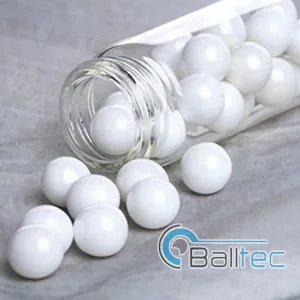
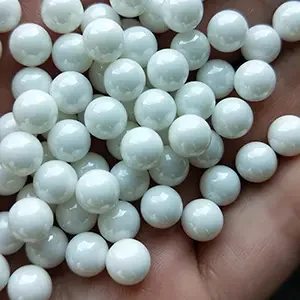
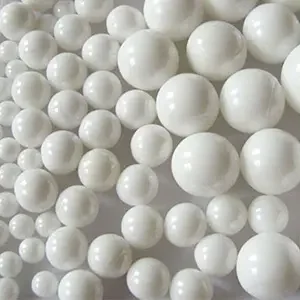
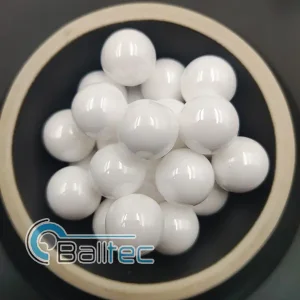
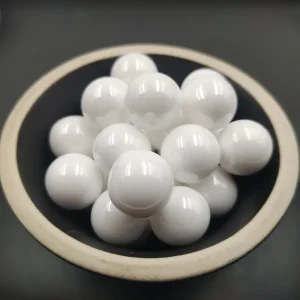
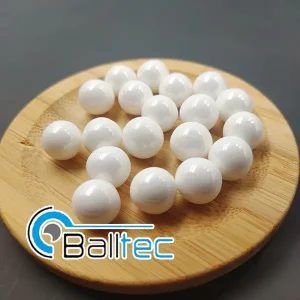
Examining how high-purity micro-structural ceramics drive modern printed circuit board (PCB) substrates, semiconductor packaging, and sub-micron powder refinement.
The global electronics sector relies heavily on high-frequency, thermally resilient, and dielectric structural materials. In the domain of advanced electronic circuitry, the term "China Parts of Circuit Supplier & Factories" encompasses an integrated industrial ecosystem responsible for producing non-metallic circuit substrates, piezoelectric ceramic elements, structural insulating balls, high-frequency dielectric carriers, and specialized ceramic grinding media used in the synthesis of MLCC (Multi-Layer Ceramic Capacitors) powders.
As integrated circuits shrink to single-digit nanometer nodes, thermal dissipation and mechanical rigidity become dominant engineering bottlenecks. Traditional FR-4 glass-reinforced epoxy laminates fail to maintain structural stability under operational temperatures exceeding 150°C or high-frequency RF transmission environments. Consequently, advanced ceramics—specifically Yttria-Stabilized Tetragonal Zirconia Polycrystals (Y-TZP) and High-Purity Alumina ($Al_2O_3$)—have emerged as foundational materials in direct bonded copper (DBC) substrates, direct plated copper (DPC) circuits, and structural micro-bearings within precision circuit assembly machinery.
High thermal conductivity combined with exceptionally low coefficients of thermal expansion (CTE) matching silicon, preventing solder joint fatigue in high-power IGBT modules.
Superior volume resistivity (> $10^{14}$ $\Omega\cdot cm$) and high dielectric breakdown voltage (>20 kV/mm) to prevent leakage currents in high-voltage automotive circuitry.
Zirconia media engineered for nano-scale synthesis of titanate, barium, and rare-earth dielectric slurries without introducing metallic cross-contamination.
Furthermore, China's centralized manufacturing hubs in regions such as Jiangxi (Pingxiang) feature integrated vertical production lines: from raw mineral chemical synthesis and spray-drying granulating towers to high-pressure cold isostatic pressing (CIP) and high-temperature gas-pressure sintering furnaces. This integration allows Chinese suppliers to deliver circuit-grade ceramic media and structural elements with unprecedented batch-to-batch consistency.
Comparative structural assessment of advanced technical ceramics utilized in electronic circuit manufacturing, micro-milling, and dielectric isolation.
Choosing the ideal ceramic material for circuit substrate support, high-frequency insulating spacers, or ultra-fine grinding media requires evaluating physical parameters such as density, flexural strength, thermal conductivity, and fracture toughness ($K_{1C}$). Below is an engineering comparison matrix detailing the material grades supplied by specialized Chinese manufacturers.
| Material Composition | Density (g/cm³) | Flexural Strength (MPa) | Thermal Conductivity (W/m·K) | Dielectric Constant (1 MHz) | Primary Electronic Circuit Application |
|---|---|---|---|---|---|
| Y-TZP Zirconia ($ZrO_2$) | ≥ 6.00 | 1,000 - 1,200 | 2.5 - 3.0 | 28 - 30 | Sub-micron MLCC powder milling, high-toughness micro-bearings |
| High-Purity Alumina ($99.9\% Al_2O_3$) | 3.92 - 3.96 | 380 - 450 | 30 - 35 | 9.8 - 10.1 | DBC circuit substrates, IC packaging insulators, high-voltage standoffs |
| Zirconia Toughened Alumina (ZTA) | 4.10 - 4.30 | 600 - 800 | 20 - 25 | 14 - 16 | Heavy-duty ball mill media for electronic grade raw mineral refining |
| Silicon Nitride ($Si_3N_4$) | 3.20 - 3.25 | 850 - 1,000 | 60 - 80 | 7.8 - 8.2 | High-speed spindle bearings for circuit board CNC drilling, EV power modules |
The operational longevity of zirconia-based circuit components and grinding media stems from phase transformation toughening. Unstabilized zirconia undergoes a destructive phase transition from tetragonal to monoclinic ($t \rightarrow m$) upon cooling, accompanied by a ~3-5% volume expansion. By introducing 3 mol% Yttria ($Y_2O_3$) as a stabilizing agent, Chinese manufacturers freeze the metastably preserved tetragonal phase at room temperature.
When stress propagates through the material, micro-cracks trigger the local $t \rightarrow m$ transformation. The associated volumetric expansion places the crack tip under compressive stress, effectively arresting crack growth. This mechanism yields a fracture toughness ($K_{1C}$) of 7–10 $MPa\cdot m^{1/2}$, enabling zirconia grinding balls to withstand intensive kinetic impact inside high-energy horizontal bead mills without fracturing or spalling.
Strategic purchasing perspectives for international OEMs, procurement directors, and tier-1 electronic suppliers sourcing from Chinese ceramic production hubs.
Procuring advanced ceramics directly from specialized Chinese suppliers reduces initial material expenditure by 30% to 45% compared to Western European or North American counterparts. More importantly, high-density Y-TZP media exhibit wear rates as low as < 0.01 g/kg·h. This drastically lowers long-term operational costs by reducing media consumption and minimizing downtime for bead replenishment in continuous milling circuits.
Chinese factories leverage vast industrial clusters equipped with multi-cavity dry presses, tape casting units, and automated tunnel kilns. This setup supports flexible batch production—ranging from micro-spheres with diameters of 0.05mm for nanoscale slurry milling to multi-inch ceramic substrate blocks engineered for high-power semiconductor packaging.
The concentration of ceramic manufacturing in Pingxiang, Jiangxi, creates strong supply chain synergies. From raw material refining to specialized kiln thermal engineering and ISO-certified quality testing labs, the entire value chain operates within a localized industrial radius. This geographic integration minimizes lead times, mitigates international freight disruption risks, and enables rapid scaling to meet seasonal spikes in global consumer electronics production.
Discover how precision parts of circuit components drive performance across automotive electronics, green energy storage, medical instrumentation, and semiconductor fabrication.
Direct Bonded Copper (DBC) substrates utilizing 96% and 99.9% $Al_2O_3$ provide structural support and electrical insulation for SiC power inverters, enabling fast charging and high efficiency in modern electric vehicles.
Yttria-stabilized zirconia media are used in high-energy agitator bead mills to grind Barium Titanate ($BaTiO_3$) powders down to sub-100nm particle sizes, ensuring pinhole-free dielectric layers in multi-layer capacitors.
Advanced ceramic spacers and dielectric resonators exhibit ultra-low loss tangents ($tan\,\delta < 10^{-4}$), preserving signal integrity across 5G millimeter-wave circuit architectures and satellite communications.
During semiconductor wafer manufacturing, chemical mechanical planarization slurries require ultra-pure, ultra-fine abrasive particles. High-purity alumina ceramic balls and zirconia dispersion media ensure that CMP slurries achieve tightly controlled particle size distributions (PSD), eliminating large oversized agglomerates that could cause scratch defects on sub-nanometer silicon wafers.
Exceeding international standards for electronic components, environmental safety, and trace element management.
Leading Chinese ceramic manufacturers adhere to international quality and environmental management systems. Comprehensive testing protocols ensure every batch of ceramic products meets exact physical, mechanical, and chemical requirements prior to global shipment.
Forecasting trends in sub-nanometer grinding media, additive ceramic manufacturing, and ultra-high thermal conductivity substrate materials.
Demand for ultra-fine electronic inks and quantum dot displays is driving development of yttria-stabilized micro-beads under 30 microns in diameter, manufactured via aerosol droplet solidification techniques.
Stereolithography (SLA) and Digital Light Processing (DLP) of ceramic resins enable complex 3D internal cooling channels within circuit substrates, improving thermal management in high-power radar modules.
As electric vehicle powertrains transition to 800V+ architectures, Silicon Nitride ($Si_3N_4$) and Aluminum Nitride ($AlN$) substrates will increasingly replace standard alumina due to their high thermal conductivity (>170 W/m·K) and superior flexural strength.
Detailed engineering and procurement insights to guide your selection of advanced ceramic components and milling media from Chinese suppliers.
Browse our expanded portfolio of specialized ceramic media, bearing balls, and high-performance industrial solutions manufactured in China.