Follow 


The Seoul Metropolitan Area (comprising Seoul, Incheon, and Gyeonggi-do) stands as one of the world's most concentrated hubs for high-technology manufacturing, biomedical engineering, and semiconductor component fabrication. From the dental laboratory clusters in Gangnam and Geumcheon-gu to the semiconductor mega-clusters in Suwon, Hwaseong, and Icheon, the local industrial ecosystem demands chemical materials of uncompromising consistency, sub-micron particle distribution, and zero trace contamination.
As a premier direct manufacturer and exporter, Pingxiang Baitian (Ball-tec) New Materials Co., Ltd. supplies advanced ceramic raw materials tailored specifically to the operational requirements of South Korean enterprises. With a 100,000 m² state-of-the-art production base in Jiangxi, China, our R&D team—led by industry veterans with deep roots in Japanese and American technical ceramics—bridges the gap between high-end material synthesis and cost-effective bulk supply.
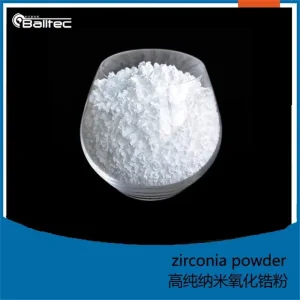
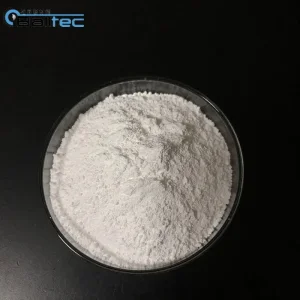
Historically dependent on Western European or specialized domestic Japanese powder refiners, South Korean manufacturers face rising raw material overheads and unpredictable lead times. Baitian's hydrothermal synthetic process yields spray-dried Y-TZP powder with equivalent crystallographic stability (tetragonal phase > 95%) at a 25% to 35% Total Cost of Ownership (TCO) advantage, accompanied by rapid maritime dispatch from East China ports directly to Incheon and Busan.
Zirconia ($ZrO_2$) exhibits three crystallographic polymorphs: Monoclinic ($m-ZrO_2$) stable up to 1170°C, Tetragonal ($t-ZrO_2$) stable from 1170°C to 2370°C, and Cubic ($c-ZrO_2$) above 2370°C. By doping pure zirconia with stabilizing oxides such as Yttria ($Y_2O_3$) or Magnesia ($MgO$), the high-strength tetragonal phase is metastably retained at room temperature. Under mechanical stress, stress-induced phase transformation ($t \rightarrow m$) occurs, expanding grain volume by ~4% and arresting microcrack propagation—a key phenomenon known as transformation toughening.
| Product Grade | Stabilizer / Composition | BET Surface Area (m²/g) | Particle Size D₅₀ (μm) | Sintering Temp (°C) | Sintered Density (g/cm³) | Flexural Strength (MPa) | Primary Seoul Application |
|---|---|---|---|---|---|---|---|
| Dental Y-TZP (3YSZ) | 3 mol% Y₂O₃ (5.2 wt%) | 7.0 - 10.0 | 0.25 - 0.35 | 1450 - 1530 | ≥ 6.05 | 1100 - 1400 | CAD/CAM Dental Blocks (Gangnam Labs) |
| High-Translucency (4YSZ / 5YSZ) | 4.5 - 5.5 mol% Y₂O₃ | 8.0 - 12.0 | 0.20 - 0.30 | 1480 - 1550 | ≥ 6.02 | 700 - 900 | Anterior Dental Veneers & Aesthetics |
| Nano Monoclinic ZrO₂ | Unstabilized (>99.9%) | 15.0 - 30.0 | 0.05 - 0.15 | 1300 - 1450 | 5.85 | N/A (Functional Additive) | MLCC Capacitors, Optical Glass, Pigments |
| Mg-PSZ Powder | 3.0 - 3.5 wt% MgO | 5.0 - 9.0 | 0.50 - 1.20 | 1650 - 1750 | ≥ 5.75 | 650 - 800 | Thermal Barrier & Molten Metal Valves |
| ZTA (Zirconia Toughened Alumina) | 15 - 30% ZrO₂ in Al₂O₃ | 6.0 - 11.0 | 0.40 - 0.80 | 1550 - 1650 | 4.10 - 4.50 | 750 - 950 | Semiconductor Ceramic Rings & Guides |
| 8YSZ Electrolyte Powder | 8 mol% Y₂O₃ (Fully Cubic) | 10.0 - 14.0 | 0.20 - 0.40 | 1400 - 1500 | ≥ 5.90 | 300 - 400 | Solid Oxide Fuel Cell (SOFC) Membranes |
Unlike secondary compounders who buy intermediate zircon sand, Baitian maintains integrated chemical precipitation and hydrothermal synthesis lines. This guarantees batch-to-batch chemical purity ($ZrO_2 + HfO_2 \ge 99.9\%$), extremely low radioactive trace elements ($Th, U < 100 Bq/kg$), and perfectly spherical spray-dried granules with binder systems designed for automatic press die filling.
Situated in Pingxiang's Ceramic Industrial Park with direct expressway access to Shanghai and Ningbo ports, Baitian routes Seoul shipments via direct container feeder lines. Goods clear custom inspection rapidly with full KC chemical registration compliance, arriving at Seoul/Incheon factories within 5 business days from order fulfillment.
Our dedicated export department handles all South Korea import documentation, including Certificate of Origin (Form R / China-Korea FTA reducing import duties), SDS (Safety Data Sheets in Korean adhering to K-REACH guidelines), and full batch ICP-OES chemical analysis test certificates.
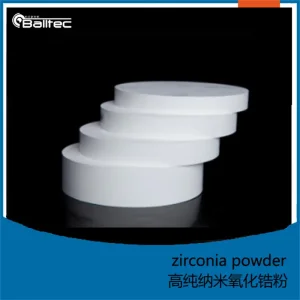
Seoul is a global capital for cosmetic and restorative dentistry. Manufacturers of multi-layered zirconia blank discs require ready-to-press (RTP) Y-TZP powder with uniform green density after cold isostatic pressing. Baitian's 3YSZ-P and 5YSZ powders provide predictable shrink rates (1.200 ± 0.005), eliminating dimensional warping during high-temperature sintering and matching Vita Shade standards flawlessly.
The Gyeonggi semiconductor belt relies on high-purity ZTA (Zirconia Toughened Alumina) and Y-TZP structural components for plasma etch chambers, wafer handling arms, and CMP retaining rings. Baitian powders deliver extreme plasma erosion resistance, zero electrical conductivity, and high mechanical hardness (Vickers > 1350 HV) to minimize particulate contamination during sub-3nm wafer processing.
South Korea's Hydrogen Economy Roadmap has accelerated R&D into Solid Oxide Fuel Cells (SOFC) and Solid Oxide Electrolyzer Cells (SOEC). Baitian's 8YSZ powder boasts high oxygen-ion conductivity ($\sigma > 0.1 S/cm$ at 800°C) and sub-micron primary particle size, allowing tape-casting manufacturers to form ultra-thin, pinhole-free dense electrolyte layers with low internal resistance.
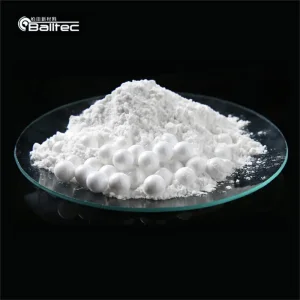
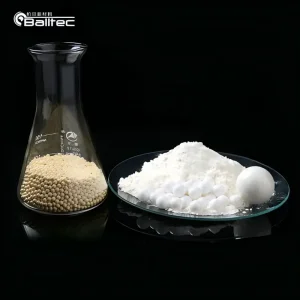
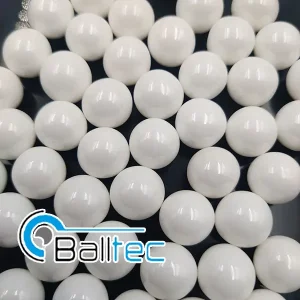
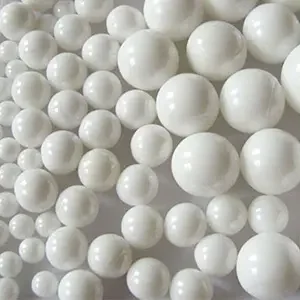
To produce Multi-Layer Ceramic Capacitors (MLCC), dielectric powders must be milled down to the nanometer scale without introducing metallic impurity. Baitian supplies both pure nanometer monoclinic zirconia powder and ultra-dense Y-TZP grinding beads ($6.0 g/cm^3$), ensuring zero contamination in bead mills across South Korean passive component lines.
Baitian (Ball-tec) maintains full compliance with international standards and South Korean environmental safety frameworks. Our quality management system operates under ISO 9001:2015, ISO 14001:2015, and ISO 13485 (Medical Devices Quality Management for Dental-grade powders).
Every production lot of Zirconia powder undergoes Inductively Coupled Plasma Optical Emission Spectrometry (ICP-OES) to quantify trace elements. We maintain strict control limits:
We provide a complete documentation package with every shipment to Seoul buyers:
As advanced ceramics transition from conventional pressing to additive manufacturing (3D ceramic printing via SLA/DLP) and ultra-high speed sintering, powder characteristics must evolve accordingly. Baitian's research lab is actively collaborating with key research institutions to pioneer next-generation powder technologies:
Spontaneous hydrothermal aging ($t \rightarrow m$ transformation in moist environments at 100°C - 300°C) has long been a challenge for 3YSZ ceramics. Baitian’s micro-alloying doping technology prevents surface grain lattice destabilization, ensuring over 50 years of mechanical integrity in dental implants and industrial seals.
Custom surface-treated monoclinic and Y-TZP powders optimized for UV-curable resin suspensions. Featuring controlled surface charge ($\zeta$-potential > +40mV) and narrow particle size distribution, these powders enable 45-65 vol% ceramic loading with low slurry viscosity for stereolithography (SLA) 3D printing.
Contact our engineering support team today to request technical data sheets (TDS), safety data sheets (SDS), or evaluation samples delivered directly to your facility in Seoul, Incheon, or Gyeonggi-do.
Send Inquiry Now