Follow 


Engineered for Costa Rica’s expanding medical device, dental block, and precision manufacturing sectors.
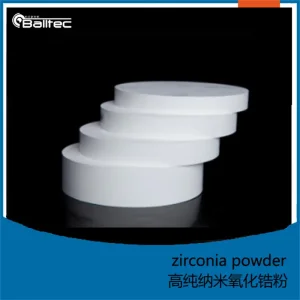
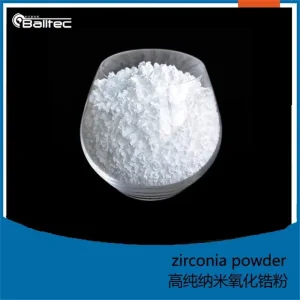
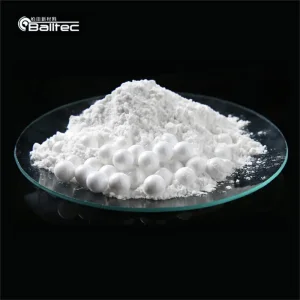
An in-depth analysis of how Costa Rica transformed into Central America’s premier medical device and high-precision manufacturing hub.
Over the past two decades, Costa Rica has successfully positioned itself as a global leader in high-tech manufacturing, medical technology (MedTech), and life sciences. Driven by favorable free-trade zones (such as Coyol Free Zone in Alajuela, Zeta Free Zone in Cartago, and America Free Zone in Heredia), the nation hosts over 300 multinational tech enterprises, including Tier-1 OEMs in medical devices, dental CAD/CAM systems, precision electronics, and clean technology.
As these industries advance from basic assembly to sophisticated component fabrication, the local demand for advanced inorganic materials—specifically Zirconium Oxide (ZrO₂) Powders—has grown exponentially. Zirconia serves as a critical raw material due to its outstanding mechanical strength, chemical inertness, phase transformation toughening, high fracture toughness ($K_{IC} \ge 7 \text{ MPa}\cdot\text{m}^{1/2}$), and superior biocompatibility.
High demand for 3YSZ bio-zirconia powder used in orthopedic implants, surgical tool components, and dental crowns produced in Alajuela and San José free zones.
Central American food processing, chemical plants, and agricultural machinery require ZTA and Mg-PSZ components for slurry pumps, nozzles, and valve seals.
Costa Rica’s commitment to 99% renewable energy drives research and deployment of Solid Oxide Fuel Cells (SOFC) requiring 8YSZ electrolytes for energy storage.
Understanding Y-TZP, Mg-PSZ, and ZTA phase transformation to optimize manufacturing yields.
Pure zirconium oxide ($ZrO_2$) exhibits three distinct crystal polymorphs depending on temperature:
During cooling, un-stabilized zirconia undergoes a phase transition from tetragonal to monoclinic accompanied by a 3% to 5% volumetric expansion, which causes catastrophic cracking in sintered parts. To retain the high-strength tetragonal phase at room temperature, chemical dopants such as Yttria ($Y_2O_3$), Magnesia ($MgO$), or Ceria ($CeO_2$) are precisely co-precipitated into the crystal lattice.
The table below summarizes our standardized zirconia powder grades supplied directly to factories across Costa Rica and international markets:
| Grade Designation | Stabilizer content (wt%) | BET Surface Area (m²/g) | Pressing Technique | Target Application |
|---|---|---|---|---|
| B-Y3Z-D (Dental Grade) | 5.15 ± 0.2% Y₂O₃ (3mol%) | 7.0 - 10.0 | Dry Pressing / CIP | Translucent Dental Blocks, CAD/CAM Milling Blanks |
| B-Y3Z-S (Spray Dried) | 5.15 ± 0.3% Y₂O₃ (3mol%) | 12.0 - 15.0 | Automatic Pressing | Structural Components, Mechanical Seals, Pump Liners |
| B-Y8Z-SOFC | 13.5 ± 0.5% Y₂O₃ (8mol%) | 6.0 - 9.0 | Tape Casting / Screen Printing | Solid Oxide Fuel Cell Electrolytes, Oxygen Sensors |
| B-ZTA30 | 30% ZrO₂ / 70% Al₂O₃ | 8.0 - 11.0 | Isostatic Pressing | High-Impact Grinding Media, Wear Plates, Cutting Tools |
Combining cost optimization, rigorous quality assurance (ISO 9001/13485), and chemical customization.
From zircon sand purification to liquid-phase chemical precipitation and spray drying, complete supply chain control eliminates batch-to-batch fluctuation.
Every shipment delivered to Limón or Caldera ports includes ICP-OES elemental analyses, XRD phase purity data, particle size distribution curves, and binder residue validation.
By bypassing European and American trading intermediaries, Costa Rican plants secure direct factory pricing, cutting raw material procurement overhead by 25% to 40%.
Precision formulations tailored to specific manufacturing and processing demands.
Costa Rican dental labs and block producers require spray-dried 3YSZ powder containing organic binders (PVA/PEG) that yield consistent green density during cold isostatic pressing (CIP). Our powders guarantee predictable sintering shrinkage factors (1.20 to 1.25) and high light translucency (≥ 49% for 5YSZ), essential for full-contour crowns and multi-unit bridges.
Biomedical component manufacturers demand extreme purity ($ZrO_2 + HfO_2 \ge 99.9\%$, $Al_2O_3 < 0.05\%$). Hydrothermally synthesized nanometer powders provide ultra-fine grain microstructures (< 0.3 μm) after sintering, resisting hydrothermal degradation (aging behavior in warm humid environments) in accordance with ISO 13356 standards.
For chemical handling, water treatment, and food packaging machinery in Cartago and Heredia, components fabricated from our ZTA and Magnesia-stabilized powders deliver superior resistance to acidic corrosion, high thermal shock, and cavitation wear under high fluid velocity.
Process industries utilizing bead mills for paint, ink, and electronic slurry dispersion benefit from our high-density Y-TZP grinding beads ($6.0 \text{ g/cm}^3$) and High Purity Alumina media. Micro-grinding beads ensure near-zero wear debris and zero metallic contamination of processed materials.
Direct technical answers addressing international shipping, specifications, and quality control.
We implement strict SPC (Statistical Process Control) throughout hydrothermal synthesis, spray drying, and calcination. Every batch undergoes laser particle size analysis (Malvern Mastersizer), surface area measurement (BET), ICP elemental testing, and test-sintering shrinkage verification. Full Certificates of Analysis (COA) are provided prior to export dispatch.
Zirconia powders are prone to moisture absorption which impacts pressing behavior. We package all export orders in heavy-duty, aluminum-foil vacuum bags (10kg or 25kg per bag), enclosed in sealed plastic drums or fiber drums stacked on wooden or plastic export-certified pallets with stretch wrap.
Yes. We offer both ready-to-press (RTP) spray-dried powders with customized binder formulations tailored to your compaction pressure, as well as binder-free powders for slip casting, gel casting, or custom compounding.
Production lead time for standard Y-TZP grades is typically 7-14 days. Ocean transit from major Chinese ports (Ningbo, Shanghai, Shenzhen) to Puerto Limón (Atlantic coast) or Puerto Caldera (Pacific coast) ranges between 22 to 30 days. Express air freight to Juan Santamaría International Airport (SJO) is available for urgent R&D samples.
Y-TZP (Yttria-Stabilized Tetragonal Zirconia Polycrystal) consists predominantly of zirconium oxide with 3mol% yttria, yielding higher flexural strength (1200 MPa) and biocompatibility. ZTA (Zirconia Toughened Alumina) blends alumina matrix (typically 70-85%) with zirconia grains (15-30%), offering an optimal compromise between high hardness, elevated temperature resistance, and lower overall material cost.
Explore our complete manufacturing series available for direct factory shipment to Costa Rica.
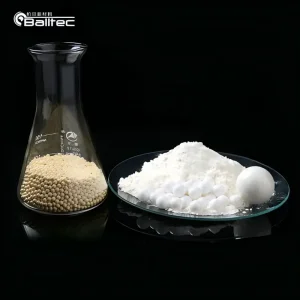
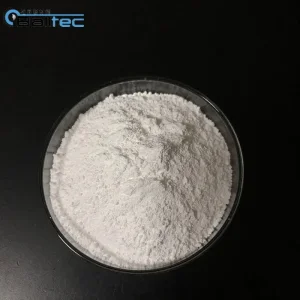
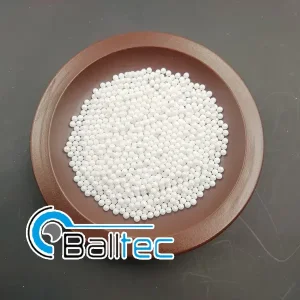
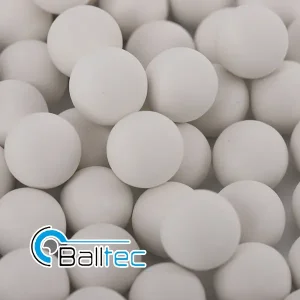
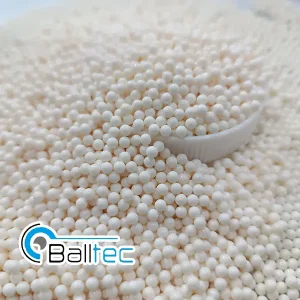
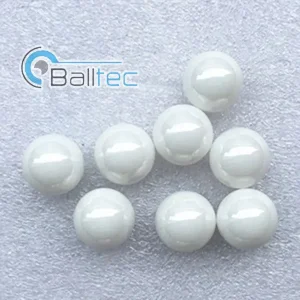
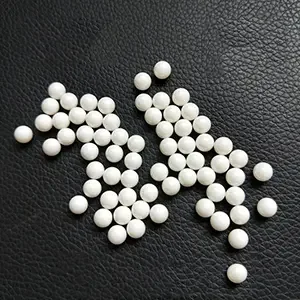
Partner directly with China’s leading advanced ceramic powder manufacturer. We provide engineering support, custom granulations, and reliable logistics for your Costa Rica facility.
Send Inquiry Now