Follow 


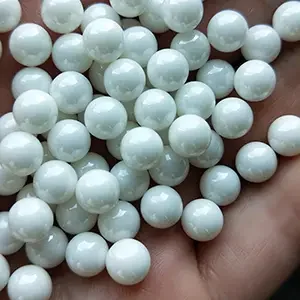
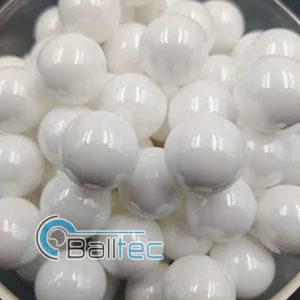
Capacitor dielectric production requires sub-micron ball milling and zero-contamination dispersion. Explore our qualified high-purity zirconia and ceramic media engineered for high-performance dielectric slurries.
The transformation of power electronics—spurred by EV drivetrains, AI accelerated computing, and photovoltaic grid tied systems—has fundamentally altered the demands placed upon capacitor manufacturers and exporters. Once regarded primarily as high-volume providers of standard aluminum electrolytic capacitors, elite Chinese exporters have achieved deep vertical integration across fine raw materials, advanced dielectric thin films, and automated surface mount manufacturing.
The transition from 400V architecture to 800V Silicon Carbide (SiC) powertrains demands DC-link film capacitors with self-healing metallization, extremely low Equivalent Series Resistance (ESR), and continuous thermal operation exceeding 125°C.
High-current GPU power stages require multi-layer ceramic capacitors (MLCC) exhibiting ultra-low Equivalent Series Inductance (ESL) and exceptional capacitance retention under high-frequency transient switching loads.
Centralized utility inverters and microinverters rely on high-ripple-current aluminum electrolytic and dry polypropylene film capacitors capable of delivering uninterrupted service across 15 to 25 year operational lifespans.
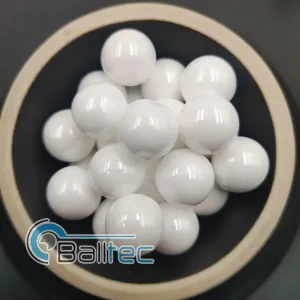
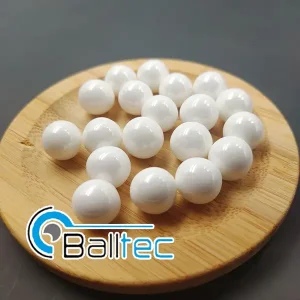
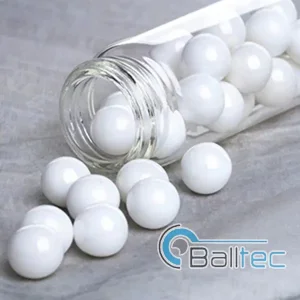
Capacitance volume scaling starts at sub-micron levels. Chinese exporters succeed globally by coupling cutting-edge nano-grinding media and high-purity zirconia/alumina tools to ensure dielectric precursor powders remain uncontaminated.
Procuring capacitors or dielectric processing components from modern Chinese manufacturing hubs is no longer merely a low-cost transaction. It is an integration with vertically consolidated production clusters that mitigate supply disruption risks through automated synthesis, closed-loop material cycles, and predictive quality controls.
From barium titanate synthesis to high-purity aluminum etching foil, China’s industrial bases in Jiangxi, Guangdong, and Jiangsu eliminate overseas raw-material bottlenecks, ensuring reliable deliveries during unexpected global trade shifts.
Export-grade facilities employ multi-angle Automated Optical Inspection (AOI) alongside real-time capacitance, dielectric dissipation factor (DF/tanδ), and insulation resistance testing at production line speeds.
Tier-1 exporters cut the prototype-to-production lead cycle to under 3 weeks. Dedicated engineering teams support custom busbar integration, low-profile packaging, and bespoke thermal topologies.
Global procurement teams gain measurable supply efficiencies by coordinating with the appropriate specialized industrial cluster. China's domestic supply network is structured across distinct regional strengths.
The national center for advanced industrial ceramics, precision grinding media, yttria-stabilized zirconia balls, and raw dielectric precursor processing.
Global epicenter for high-frequency MLCCs, ultra-miniature tantalum SMD units, consumer electronics components, and rapid turnkey export logistics.
Premier hub for high-voltage DC-link film capacitors, renewable energy inverters, motor run capacitors, and industrial power factor correction modules.
Specialized centers for aluminum etched foils, high-temperature solid electrolyte aluminum capacitors, and defense/aerospace electronic ceramics.
Leading exporters of polymer hybrid capacitors, automotive traction inverter DC-link assemblies, and high-efficiency wind turbine capacitors.
A reference engineering checklist comparing standard commercial exports against tier-1 precision components used across demanding automotive, telecom, and renewable platforms.
| Capacitor / Media Category | Dielectric / Core Material | Operating Specs | Key Export Standard | Target Industrial Use |
|---|---|---|---|---|
| High-Voltage Film (DC-Link) | Segmented Metallized Polypropylene Film | Up to 1,500 VDC; -40°C to +105°C; Low ESR < 0.8 mΩ | AEC-Q200 / IEC 61071 | EV Traction Inverters, Solar String Converters, ESS |
| Multilayer Ceramic (MLCC) | Nanoscale Barium Titanate (BaTiO3) / Ni Electrodes | 0201 to 2220 format; X7R, X8R, C0G/NP0; Up to 100μF | RoHS / REACH / AEC-Q200 | AI Server VRMs, 5G Base Stations, ADAS Sensor Hubs |
| Polymer Solid Aluminum | Conductive Polymer with Etched High-Purity Foil | Ultra-low ESR < 5 mΩ; 2,000h to 10,000h @ 105°C/125°C | IEC 60384-4 | Motherboards, High-Efficiency Industrial Switched Power |
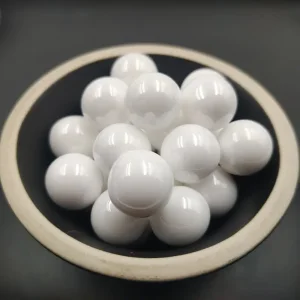
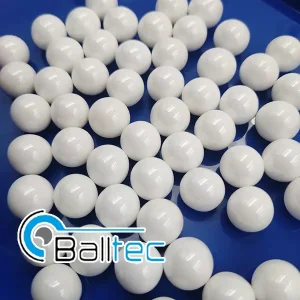
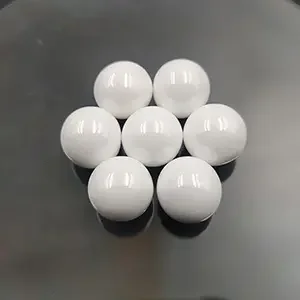
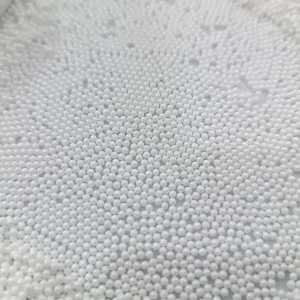
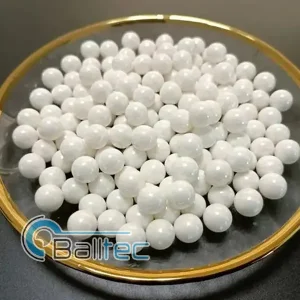
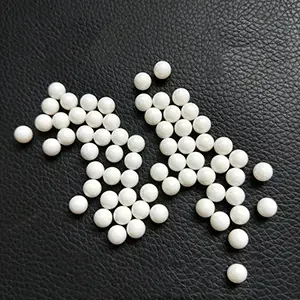
| Precision Grinding Beads | Yttria-Stabilized Zirconia (95% ZrO2 / 5% Y2O3) | Density > 6.0 g/cm³; Mohs Hardness 9.0; Sphericity > 98% | ISO 9001 / Traceable Batch | Sub-micron MLCC Slurry Milling, Ceramic Dielectric Prep |
Actionable guidance from experienced quality auditors to protect overseas procurement teams against premature failures, capacitance drift, and counterfeit component sourcing.
Request documentation of the chemical source of raw dielectric powders or polymer resins. Tier-1 manufacturers verify batch-level purity via ICP-OES and X-ray diffraction tests to prevent trace metal contamination that accelerates dielectric breakdown.
Prior to volume sign-off, verify 1,000-hour High-Temperature High-Humidity Bias (85°C/85% RH) and Thermal Shock cycling test reports (-55°C to +125°C) to validate resin sealing and termination bond strength.
Ensure your supplier implements vacuum moisture barrier bags (MBB) with humidity indicator cards and silica desiccant. Moisture absorption prior to SMT reflow leads to the destructive "popcorn effect" in sensitive dielectric layers.
Partner with established Chinese exporters that offer comprehensive DDP, CIF, or FOB options with established bonded warehouse channels in Singapore, Rotterdam, and Los Angeles to streamline tariff and import operations.
Direct technical and operational answers to common inquiries from international OEM and distributor purchasing managers.
MLCC dielectric layers rely on ultra-fine barium titanate and ceramic dopants milled to nanometer sizes. Low-grade grinding media introduce alumina, silica, or metallic wear debris into the slurry, forming conductive impurities that degrade insulation resistance and cause early dielectric punch-through. High-density yttria-stabilized zirconia media guarantee contamination-free dispersion.
Automotive compliance requires comprehensive failure mode avoidance (FMEA), automated real-time optical sorting, sub-surface acoustic microscopy to catch microcracks, and dedicated cleanrooms maintained below ISO Class 6 standards to prevent airborne contamination during foil winding and ceramic tape casting.
Standard catalog components ship within 1 to 2 weeks. Custom film capacitor assemblies (tailored busbars, low-inductance packaging) typically require 3 to 4 weeks for pilot validation samples and 5 to 6 weeks for bulk container production, supported by direct air-courier and intermodal ocean routes.
Yes. Legitimate exporters provide current test certificates from globally accredited testing bodies (SGS, TÜV, Intertek) confirming full compliance with EU RoHS 2.0 (2011/65/EU and 2015/863), REACH SVHC candidate lists, and Conflict Minerals reporting policies (CMRT).
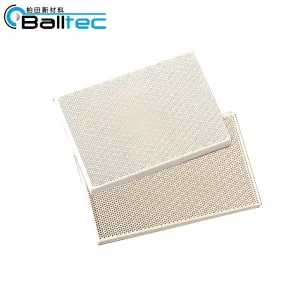
Complete your production sourcing with high-grade toughened zirconia powders, bio-inert balls, infrared combustion plates, and industrial media engineered for extreme duty cycles.