Follow 


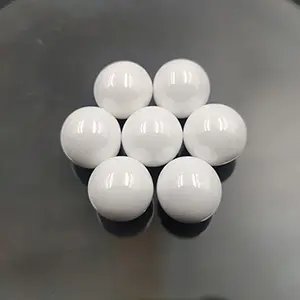
| Item | Specification |
|---|---|
| Main Material | Yttria-stabilized Zirconia (≥94.5%) |
| Bulk Density | ≥6.0 g/cm³ |
| Vickers Hardness | 1200–1350 HV |
| Sphericity | ≥0.95 |
| Wear Rate | ≤0.15 ppm/h |
| Size Range | 0.1mm–20mm |
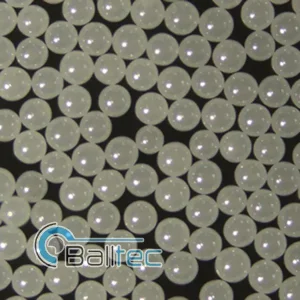
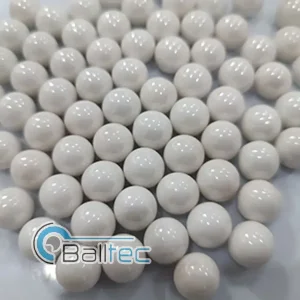
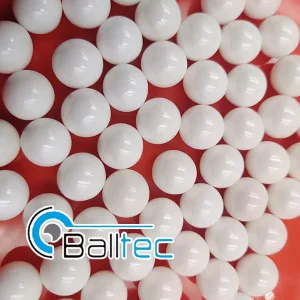
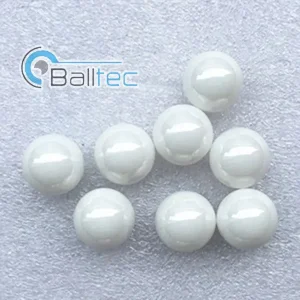
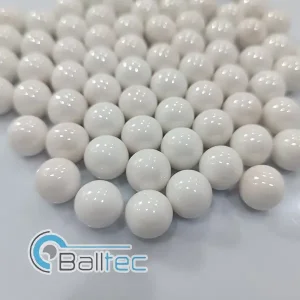
These zirconium oxide beads offer outstanding advantages in particle grinding and uniform dispersion. Their high-density structure provides powerful and uniform kinetic energy, enabling thorough crushing of coarse particles and complete dispersion of clustered materials without local over-grinding. High toughness resists cracking and abrasion, avoiding bead debris that affects material uniformity. The smooth spherical surface ensures consistent contact with materials, greatly improving dispersion homogeneity and grinding efficiency while extending service life.
Optimized for particle grinding and uniform dispersion, the beads are widely used in multiple fine-processing industries. They are ideal for grinding and dispersing coatings, printing inks, pigment powders, lithium battery electrode materials, fine chemical materials and cosmetic fillers. Fully compatible with sand mills and planetary ball mills, they solve material agglomeration problems and meet industrial demands for uniform particle size and stable batch quality.
High sphericity (≥0.95) and uniform hardness provide balanced grinding force, which disperses materials evenly without agglomeration and ensures consistent particle size.
Yes, ultra-low wear rate (≤0.15 ppm/h) and high structural stability support continuous operation, maintaining stable dispersion and grinding effects in mass production.
These beads are fully compatible with high-energy sand mills, vertical and horizontal bead mills, as well as planetary ball mills used in industrial fine processing.
Manufactured with high-purity yttria-stabilized zirconia (≥94.5%) and featuring excellent chemical inertness, they exhibit minimal abrasion to ensure pure, unpolluted output.
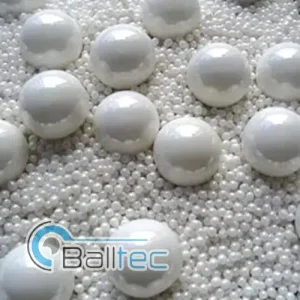
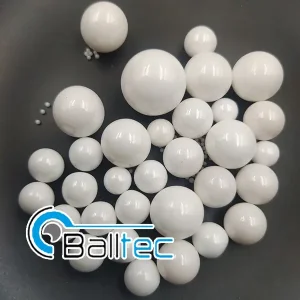
We offer a wide size range from 0.1mm to 20mm. Smaller sizes (0.1mm–1mm) are ideal for micro and nano-level fine dispersion, while larger sizes handle initial coarse crushing.