Follow 


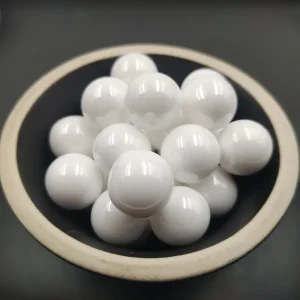
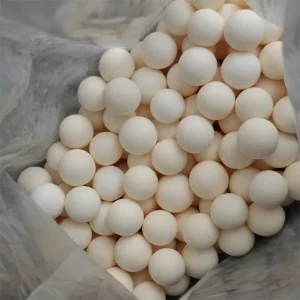
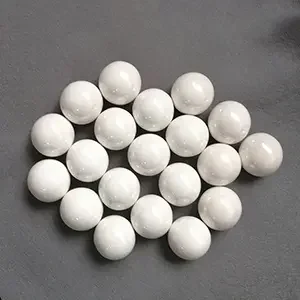
Explore our premium grade microcrystalline zirconia, high-purity alumina, and structural bearing ball solutions engineered for zero-contamination ultra-fine grinding and extreme load applications.
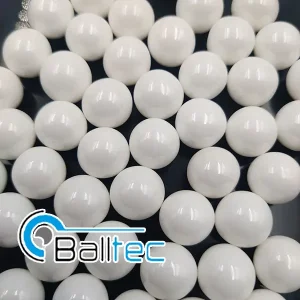
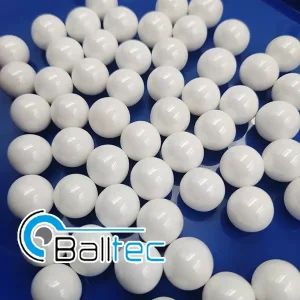
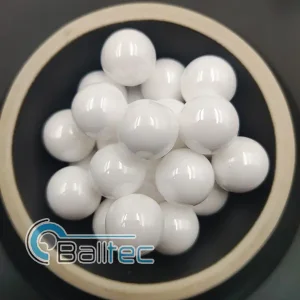
A comprehensive study on tribological technological shifts, supply chain centralization, and why precision advanced ceramics are systematically superseding traditional bearing steel alloys across high-duty applications.
The global precision bearing ecosystem is undergoing a fundamental structural transition. Driven by the rapid electrifications of automotive powertrains, high-frequency semiconductor processing, extreme-aerospace demands, and harsh chemical fluid handling, conventional chrome steel (AISI 52100) and stainless steel (AISI 440C/316) bearing balls are hitting physical material operation thresholds. Issues such as micro-welding under boundary lubrication, electrical fluting caused by stray inverter currents, high centripetal mechanical stress at extreme DN values (bore diameter in mm × RPM), and severe galvanic corrosion have forced global original equipment manufacturers (OEMs) to pivot toward advanced engineered ceramic media.
As premier China Ceramic Bearing Ball Suppliers & Exporters, Pingxiang Baitian (Ball-tec) New Materials Co., Ltd. sits at the nexus of this technological revolution. Leveraging China’s integrated industrial clusters in rare-earth refinement, synthetic powder chemistry, and high-pressure sintering infrastructure, modern manufacturing operations yield ceramic bearing elements that deliver unparalleled mechanical reliability, ultra-low density, exceptionally high thermal threshold endurance, and complete bio-inertness.
To quantify the engineering value proposition of ceramic bearing components versus legacy metallic substrates, the following empirical material science matrix outlines critical tribological and physical metrics:
| Physical / Mechanical Property | Silicon Nitride (Si3N4 - GPS/HIP) | Yttria Zirconia (Y-TZP ZrO2) | Alumina Ceramic (99.9% Al2O3) | Bearing Steel (AISI 52100 / 100Cr6) |
|---|---|---|---|---|
| Density (g/cm³) | 3.20 - 3.25 | 6.00 - 6.05 | 3.92 - 3.97 | 7.85 |
| Hardness (Vickers HV10) | 1600 - 1800 HV | 1200 - 1350 HV | 1500 - 1700 HV | 700 - 800 HV |
| Elastic Modulus (GPa) | 310 - 330 GPa | 200 - 210 GPa | 370 - 390 GPa | 208 GPa |
| Thermal Expansion (10⁻⁶/K) | 3.2 | 10.5 | 8.0 | 11.5 |
| Thermal Conductivity (W/m·K) | 27 - 35 | 2.5 - 3.0 | 28 - 32 | 46.6 |
| Electrical Resistivity (Ω·cm) | > 10¹⁴ (Insulator) | > 10¹² (Insulator) | > 10¹⁵ (Insulator) | 10⁻⁵ (Conductor) |
| Maximum Temp Limit (°C) | 1000 °C | 500 °C | 1400 °C | 150 °C |
Detailed analysis of Cold Isostatic Pressing (CIP), Hot Isostatic Pressing (HIP), sub-micron sphericity grinding mechanics, and non-destructive Weibull reliability testing.
The operational longevity of a ceramic bearing ball relies on raw powder purity. We utilize chemical co-precipitation and plasma synthesis to manufacture sub-micron $Y_2O_3$-stabilized zirconia (Y-TZP) and high alpha-phase $Si_3N_4$ powders containing < 50 ppm metallic impurities, eliminating thermal crack initiation sites.
Following initial sphere shaping via Cold Isostatic Pressing (CIP), green preforms undergo Sintering and subsequent Hot Isostatic Pressing (HIP) under 200 MPa of inert Argon gas at 1750°C. This eliminates internal micro-voids, achieving theoretical density (>99.99%) and supreme fracture toughness ($K_{IC} \ge 7.0 \text{ MPa}\cdot\text{m}^{1/2}$).
Final sphericity finishes are achieved using custom eccentric multi-stage diamond slurry lapping systems. Micro-surface roughness is controlled to $Ra \le 0.003\,\mu\text{m}$, fulfilling strict ISO 3290-2 Grade 3 and Grade 5 specifications to ensure zero friction losses in high-frequency applications.
Discover how China ceramic bearing balls solve mission-critical tribological, electrical, and corrosive challenges across tier-1 global manufacturing sectors.
Modern 800V Electric Vehicle (EV) drive motors experience rapid parasitic capacitive voltage leakage through rotor bearings, causing electrical discharge machining (EDM) fluting, micro-pitting, and grease degradation. Hybrid bearings utilizing Silicon Nitride (Si3N4) bearing balls act as complete galvanic isolators ($10^{14} \,\Omega\cdot\text{cm}$ electrical resistance), completely eliminating stray shaft currents while supporting motor rotation speeds exceeding 25,000 RPM.
In extreme ultra-high vacuum (UHV) environments (e.g., EUV photolithography, chemical vapor deposition equipment), oil-based or grease lubricants cannot be deployed due to outgassing contamination risk. Dry-running full-ceramic bearings constructed with high-purity Zirconia ($ZrO_2$) or Silicon Nitride ($Si_3N_4$) operate with an ultra-low friction coefficient under unlubricated vacuum conditions without particulate shedding or magnetic field distortion.
Positive displacement chemical dosing pumps, subsea oil valves, and flowmeters handling concentrated Hydrochloric Acid ($HCl$), Sulfuric Acid ($H_2SO_4$), or Strong Alkaline solutions destroy traditional 316L stainless steel balls within days. Precision 99.9% Alumina and Y-TZP Zirconia spheres display total chemical immunity, zero surface swelling, and no dimensional erosion, ensuring constant hydraulic metering pressure.
Rocket propulsion liquid oxygen/hydrogen pumps operate at cryogenic temperatures (-253°C) where lubricants freeze instantaneously. Ceramic bearing elements maintain high elastic modulus and ductility under cryogenic thermal shock, resisting centripetal expansion forces and providing extreme mechanical reliability during high-stress rocket engine burns.
How Pingxiang Baitian guarantees transparent quality control, international compliance certifications, and reliable local supply chain integration for overseas B2B buyers.
Every shipment is backed by comprehensive 3.1 Mill Test Certificates (MTC), full elemental spectroscopy (XRF/ICP-MS), density verification reports, and batch-indexed laser micrometer sphericity scans ensuring 100% compliance with ISO 3290-2 standards.
Our complete range of Zirconia ($ZrO_2$) and Alumina ($Al_2O_3$) ceramics are strictly validated for EU REACH and RoHS environmental standards. Special medical-grade bio-inert ceramic balls conform to ISO 10993 cytotoxicity and biocompatibility protocols for surgical instrument deployment.
Export products are vacuum-sealed in anti-static, moisture-proof cleanroom packaging, placed in reinforced non-concussive foam matrix drums, and supported by localized DDP/DAP logistics hub warehousing across North America, Europe, and Southeast Asia.
An authoritative look into ongoing advanced material breakthroughs, nanoscale grain refinement, self-lubricating ceramic matrices, and AI-driven quality inspection.
As operating parameters across robotics, aerospace, and renewable energy become increasingly severe, modern tribology demands continuous innovation. Pingxiang Baitian's dedicated R&D center is leading three foundational technological shifts over the coming decade:
By blending nanoscale Zirconia-Toughened Alumina (ZTA) and Alumina-Toughened Zirconia (ATZ) phase structures, engineering teams can fine-tune mechanical hardness and crack propagation behavior simultaneously. This eliminates micro-fracturing under impact loading, creating bearing balls with up to 300% higher Weibull modulus levels under severe cyclic stress.
Integrating solid lubricant nanophases (such as hexagonal Boron Nitride, h-BN, or graphene micro-sheets) directly into the dense $Si_3N_4$ matrix allows ceramic bearing balls to automatically maintain a low kinetic coefficient of friction ($f < 0.08$) even if external grease lubrication fails completely, protecting mission-critical spindles from sudden catastrophic seizure.
Replacing traditional batch sampling, our modern production lines are adopting high-resolution 360-degree machine vision systems integrated with real-time deep learning model classifiers. These systems inspect every manufactured ball at high speed, automatically rejecting sub-surface micro-cracks, pinhole voids, or geometric irregularities down to 0.1 microns.
Engineered answers addressing critical technical queries regarding ceramic bearing ball selection, tolerances, loading limitations, and global procurement procedures.
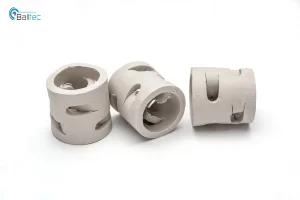
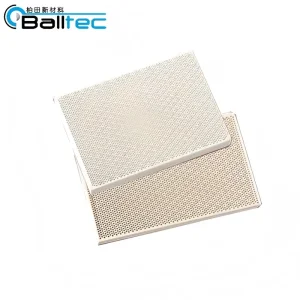
Direct factory supply for medical-grade bio-inert ceramic balls, high-efficiency scrubber packing, ultra-pure alumina media, and specialized functional ceramic plates.