Follow 


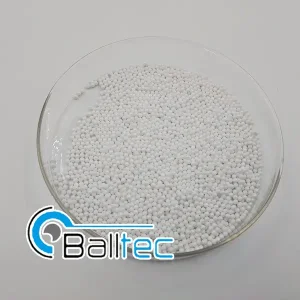
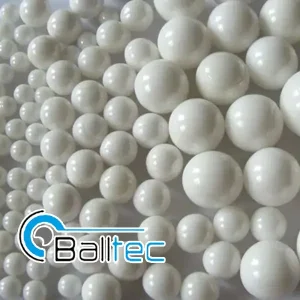
Explore our certified industrial grinding solutions. Manufactured with dense Yttria-Stabilized Tetragonal Zirconia Polycrystal (Y-TZP) formulations designed to deliver minimum wear rates, zero batch contamination, and maximum kinetic impact energy in horizontal agitator bead mills.
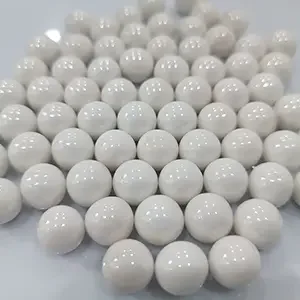
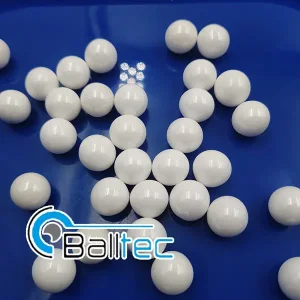
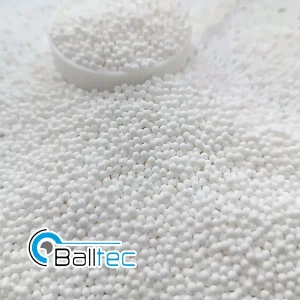
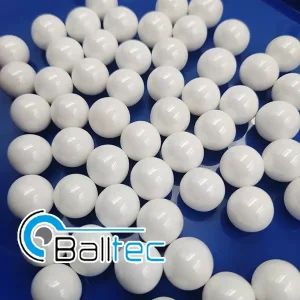
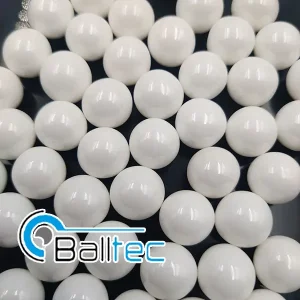
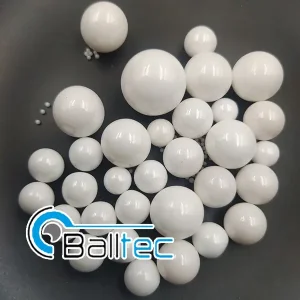
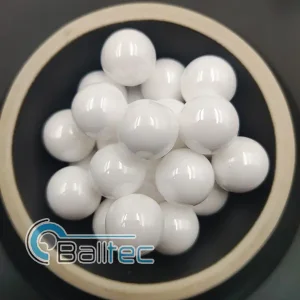
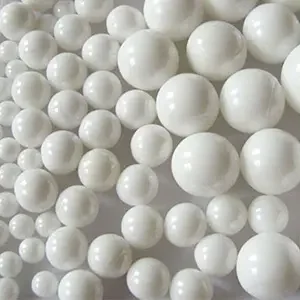
In modern ultra-fine wet milling processes, achieving sub-micron and nanometer-scale particle size distribution demands grinding media with exceptional kinetic energy density, extreme fracture toughness, and minimal volumetric wear. Yttria-Stabilized Tetragonal Zirconia Polycrystal (3mol% Y-TZP) beads represent the gold standard in advanced ceramic grinding media. Sintered from nano-scale yttria-stabilized zirconium oxide powders, these beads exhibit a dense, non-porous micro-crystalline structure optimized for high-energy bead mills.
The outstanding wear resistance of Y-TZP beads stems from a unique solid-state physical phenomenon known as Stress-Induced Phase Transformation Toughening. Pure zirconia (ZrO2) undergoes a phase transition from monoclinic (m) to tetragonal (t) at high temperatures. By doping the crystal lattice with 3 mol% Yttrium Oxide (Y2O3), the tetragonal phase is metastable at room temperature. When a micro-crack initiates due to intense impact within the grinding chamber, the local stress concentration triggers the metastable tetragonal phase to transform into the monoclinic phase. This transformation causes a 3% to 5% localized volumetric expansion, exerting compressive forces that compress the crack tip, effectively arresting crack propagation and preventing catastrophic bead fragmentation.
3mol% Y2O3 doping stabilizes the metastable tetragonal crystal phase. Stress triggers a volume-expanding t→m transformation that seals micro-cracks instantly under impact.
Delivers substantially higher kinetic energy per impact compared to alumina or zirconium silicate, slashing milling duration and raising throughput.
Ultra-low wear rate (<0.005 g/kg·h) guarantees pristine chemical purity, critical for lithium battery cathodes, MLCCs, and pharmaceutical formulations.
To select the optimal grinding media, process engineers must evaluate physical parameters including bulk density, Vickers hardness, crush strength, and grain size uniformity. Sourcing directly from top China Yttria-stabilized zirconia beads manufacturers provides industrial buyers with rigorously tested materials verified via ICP-OES chemical analysis and X-ray diffraction (XRD) crystal phase profiling.
| Technical Parameter | Yttria-Stabilized Zirconia (3mol% Y-TZP) | Cerium-Stabilized Zirconia (Ce-TZP) | Zirconium Silicate (ZrSiO4) | High-Purity Alumina (99.5% Al2O3) |
|---|---|---|---|---|
| Chemical Composition | ZrO2: ~95%, Y2O3: ~5.2% | ZrO2: ~80%, CeO2: ~20% | ZrO2: 65%, SiO2: 33% | Al2O3 ≥ 99.5% |
| Specific Density (g/cm³) | ≥ 6.00 - 6.05 | ≥ 6.20 | 4.00 - 4.10 | 3.80 - 3.90 |
| Bulk Density (kg/L) | 3.70 - 3.85 | 3.80 - 3.95 | 2.50 - 2.60 | 2.30 - 2.40 |
| Vickers Hardness (HV10) | 1250 - 1350 | 1150 - 1200 | 1000 | 1400 - 1500 |
| Fracture Toughness (MPa·m^1/2) | 8.0 - 10.0 | 9.0 - 12.0 | 4.5 | 4.0 - 5.0 |
| Equivalent Wear Rate (g/kg·h) | < 0.005 | < 0.010 | < 0.080 | < 0.030 |
| Average Grain Size (µm) | < 0.30 - 0.50 | < 0.60 | 1.5 - 3.0 | 1.0 - 2.5 |
| Available Sizes (mm) | Ø 0.05mm - Ø 30mm | Ø 0.4mm - Ø 25mm | Ø 0.6mm - Ø 5.0mm | Ø 0.5mm - Ø 50mm |
The exceptional quality of China-manufactured yttria-stabilized zirconia beads is built upon sophisticated chemical powder synthesis and precision molding technology. Modern Chinese factories employ two primary forming methodologies depending on target bead dimensions: Sol-Gel Titration (Dropping Method) for ultra-fine micro-beads (0.05mm – 0.6mm) and Cold Isostatic Pressing (CIP) / Roll Forming for larger spherical grinding media.
High-purity zirconyl chloride (ZrOCl2) and yttrium nitrate (Y(NO3)3) undergo hydrothermal co-precipitation to yield sub-micron precursor powders with exact chemical stoichiometry.
Slurry is jet-dispensed through micro-nozzles into an electrolyte bath via electrolyte-gelation titration, forming perfectly spherical green beads with zero internal voids.
Green beads pass through computer-controlled tunnel kilns at 1450°C - 1500°C. Sintering thermal profiles are tightly controlled to restrict grain growth under 0.3µm.
The rapid expansion of global high-tech manufacturing—particularly in electric vehicle energy storage, advanced semiconductors, and bio-pharmaceuticals—has created unprecedented demand for reliable Y-TZP grinding beads from leading Chinese factories.
Processing Lithium Iron Phosphate (LFP), LMFP, and NMC cathode active materials requires grinding precursor slurries down to D50 < 200 nm. Using 0.1mm - 0.4mm Y-TZP beads eliminates metal contamination, optimizing discharge capacity, battery safety, and cycle longevity.
Multilayer Ceramic Capacitors (MLCCs) demand ultra-fine Barium Titanate (BaTiO3) powders. Y-TZP media deliver stable nanometer size reduction without introduce extraneous lattice impurities that degrade dielectric constants.
Chemical Mechanical Planarization (CMP) slurries for semiconductor wafer polishing require defect-free silica and ceria nanoparticle dispersion. Micro zirconia beads ensure uniform particle sizing to prevent wafer surface scratching.
When assessing procurement costs for grinding media, savvy enterprise buyers look beyond the initial purchase price per kilogram. The true operational cost is governed by the Total Cost of Ownership (TCO) formula:
TCO = Initial Media Cost + (Media Wear Rate × Price/kg × Annual Loading) + Energy Consumption + Downstream Product Scrap Rates
While Yttria-stabilized zirconia beads carry a higher initial unit price than zirconium silicate or glass beads, their near-zero wear rate (<0.005 g/kg·h) and superior density (6.0 g/cm³) dramatically reduce total operational expenses:
Higher kinetic energy transfers energy more efficiently to the target slurry, allowing mills to achieve target particle size distribution (PSD) in half the passes, directly cutting factory kWh electrical consumption.
Y-TZP beads outlast standard glass media by 30 times and zirconium silicate by 10 times. Mill operators drastically decrease chamber re-topping frequency and costly equipment maintenance downtime.
Preventing media degradation stops oversized spalled fragments from contaminating final slurries, protecting high-value end-products such as battery cells and optical coatings from yield loss.
As advanced material manufacturing pushes into the nanometer regime (<50 nm), China’s leading YSZ suppliers are pioneering key technological advancements:
Developing sub-50-micron Y-TZP beads via advanced micro-fluidic emulsion gelation to serve next-generation CMP processes and quantum dot color filter dispersion.
Engineering dopant structures (Al2O3 co-doping) to prevent Low-Temperature Degradation (LTD) when milling in hot aqueous environments above 90°C.
Transitioning Chinese ceramic industrial parks to clean electric continuous microwave sintering, lowering carbon footprints per ton produced to align with global ESG directives.
Reliable enterprise supply chains demand stringent batch-to-batch consistency and international regulatory compliance. Premier China Yttria-stabilized zirconia beads factories maintain comprehensive certification systems:
Full adherence to ISO 9001:2015 Quality Management, ISO 14001:2015 Environmental Management, and ISO 45001 Occupational Health & Safety standards.
Products undergo rigorous third-party SGS testing to ensure complete compliance with EU REACH registration and RoHS hazardous substance restrictions.
Packed in heavy-duty 25kg sealed plastic drums reinforced inside ISPM-15 compliant wooden crates or 1000kg palletized supersacks to prevent moisture intrusion during ocean transit.
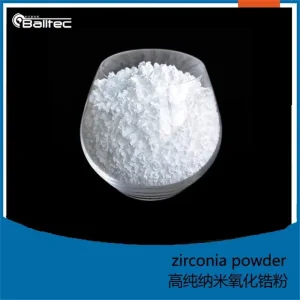
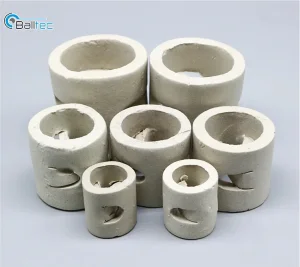
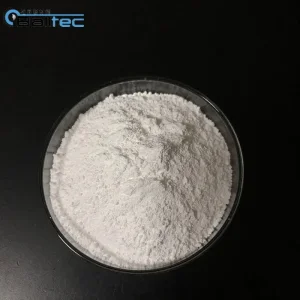
Explore our extended industrial lineup including high-purity zirconia powders, structural tower packings, alumina media, and special application ceramic components.