Follow 


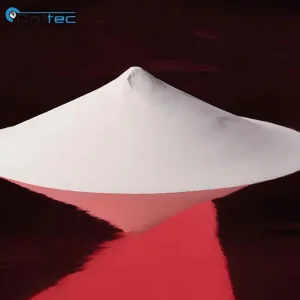
Our manufacturing vertical controls raw material ultra-fine powder preparation through high-temperature sintering, directly serving the global MLCC dielectric and advanced ceramic substrate markets.
Multilayer Ceramic Capacitors (MLCCs) represent the foundational passive component backbone of modern electronic architecture. Accounting for over 75% of global fixed capacitor volume, the MLCC market consumes billions of units daily across automotive powertrains, 5G telecommunication infrastructure, AI data center hardware, consumer electronics, and industrial automation control loops. As modern electronic platforms transition toward higher frequency bands, extreme power density, and stringent thermal tolerances, selecting certified high-quality multilayer ceramic capacitor factories & exporters has evolved from a routine procurement decision into a strategic risk management imperative.
The global electronic manufacturing services (EMS) sector is undergoing structural realignments driven by four macroeconomic realities:
A modern internal combustion engine (ICE) vehicle utilizes approximately 2,000 to 3,000 MLCCs. Conversely, a Battery Electric Vehicle (BEV) equipped with Advanced Driver Assistance Systems (ADAS) requires up to 10,000 to 15,000 MLCCs. Exporters must provide Grade 0 AEC-Q200 components capable of surviving engine compartment vibrations and ambient operating temperatures spanning -55°C to +150°C.
High-performance GPUs and TPU acceleration clusters demand clean, low-ripple direct current. Ultra-low Equivalent Series Resistance (ESR) and Equivalent Series Inductance (ESL) Class 1 and Class 2 MLCCs are deployed adjacent to processor sockets to suppress transient voltage spikes and eliminate high-frequency ripple noise.
To mitigate geopolitical friction and unexpected component allocations, tier-1 OEMs are establishing direct supply lines with primary Chinese ceramic capacitor manufacturers. Direct factory partnerships bypass distributor markups while guaranteeing batch-to-batch chemical and dimensional consistency.
The performance of an MLCC is fundamentally determined by the microstructural purity of its dielectric powder, the precision of screen-printed internal electrode layers, and the thermal control of the co-firing process. Understanding the material science behind Class 1 and Class 2 MLCC formulations is critical for engineering teams specifying passives for high-reliability circuit designs.
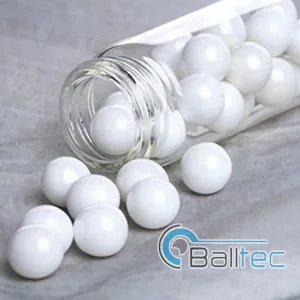
Technical Insight: High-end MLCC manufacturing requires sub-micron dielectric tape thickness (< 0.5 µm) stacked up to 1,000 layers within an 0402 or 0201 package. Controlling ceramic slurry rheology using ultra-pure zirconia ball-milled barium titanate (BaTiO3) powder is essential to eliminate pinholes, micro-cracks, and dielectric breakdown under DC bias stress.
Multilayer ceramic capacitors are categorized under Electronic Industries Alliance (EIA) standards based on temperature stability, volumetric efficiency, and dielectric constant ($\epsilon_r$):
| Dielectric Class | EIA Code | Composition Base | Temp. Range | Capacitance Drift ($\Delta C$) | Primary Application Field |
|---|---|---|---|---|---|
| Class 1 (Ultra-Stable) | C0G / NP0 | Neodymium / Barium Neodymium Titanate | -55°C to +125°C | 0 ± 30 ppm/°C | RF Resonance, High-Q Filters, Precision Timing, Tuning Circuits |
| Class 2 (High Volumetric) | X7R | Doped Barium Titanate ($BaTiO_3$) | -55°C to +125°C | ± 15% | Automotive ECUs, Industrial Power Supplies, Decoupling |
| Class 2 (Extended Temp) | X8R / X9R | Rare-Earth Doped $BaTiO_3$ | -55°C to +150°C / +200°C | ± 15% | Under-the-hood Automotive, Downhole Oil Drilling Sensors |
| Class 2 (General Purpose) | X5R | Sub-micron $BaTiO_3$ Formulations | -55°C to +85°C | ± 15% | Mobile Devices, Wearables, Consumer Computing Bypass |
| Class 3 (High-K) | Y5V / Z5U | Modified Ferroelectric Titanates | -30°C to +85°C | +22% / -82% | Non-critical DC Blocking, Cost-Sensitive Consumer Products |
Precision manufacturing defines component longevity. Modern Chinese factories employ fully automated Base Metal Electrode (BME) processes utilizing Nickel ($Ni$) inner electrodes and Copper ($Cu$) termination layers:
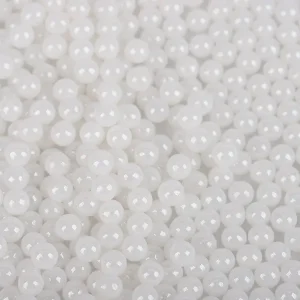
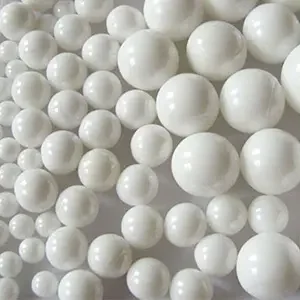
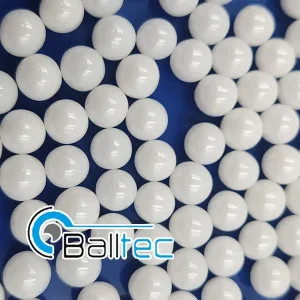
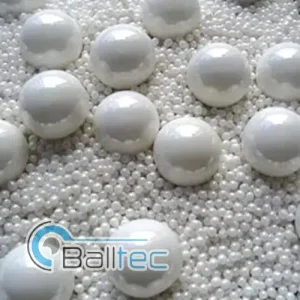
High-purity $BaTiO_3$ raw material powder is wet-milled using high-density yttria-stabilized zirconia grinding beads to achieve tight sub-micron particle size distribution (<100nm) without metal contaminant seeding.
Ceramic slurry containing organic binders and solvents is doctor-blade cast onto carrier film, creating uniform green sheets with thicknesses ranging from 0.5 µm to 5 µm.
Nickel electrode paste is screen-printed onto green sheets in high-density arrays. Hundreds of layers are precisely aligned, stacked, and hydraulically compressed into a monolithic block.
The laminated block is diced into individual chips (e.g., 0201, 0402, 0603, 1206). Chips undergo controlled thermal profile binder burn-out (Debinding) to prevent delamination gas pockets.
Green chips are co-fired at 1,200°C to 1,350°C in a tightly regulated $H_2/N_2$ reducing atmosphere, preventing oxidation of the nickel inner electrodes while densifying the ceramic matrix to near-theoretical limits.
Exposed electrode ends are dipped in copper paste and fired. A protective Ni-Sn barrier coating is electroplated over the copper termination, preventing solder leaching and providing excellent solderability.
Capacitance stability varies dramatically depending on physical placement within a circuit topology. Professional exporters evaluate operational stresses—including temperature coefficient, DC bias voltage decay, and mechanical flexing—before recommending specific part numbers.
In battery management systems (BMS) and traction inverters, MLCCs experience extreme thermal cycling. Qualified factories furnish Soft Termination (Flexi-Term) options featuring a conductive epoxy resin layer within the end metallization to absorb PCB deflection strain and prevent ceramic body shear cracking.
In massive MIMO base stations operating in sub-6GHz and mmWave bands, Class 1 C0G components provide ultra-high Q factors (>1,000 at 1GHz) with near-zero capacitance drift over temperature variations, ensuring clean signal phase stability.
Photovoltaic string inverters and industrial motor drives require high-voltage snubbing MLCCs rated from 630V up to 3,000V DC. Internal floating electrode structures redistribute electrical field stress to minimize localized arc-over risks.
High-reliability component sourcing hinges on verifiable quality management systems. Recognized MLCC factories operate under rigorous Statistical Process Control (SPC) frameworks to drive defect rates down to Parts Per Billion (PPB) metrics.
Fully free from Lead ($Pb$), Cadmium ($Cd$), Mercury ($Hg$), Hexavalent Chromium ($Cr^{6+}$), PBBs, PBDEs, and phthalates (DEHP, BBP, DBP, DIBP) under EU Directive 2015/863.
Complete supply chain traceability ensuring Gold ($Au$), Tantalum ($Ta$), Tungsten ($W$), and Tin ($Sn$) are sourced exclusively from RMAP-validated non-conflict smelters.
Automotive-grade manufacturing sites governed by ISO 9001:2015 Quality Systems and ISO 14001:2015 Environmental Protocols.
As integrated circuits advance to sub-3nm nodes, active IC operating voltages are dropping toward 0.5V, while current density spikes dramatically. Key innovation vectors among leading ceramic capacitor factories include:
Transitioning from 500nm to 300nm dielectric layer thickness, enabling 47µF capacitance values within compact 0201 (0603 metric) footprints.
Developing stable X9R formulations rated for continuous +200°C operation to support fast-switching Silicon Carbide and Gallium Nitride power converters.
Manufacturing profile heights down to < 0.15mm for direct embedding within IC package substrates to minimize power delivery network impedance.
Engineering non-ferroelectric ceramic formulations to eliminate the piezoelectric effect ("singing noise") in human-interface electronics.
Direct answers to common engineering questions faced by buyers, hardware designers, and quality assurance personnel when evaluating high-volume MLCC exporters.
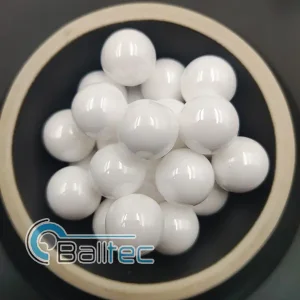
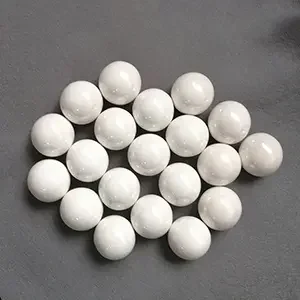
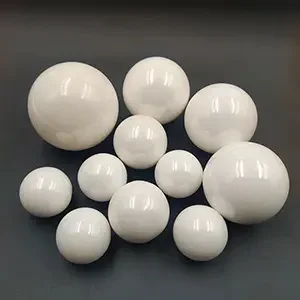
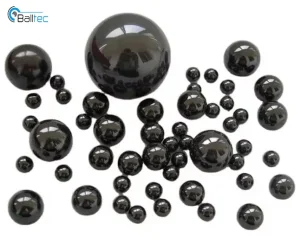
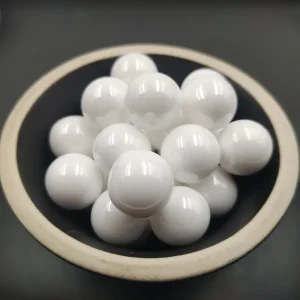
Explore our technical grinding media, structural ceramic components, and specialized material solutions supporting high-precision manufacturing globally.
Whether you are designing automotive radar controllers, ultra-compact mobile handsets, or multi-kilowatt power inverters, our direct factory engineering teams provide total component customization, sample evaluation kits, full AEC-Q200 documentation, and resilient export logistics.