Follow 


Direct factory supply of high-grade synthetic zeolites optimized for deep gas dehydration, solvent drying, and high-purity air separation systems across Massachusetts.
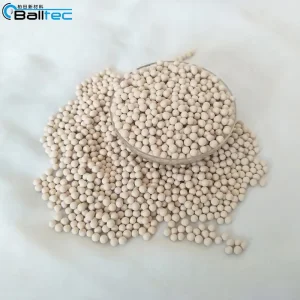
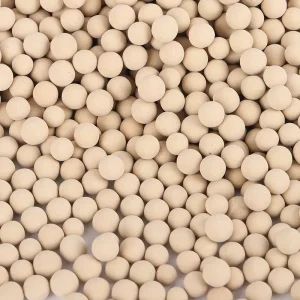
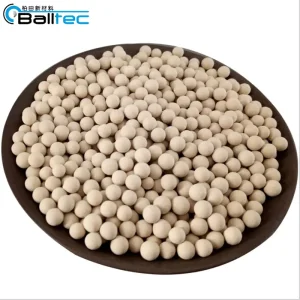
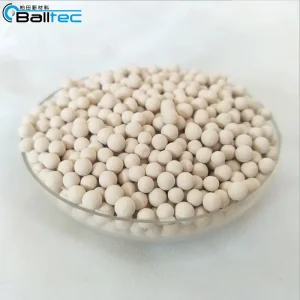
Understanding the stringent gas purity, moisture control, and mass transfer requirements of New England's innovation-driven commercial sectors.
Kendall Square in Cambridge and the Waltham-Lexington corridor house the world's highest concentration of biopharmaceutical innovation. Production of active pharmaceutical ingredients (APIs), monoclonal antibodies, and cell therapies requires ultra-pure process gases with water dew points below -100°F (-73°C). Synthetic 3A and 4A molecular sieves provide critical solvent dehydration (e.g., ethanol, IPA, acetonitrile) without organic molecule co-adsorption or catalytic side reactions.
The Greater Boston metropolitan area, including critical energy import terminals such as the Everett LNG Facility, demands continuous, heavy-duty gas pre-purification. Natural gas streams must be stripped of water ($H_2O < 0.1\text{ ppm}$) and carbon dioxide ($CO_2 < 50\text{ ppm}$) using high-crush 13X and 4A zeolite beds prior to cryogenic liquefaction to prevent freeze-outs and mechanical damage in heat exchangers.
From Route 128 microelectronics fabs to MIT Lincoln Laboratory research facilities, wafer fabrication processes rely on dry compressed air (CDA) and specialty carrier gases ($N_2, Ar, H_2$). Ultra-fine molecular sieve desiccants eliminate micro-droplets and residual polar hydrocarbons that induce surface defects during chemical vapor deposition (CVD) and lithography.
Information Gain Insight: Unlike standard desiccant silica gels or activated alumina, synthetic molecular sieves feature uniform crystalline pore networks ($3\text{Å}, 4\text{Å}, 5\text{Å}, 10\text{Å}$) that discriminate molecules based on kinetic diameter and polar adsorption affinity, making them indispensable for high-yield Boston industrial processes.
A detailed look at the aluminosilicate framework chemistry, adsorption isotherms, and kinetic performance driving industrial dehydration columns.
Synthetic molecular sieves are crystalline sodium, potassium, or calcium aluminosilicates possessing a three-dimensional interconnecting network of silica ($SiO_4$) and alumina ($AlO_4$) tetrahedra. The general chemical formula for a Type A zeolite unit cell is:
By varying the exchangeable cation ($K^+$, $Na^+$, $Ca^{2+}$), the effective crystallographic aperture size is precisely tailored:
In packed bed dehydration columns, the drying process occurs within a moving boundary known as the Mass Transfer Zone (MTZ). A sharp, compact MTZ indicates high mass transfer rates and superior pore accessibility.
| Zeolite Type | Cation Type | Nominal Pore Diameter | Bulk Density (g/mL) | Crush Strength (N/bead 3-5mm) | Static Water Adsorption (25°C, 75% RH) | Primary Industrial Applications in Boston |
|---|---|---|---|---|---|---|
| 3A Zeolite | Potassium ($K^+$) | ~3 Å (0.3 nm) | 0.68 – 0.74 | ≥ 85 N | ≥ 21.5 wt% | Ethanol/Pharma solvent dehydration, Cracked gas drying, Insulating glass units |
| 4A Zeolite | Sodium ($Na^+$) | ~4 Å (0.4 nm) | 0.66 – 0.72 | ≥ 80 N | ≥ 22.0 wt% | CDA drying, Closed-circuit refrigerant drying, Gas stream hydrocarbon removal |
| 5A Zeolite | Calcium ($Ca^{2+}$) | ~5 Å (0.5 nm) | 0.68 – 0.73 | ≥ 85 N | ≥ 21.5 wt% | PSA Oxygen Generators for hospital networks, Normal-paraffin separation |
| 13X Zeolite | Sodium ($Na^+$ Faujasite) | ~10 Å (1.0 nm) | 0.64 – 0.70 | ≥ 75 N | ≥ 24.0 wt% | Cryogenic Air Separation Unit (ASU) pre-purification ($CO_2/H_2O$), LNG sulfur removal |
Innovations in molecular sieve binder chemistry, nano-structured zeolites, and low-energy thermal regeneration protocols engineered for carbon neutrality goals.
Traditional beads contain 15-20% clay binder (attapulgite, bentonite), which reduces total active capacity. Advanced synthesis techniques transform inert binders into active crystalline zeolite frameworks, increasing mass capacity by 15-20% while eliminating dust generation in high-velocity gas beds.
Thermal regeneration accounts for substantial energy expenditure in chemical plants. Novel surface-functionalized zeolites reduce desorption activation energy, allowing full thermal reactivation at 140°C - 160°C rather than traditional 250°C+ cycles, dramatically reducing plant carbon footprints.
Transitioning from packed bead beds to 3D printed honeycombs and ceramic monoliths reduces bed pressure drop by up to 60%. This breakthrough allows compact, ultra-high-velocity gas purification in space-constrained urban facilities and lab environments.
Ensuring fast, air-tight delivery to Massachusetts industrial hubs with complete batch traceability and international regulatory compliance.
Molecular sieves begin adsorbing ambient humidity immediately upon atmospheric exposure. To guarantee fresh dynamic capacity upon delivery to Boston plants, we implement dual-layer, moisture-proof export packaging:
All product shipments pass rigorous quality inspection under ISO 9001:2015 management systems. Batch certificates of analysis (COA) are provided for every batch, confirming:
Expert technical responses to common questions regarding adsorbent selection, bed sizing, regeneration, and procurement timelines.
Ethanol has a kinetic molecular diameter of approximately 4.3 Ångströms, while water is 2.65 Ångströms. A 4A molecular sieve (~4.0 Å aperture) will co-adsorb both ethanol and water, leading to catalyst coking, rapid pore clogging, and significant product loss. Type 3A (~3.0 Å aperture) exclusively permits water molecules to enter the internal crystalline cage while excluding ethanol, making it the industry standard for producing fuel-grade anhydrous ethanol ($>99.9\text{ wt}\%$) without chemical contamination.
Under optimal operating conditions with proper pre-filtration (removal of liquid water, heavy hydrocarbons, and compressor oil aerosols), high-grade synthetic molecular sieves typically deliver 3 to 5 years (3,000+ thermal regeneration cycles) of continuous service in Temperature Swing Adsorption (TSA) units before requiring replacement due to gradual hydrothermal degradation or mechanical attrition.
Hydrothermal aging occurs when residual liquid water or high-pressure steam interacts with zeolites at elevated temperatures ($>200^\circ\text{C}$), destroying the crystalline aluminosilicate framework. To prevent this, implement a step-wise heating protocol: first blow dry purge gas through the bed at lower temperatures ($100^\circ\text{C} - 120^\circ\text{C}$) to desorb liquid moisture before elevating the bed temperature to the final reactivation range ($200^\circ\text{C} - 280^\circ\text{C}$).
We support standard sea freight (FCL/LCL) arriving via the Port of Boston (Conley Terminal), expedited air freight for critical plant shut-down needs arriving at Boston Logan International Airport (BOS), and domestic regional warehousing delivery. Lead times for standard drummed orders range from 3 to 7 business days for regional warehouse stock, or 18-25 days for factory-direct container shipments.
Yes. Molecular sieves exposed to ambient moisture are not permanently damaged; they simply reach static saturation. They can be fully restored to original dry adsorption capacity by performing a thermal reactivation in a dry gas stream or vacuum oven at $200^\circ\text{C} - 250^\circ\text{C}$ for 3 to 4 hours.
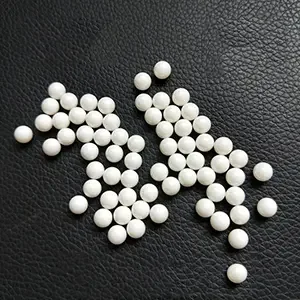
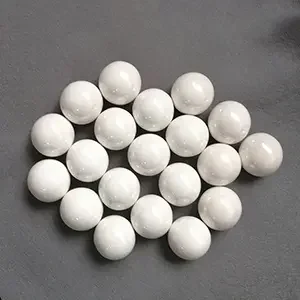
Browse our extended product line of high-density grinding media, ceramic micro-balls, and functional zeolite adsorbents available for direct Boston delivery.
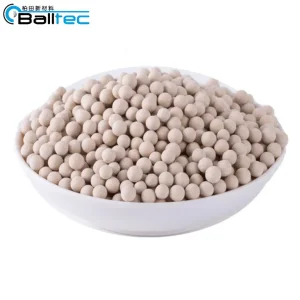
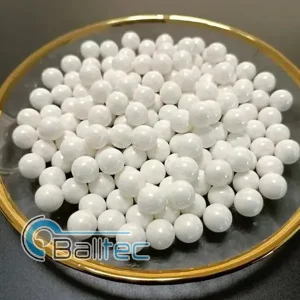
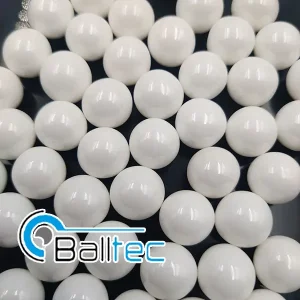

Connect directly with our senior application engineers to calculate bed sizing, mass transfer coefficients, or receive factory-direct wholesale pricing for your facility.
Send Inquiry Now