Follow 


Engineered to exact U.S. ASTM and ISO standards for density, chemical purity, and grain size distribution.
Strategic adoption trends across high-value American manufacturing, aerospace, healthcare, and semiconductor sectors.
The U.S. cosmetic and restorative dental market relies extensively on 3mol% Yttria-Stabilized Tetragonal Zirconia Polycrystal (3YSZ) and high-translucency 4YSZ/5YSZ grades. Demands center around strict biocompatibility, sub-micron particle sizes for high sinter density, and translucent optical qualities for monolithic crowns and bridges conforming to FDA 510(k) standards.
With massive U.S. federal investments in clean hydrogen and distributed fuel cell power generation, 8mol% Yttria-Stabilized Zirconia (8YSZ) serves as the industry gold standard electrolyte material. Its exceptional ionic conductivity at elevated temperatures enables solid oxide fuel cells (SOFC) and electrolyzers (SOEC) to achieve peak thermodynamic efficiency.
American turbomachinery and defense OEMs utilize plasma-sprayed monoclinic and stabilized zirconia powders for Thermal Barrier Coatings (TBCs). Providing critical thermal insulation for gas turbine blades and combustion chambers, these powders must feature controlled morphology to survive severe thermal cycling up to 1400°C.
Optimized crystallographic phase formulations engineered for slip casting, dry pressing, tape casting, and injection molding.
| Grade Classification | Dopant Chemistry | Primary Phase | Average Particle Size (d50) | BET Surface Area (m²/g) | Primary U.S. Application Target |
|---|---|---|---|---|---|
| Bio-Dental Y-TZP | 3.0 mol% Y₂O₃ | Tetragonal | 0.05 – 0.3 µm | 8.0 – 14.0 | CAD/CAM Dental Blocks, Surgical Implants |
| SOFC Electrolyte 8YSZ | 8.0 mol% Y₂O₃ | Cubic | 0.2 – 0.8 µm | 6.0 – 10.0 | Fuel Cell Substrates, Oxygen Sensors |
| Monoclinic Fine ZrO₂ | Undoped (>99.9%) | Monoclinic | 0.3 – 1.2 µm | 12.0 – 20.0 | Structural Additives, Electronic Pigments, TBCs |
| ZTA Toughened Alumina | 10% - 20% ZrO₂ / Al₂O₃ | Mixed Matrix | 0.4 – 1.0 µm | 7.0 – 12.0 | High-Impact Valve Seats, Cutting Inserts |
| Mg-PSZ Refractory | 3.5 - 4.0 wt% MgO | Partially Stabilized | 1.0 – 3.5 µm | 4.0 – 8.0 | Extrusion Dies, Molten Metal Valves |
When metastably retained tetragonal grains experience crack propagation stress, they instantly transform into the monoclinic phase. This phase transformation involves a 3–5% volumetric expansion, inducing compressive stress at the crack tip that effectively arrests further micro-cracking—granting Y-TZP its renowned fracture toughness (>8 MPa·m1/2).
Our powders utilize advanced spray-drying atomization to yield spherical, hollow-free ready-to-press (RTP) granules. Incorporating tailored organic binder systems ensures exceptional powder flowability, consistent mold cavity filling, and uniform green body density during high-speed automated pressing.
Pioneering chemical synthesis techniques to satisfy evolving technological demands across North American R&D hubs.
Development of ultra-low viscosity photo-curable ceramic slurries tailored for Stereolithography (SLA) and Digital Light Processing (DLP) 3D printing. Enables complex geometric components without conventional tooling constraints.
Co-precipitation nano-synthesis routes reducing full-densification thermal requirements from 1500°C down to <1300°C. Slashes energy usage while preserving fine sub-100nm grain microstructures to prevent hydrothermal degradation.
Specialized refining processes eliminating Uranium (U) and Thorium (Th) trace impurities down to <0.01 Bq/g. Critical for microchip encapsulation and high-density memory packaging where alpha-particle emissions cause soft errors.
Combining the natural cluster advantages of Pingxiang Industrial Park with AI-monitored smart calcination to guarantee volume scalability and price stability.
Our integrated production base utilizes continuous hydrothermal reaction facilities that chemically control crystal growth at the atomic level. Unlike traditional solid-state mechanical calcination, hydrothermal synthesis produces unagglomerated sub-micron crystallites with exceptional chemical homogeneity.
By leveraging closed-loop DCS (Distributed Control Systems) during rotary kiln calcination, we eliminate temperature gradients, ensuring that every metric ton shipped to U.S. ports maintains identical specific surface area, tap density, and sintering behavior.
Every batch destinated for U.S. distribution undergoes stringent testing protocols, ensuring seamless integration into automated U.S. manufacturing lines without requiring line re-calibration.
Full alignment with U.S. environmental, safety, and trade standards to streamline import compliance.
All chemical compositions supplied by Baitian comply fully with the U.S. EPA Toxic Substances Control Act (TSCA) inventory requirements and global REACH regulations. Safety Data Sheets (SDS) are provided in standard OSHA GHS 16-section format.
To mitigate transpacific maritime transit delays, key standard grades (3YSZ, 8YSZ, Monoclinic 0.3µm) are maintained in partner fulfillment hubs across the Continental U.S. (West Coast & Midwest), supporting JIT (Just-In-Time) release programs.
Powder characterization reports follow standardized ASTM test guidelines including ASTM C1069 (Specific Surface Area), ASTM B527 (Tap Density), and ASTM C1161 (Flexural Strength of Advanced Ceramics), guaranteeing transparent quality parameters.
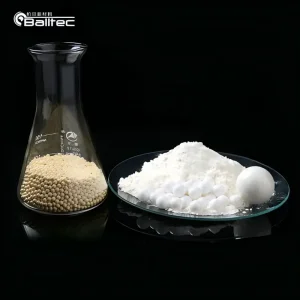
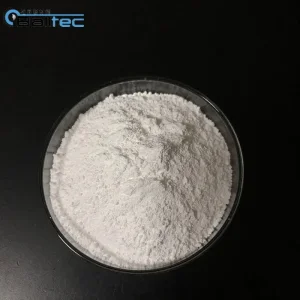
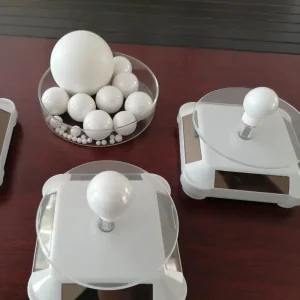
Direct factory supply of specialized Zirconia powders, media, and structural ceramic media tailored for North American enterprise requirements.
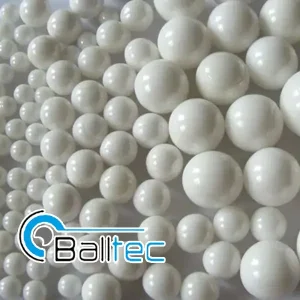
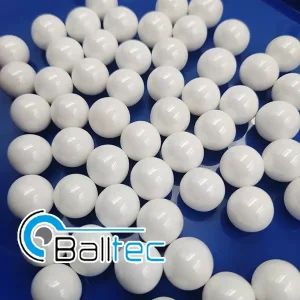
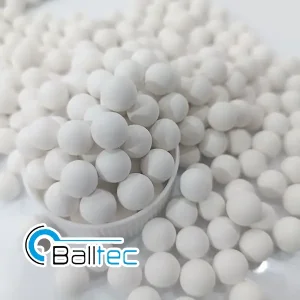
Addressing core technical, logistical, and material selection inquiries regarding wholesale Zirconia powders.
Contact our application engineering team today to request custom sample evaluation lots, material safety data sheets (MSDS), or competitive bulk pricing for the U.S. market.
Send Inquiry Now