Follow 


Select from our core nanostructured and microcrystalline zirconium oxide powder formulations engineered specifically to meet Eurasian Economic Union (EAEU) manufacturing specifications.
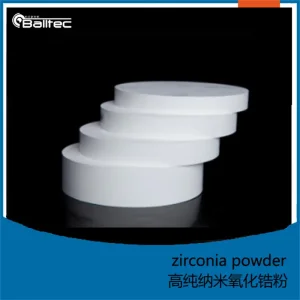
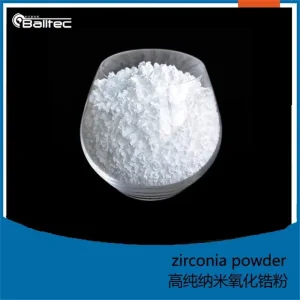
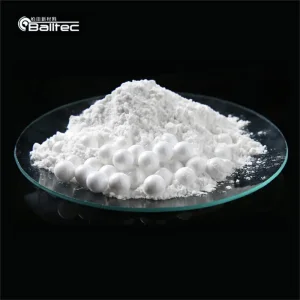
As a premier global chemical synthesizer and materials science exporter, our enterprise delivers high-purity zirconium dioxide (ZrO₂) powders engineered for demanding industrial environments. Zirconia is renowned for its exceptional fracture toughness, thermal insulation, chemical inertness, and ionic conductivity at elevated temperatures. However, raw monoclinic zirconia undergoes a phase transformation during heating—transitioning from monoclinic (m) to tetragonal (t) at ~1170°C, and cubic (c) at ~2370°C—accompanied by a destructive volumetric contraction (~3% to 5%).
To overcome this lattice instability, our advanced synthesis processes incorporate stabilizing oxides such as Yttria (Y₂O₃), Magnesia (MgO), and Calcia (CaO). By controlling dopant kinetics at the atomic level, we supply Moscow's industrial enterprises with Phase Transformation Toughened (PTT) powders. When a crack tip propagates through our sintered Y-TZP material, the local stress field triggers a stress-induced transformation from the metastable tetragonal phase to the monoclinic phase. This localized expansion clamps the crack tip shut, yielding fracture toughness values exceeding 8 to 10 MPa·m1/2.
The Greater Moscow region, encompassing Technopolis Moscow, Zelenograd microelectronics hubs, Ramenskoye aerospace clusters, and the broader Moscow Oblast industrial belt, represents the primary consumer of advanced structural and functional ceramics in the Russian Federation. High-tech manufacturing hubs in Moscow are experiencing unprecedented demand for advanced ceramic feedstock driven by rapid localized import-substitution initiatives, sovereign defense upgrades, medical device domestic production, and energy grid modernization.
Procurement engineers across Moscow demand ceramic powders that provide absolute batch-to-batch repeatability. Fluctuations in moisture content, agglomerate strength, or silica/iron impurity levels can cause catastrophic cracking during spark plasma sintering (SPS), hot isostatic pressing (HIP), or high-temperature vacuum firing. Our supply chain is structured specifically to provide direct container load and LCL shipments to Moscow customs terminals (e.g., Sheremetyevo Freight, Vorsino Logistics Hub) with seamless customs documentation, GOST R conformity alignment, and full material batch traceability.
Direct technical support and tailored batch sizing for microelectronic substrates, wear-resistant seals, and semiconductor processing equipment manufacturers operating in Moscow's free economic zones.
Ultra-translucent 4Y-PSZ and 5Y-PSZ ready-to-press (RTP) spray-dried powders tailored for Moscow dental laboratories manufacturing high-strength monolithic bridges and aesthetic crowns.
Direct rail freight via China-Europe Railway Express (Yiwu/Zhengzhou to Moscow) and maritime-rail multimodal routes ensuring stable delivery lead times under 18–22 days.
Our proprietary hydrothermal synthesis and co-precipitation processes allow precise microstructural control. Below is the technical datasheet matrix for our core export grades supplied to the Moscow industrial corridor:
| Grade / Code | Stabilizer (mol%) | BET Surface Area (m²/g) | Primary Size d50 (µm) | Sintered Density (g/cm³) | Key Moscow Application |
|---|---|---|---|---|---|
| YSZ-3B (RTP) | 3.0% Y₂O₃ | 7.0 ± 1.5 | 0.30 ± 0.05 | ≥ 6.05 | High-stress mechanical seals, structural bearings, dental blocks |
| YSZ-5T | 5.0% Y₂O₃ | 10.0 ± 2.0 | 0.15 ± 0.03 | ≥ 6.02 | High-translucency aesthetic dental restorations & optical ferrules |
| YSZ-8C | 8.0% Y₂O₃ | 13.0 ± 2.5 | 0.08 ± 0.02 | ≥ 5.95 | SOFC electrolytes, oxygen sensors, thermal barrier coatings (TBC) |
| ZrO-MONO | 0% (Monoclinic) | 15.0 ± 3.0 | 0.05 ± 0.01 | 5.80 | Opacifiers, brake linings, electronics additives, pigment synthesis |
| ZTA-20A | 20% ZrO₂ in Al₂O₃ | 8.5 ± 1.5 | 0.40 ± 0.05 | ≥ 4.35 | High-impact cutting tools, pump plungers, mining wear liners |
Our zirconia materials serve as critical components across multiple foundational industries in Western Russia:
Moscow’s aerospace design bureaus require high-purity 7YSZ and 8YSZ monoclinic/yttria-blend powders optimized for Atmospheric Plasma Spraying (APS) and Electron Beam Physical Vapor Deposition (EB-PVD). Our plasma-sprayable powders form strain-tolerant microcracked structures on turbine blades, providing extreme thermal insulation up to 1350°C and resistance to hot corrosion from jet fuel combustion products.
For Moscow's rapidly expanding medical implant and dental disc production lines, we supply organic-binder-formulated Ready-To-Press (RTP) powders. Featuring controlled binder burn-out behavior, low pressing pressure requirements, and ultra-high translucency (up to 49% total light transmittance), our powders ensure zero dimensional warpage during the final 1500°C sintering cycle.
Fully stabilized 8YSZ (8mol% Yttria Stabilized Zirconia) powder is the gold standard electrolyte material for Solid Oxide Fuel Cells (SOFC) and Solid Oxide Electrolyzer Cells (SOEC). Our chemical synthesis guarantees exceptionally high ionic conductivity (>0.1 S/cm at 1000°C) with negligible electronic conductivity, allowing Moscow research institutes and energy system developers to build next-generation green energy cells.
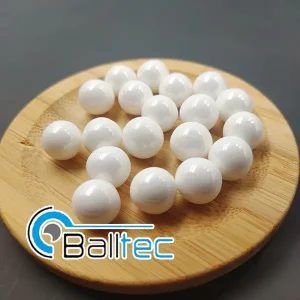
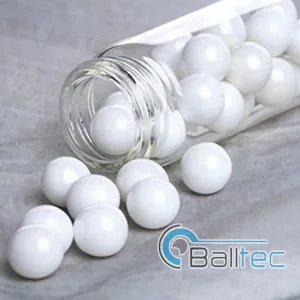
Moscow paint, ink, and lithium-ion battery cathode processing plants rely on microcrystalline Y-TZP and MSZ (Magnesia Stabilized Zirconia) powders to manufacture wear-resistant grinding beads. With grain sizes refined below 300nm, beads manufactured from our powders exhibit wear rates up to 10x lower than standard toughened glass or alumina beads.
As advanced manufacturing evolves toward additive manufacturing and extreme-environment robotics, our R&D team continues to innovate next-generation ceramic feedstock formulations:
International procurement into the Russian Federation requires strict adherence to regulatory standards, secure packaging, and reliable payment/shipping pathways. Our export division provides dedicated services catered specifically to Moscow clients:
Every shipment includes complete chemical analysis certificates (COA), Safety Data Sheets (MSDS/GHS), and Certificate of Origin (Form A / Form R) documents matching GOST guidelines for smooth customs clearance.
Standard packaging includes heavy-duty 25 kg fiber drums or 1,000 kg big bags lined with double vacuum-sealed aluminum-foil barrier bags to protect against ambient humidity during long transit.
We accommodate CIP Moscow, DDP Vorsino, and FOB China ports, supporting multiple international transaction currencies (RMB, AED, EUR) to simplify financial settlement.
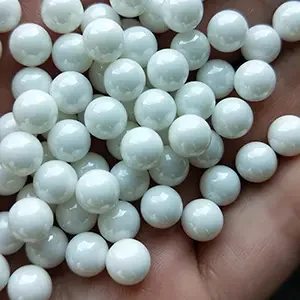
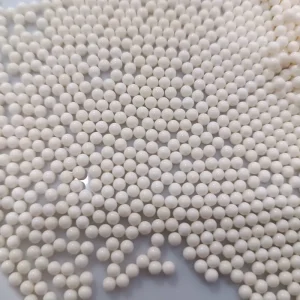
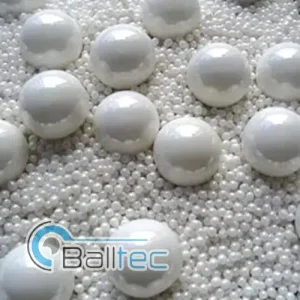
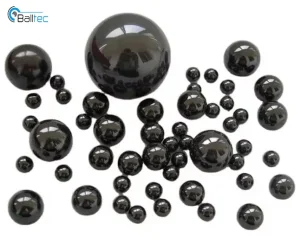
Explore our full range of raw material powders, high-density grinding media, and structural precision ceramic spheres available for export to the Moscow market.
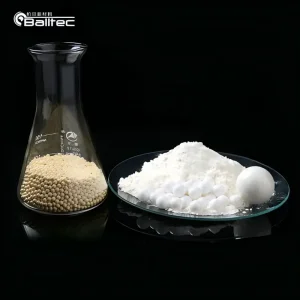
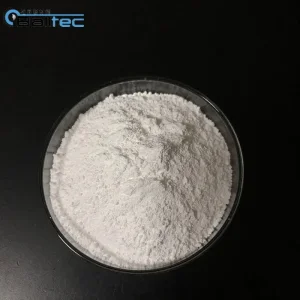
Whether you require bulk containers of 3Y-TZP powder for structural ceramic pressings or ultra-pure 8YSZ for SOFC research in Moscow, our application engineers are ready to assist with technical specifications, TDS/MSDS, and sample evaluation.
Send Inquiry Now