Follow 


High-density zirconia grinding media, microcrystalline ceramic balls, and specialized technical components powering global passive electronic component manufacturing.
Understanding why the 100nF capacitor serves as the fundamental building block for global high-frequency signal decoupling, power distribution networks (PDN), and electromagnetic interference (EMI) filtering.
In modern microelectronics, the 100nF (nanofarad) capacitor—commonly designated as 0.1µF or 100,000pF—is universally acknowledged as the primary workhorse across surface-mount technology (SMT) and through-hole electronic assemblies. Whether deployed in low-power IoT microcontrollers, high-voltage automotive EV traction inverters, 5G baseband processors, or industrial automation robotics, the 100nF capacitor provides vital localized energy storage and high-frequency noise suppression. By presenting an exceptionally low equivalent series resistance (ESR) and minimal equivalent series inductance (ESL) at sub-gigahertz frequencies, these passive components effectively shunt transient current ripples to ground, preserving signal integrity across complex printed circuit board (PCB) layouts.
The performance of a 100nF capacitor relies directly on material physics and advanced manufacturing processes. The capacitance value $C$ is governed by the classical dielectric formula:
Where ε₀ is the permittivity of free space, εᵣ is the relative dielectric constant of the ceramic core material, A is the active overlapping electrode area, and d is the dielectric layer thickness. To achieve a high capacitance density of 100nF within ultra-compact package sizes such as EIA 0201, 0402, 0603, or 0805, Chinese MLCC (Multi-Layer Ceramic Capacitor) manufacturers must engineer sub-micron dielectric films ($d < 1\,\mu\text{m}$) using high-K ceramic powders (typically Barium Titanate $\text{BaTiO}_3$ formulations modified with Yttria-Stabilized Zirconia $\text{ZrO}_2$ and Alumina $\text{Al}_2\text{O}_3$). Achieving this level of structural refinement requires zero-contamination ball milling, precise slurry dispersion, and tight atmospheric co-firing control.
An engineering breakdown of dielectric classes used by Chinese 100nF capacitor manufacturers for diverse operating environments.
| Dielectric Class | EIA Temperature Code | Dielectric Constant (K) | Temperature Operating Range | Capacitance Drift (ΔC) | Primary Industrial Applications |
|---|---|---|---|---|---|
| Class I (Parametric) | C0G / NP0 | 15 – 500 | -55°C to +125°C | 0 ± 30 ppm/°C | Precision RF circuits, high-Q filters, critical timing networks, resonant circuits. |
| Class II (General) | X7R | 2,000 – 4,000 | -55°C to +125°C | ±15% max | Automotive ECU, industrial controllers, DC-DC converter bypass, power decoupling. |
| Class II (General) | X5R | 2,500 – 4,500 | -55°C to +85°C | ±15% max | Mobile consumer devices, smart home electronics, compact embedded modules. |
| Class II (High-Temp) | X8R / X9R | 1,500 – 3,000 | -55°C to +150°C / +175°C | ±15% max | Under-hood automotive sensor nodes, downhole oil drilling telemetry, aerospace electronics. |
| Class III (High-Density) | Y5V / Z5U | 6,000 – 15,000 | -30°C to +85°C | +22% / -82% max | Cost-sensitive consumer toys, general non-critical decoupling, legacy audio circuits. |
From raw mineral synthesis to high-speed tape-and-reel packaging: How China created an integrated, cost-resilient supply chain for advanced passive microelectronics.
China leads global processing for high-purity Barium Carbonate ($\text{BaCO}_3$), Titanium Dioxide ($\text{TiO}_2$), Zirconia Oxide ($\text{ZrO}_2$), and Rare Earth Dopants (Yttrium, Neodymium, Dysprosium). Direct access to raw minerals ensures stable material pricing and low batch contamination.
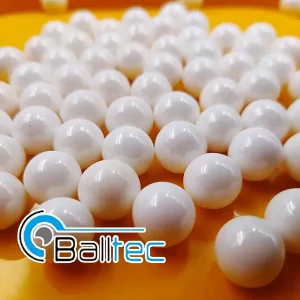
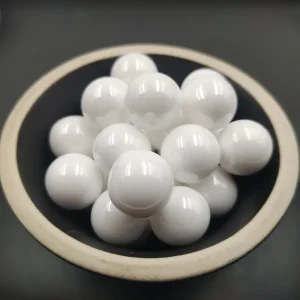
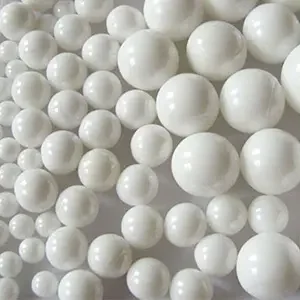
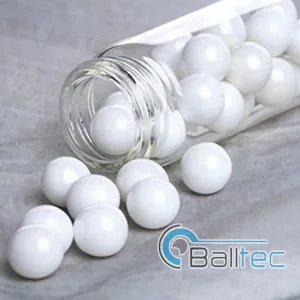
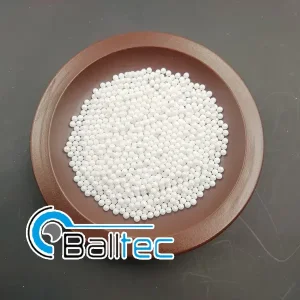
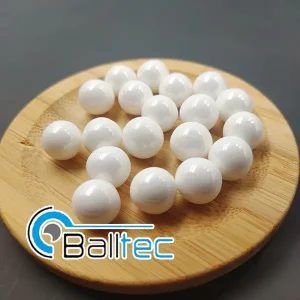
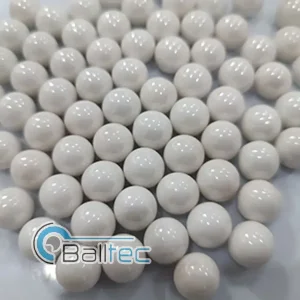
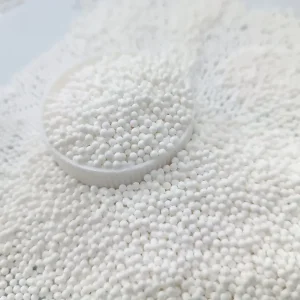
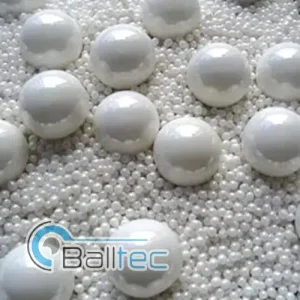
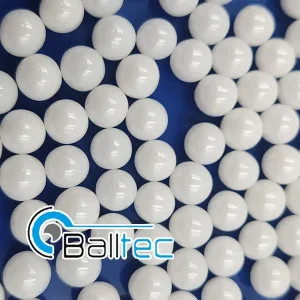
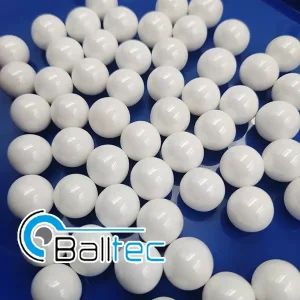
Utilizing high-density Yttria-Stabilized Zirconia (YSZ) grinding beads and microcrystalline alumina grinding media, Chinese chemical processing centers refine ceramic dielectrics to uniform sub-100nm particle sizes, enabling micro-thin tape casting.
Advanced Chinese MLCC mega-factories feature high-speed multi-head screen printing, ultra-precise wet-stacking, automated optical inspection (AOI), and high-throughput high-temperature tunnel kilns capable of producing billions of 100nF units per month.
How leading global OEM/ODM engineering teams implement 100nF ceramic capacitors across mission-critical sub-systems.
In Electric Vehicle (EV) battery management systems (BMS), traction inverters, and Advanced Driver Assistance Systems (ADAS), 100nF X7R/X8R capacitors handle extreme thermal cycling and intense mechanical vibration. Applied closely to the power pins of microcontrollers and system basis chips (SBCs), they suppress high-voltage switching transients generated by SiC/GaN power MOSFETs, safeguarding sensitive logic gates against catastrophic over-voltage spikes.
High-speed digital processing arrays (FPGAs, ASICs, GPUs) demand clean power delivery networks. Placing 100nF C0G/X7R micro-capacitors inside high-density BGA packages directly minimizes power plane impedance. This decoupling prevents ground bounce and Vcc sag during dynamic clock state changes, ensuring bit-error-rate (BER) integrity across 5G NR signal processing boards.
Precision sensors, surgical instrumentation, and robotic joint controllers depend on noise-free operational amplifier inputs. 100nF low-ESR ceramic capacitors serve as first-stage anti-aliasing filters and DC blocking elements, isolating sensitive analog signals from ambient electromagnetic interference (EMI) created by industrial variable frequency drives (VFDs).
Used in snubber networks across primary and secondary transformer windings, 100nF capacitors rated at 50V, 100V, or 630V absorb peak inductive kickback voltage. Paired with high-reliability power resistors, they damp high-frequency ringing and lower radiated EMI, streamlining FCC and CE EMC certification.
Strategic technical shifts shaping the next generation of passive components from 2026 to 2030.
As wearable electronics, medical implants, and mobile devices shrink, the demand for 100nF capacitors in smaller packages—such as EIA 01005 ($0.4 \times 0.2\,\text{mm}$) and EIA 008004 ($0.25 \times 0.125\,\text{mm}$)—is accelerating. Chinese factories are implementing advanced slurry dispersion machines utilizing nano-grade zirconia beads ($\le 0.05\,\text{mm}$) to eliminate agglomeration, allowing wet tape-casting thickness to drop under $300\,\text{nm}$.
Historically, precious metals like Palladium (Pd) and Silver (Ag) dominated MLCC internal electrodes. Chinese manufacturers lead the global transition toward Base Metal Electrode (BME) technology, replacing precious metals with high-purity Nickel (Ni) and Copper (Cu). This transition reduces raw material costs by up to 60% while improving high-temperature reliability under reducing sintering atmospheres.
With the rise of 800V EV architectures and Silicon Carbide (SiC) power modules, 100nF capacitors must withstand continuous operating voltages up to 1000V DC without dielectric breakdown. Chinese material research centers are developing specialized lead-free ferroelectric ceramic formulations doped with Rare Earth oxides, raising dielectric breakdown strength beyond $100\,\text{V/\mu m}$ at temperatures exceeding 175°C.
Rigorous verification standards used by top procurement professionals when auditing Chinese 100nF capacitor suppliers.
Leading Chinese factories certify 100nF products against ISO/IATF 16949 standards, executing 1000-hour Life Testing at $2 \times$ Rated Voltage at 125°C, Thermal Shock (-55°C to +125°C, 300 cycles), and Moisture Resistance (85°C / 85% RH bias test).
To guarantee structural integrity, factory quality labs execute cross-sectional DPA via Scanning Electron Microscopy (SEM). This inspects for internal delamination, ceramic void ratios, electrode continuity, and dielectric layer uniformity.
Full compliance with RoHS, REACH, and Halogen-Free directives is verified via ICP-OES chemical analysis. Lead-free matte Tin (Sn) plating over Nickel (Ni) barrier layers ensures complete solderability during lead-free reflow operations.
Detailed technical answers to common queries raised by component engineers and global procurement heads.
High-grade wear-resistant zirconia media, alumina grinding balls, and specialized technical ceramic components directly supporting micro-powder formulation and electronics manufacturing.