Follow 


Explore our industrial catalog featuring engineered zirconia, high-purity alumina substrates, and ceramic grinding solutions.
In modern electronic circuit design, the 4.7 K resistor (4,700 ohms or 4.7kΩ) represents one of the most fundamental passive components utilized across analog signal processing, digital pull-up/pull-down networks, I2C bus communications, and power conditioning architectures.
Whether sourcing ultra-precise thin-film SMD chips (0402, 0603, 0805, 1206 footprints) for aerospace flight controls or high-power wirewound resistors built upon advanced ceramic substrates for electric vehicle (EV) traction inverters, selecting a qualified high-quality 4.7 K resistor supplier requires deep evaluation of material science, Temperature Coefficient of Resistance (TCR), power dissipation limits, and raw material purity.
This technical whitepaper provides sourcing directors, hardware design engineers, and component quality auditors with actionable insights into the global supply ecosystem, ceramic core substrate engineering (utilizing high-purity alumina Al₂O₃ and stabilized zirconia ZrO₂), automated laser-trimming tolerances, and long-term reliability standards including AEC-Q200 and ISO/IATF 16949 compliance.
The operational performance of a 4.7 kΩ resistor depends directly on the structural composition of its resistive element, protective passivation layers, and dielectric ceramic substrate base. A Tier-1 manufacturing factory utilizes specialized material formulations tailored to specific load environments:
Sputtered under vacuum onto 96% to 99.5% high-purity alumina ceramic substrates, thin-film 4.7 K resistors offer noise-free performance, ultra-low parasitic capacitance, and extreme stability (tolerance down to ±0.01%, TCR as low as ±5 ppm/°C). Essential for medical instrumentation, high-gain audio amplifiers, and precision ADC reference voltage dividers.
Screen-printed conductive pastes containing ruthenium oxide (RuO₂) fused at high temperatures (~850°C) form the backbone of cost-effective mass-market SMD resistors (0603, 0805, 1206). Designed for high-volume automotive controls, consumer smart home nodes, and industrial automation control cards with anti-sulfur glass protective coatings.
Constructed by winding high-grade resistance wire around a dense ceramic rod core (steatite or alumina) housed in a fireproof ceramic cement outer body. Engineered for high pulse loads, dynamic braking, and power supply surge suppression where power ratings exceed 2W to 50W.
| Parameter | Thin-Film Precision SMD | Thick-Film Standard SMD | Power Wirewound / Ceramic |
|---|---|---|---|
| Resistance Value | 4.7 kΩ (4,700 Ω) | 4.7 kΩ (4,700 Ω) | 4.7 kΩ (4,700 Ω) |
| Standard Tolerances | ±0.05%, ±0.1%, ±0.5% | ±1%, ±5% | ±1%, ±5%, ±10% |
| TCR (Temperature Coeff.) | ±5 ppm/°C to ±25 ppm/°C | ±50 ppm/°C to ±200 ppm/°C | ±20 ppm/°C to ±100 ppm/°C |
| Substrate Material | 99.5% Al₂O₃ Alumina Ceramic | 96% Al₂O₃ Alumina Ceramic | High-Density Steatite / Alumina Rod |
| Operating Temperature | -55°C to +155°C | -55°C to +155°C | -55°C to +275°C |
| Key Qualification | AEC-Q200, MIL-PRF-55342 | AEC-Q200, Anti-Sulfur ASTM-B809 | UL94V-0 Flame Resistance, IEC 60115 |
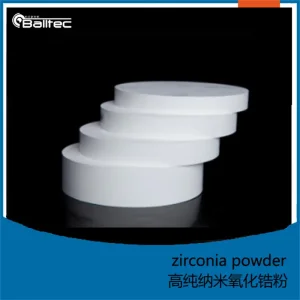
A critical differentiator in sourcing from top-tier 4.7 K resistor factories lies in the quality of the primary insulating ceramic substrate. Passive microelectronics rely heavily on high-purity ceramic technology to achieve dimensional stability, high thermal conductivity, and superior dielectric isolation under continuous thermal and electrical stresses.
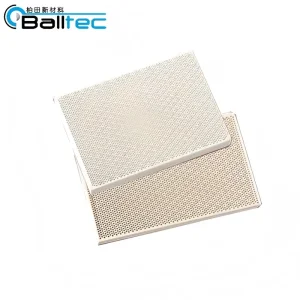
Microcrystalline alumina ceramic substrates formed from 96% to 99.5% ultra-pure powders provide the flat, smooth thermal substrate required for vacuum thin-film deposition and thick-film screening. High thermal conductivity allows efficient dissipation of localized heat generated by 4.7kΩ power loads, preventing hotspots and thermal aging of the resistive layer.
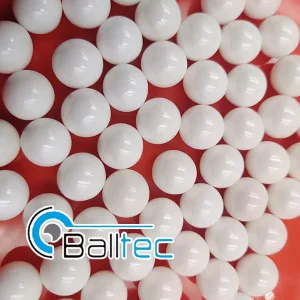
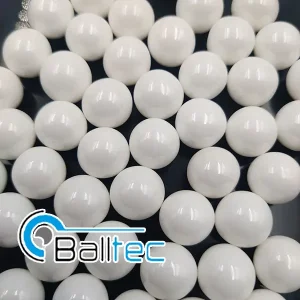
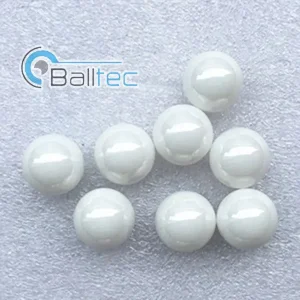
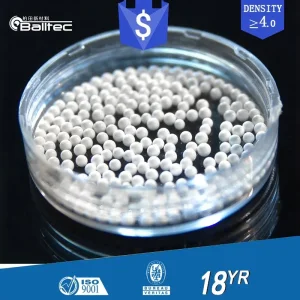
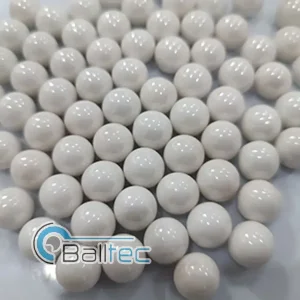
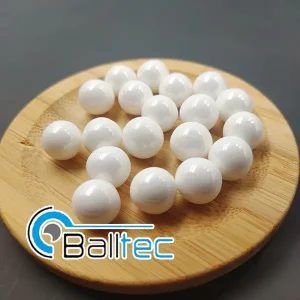
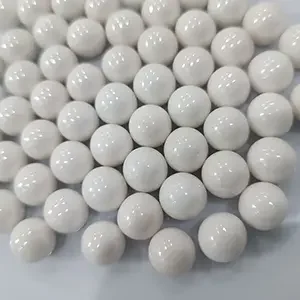
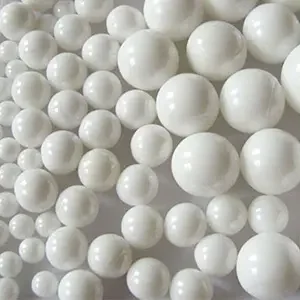
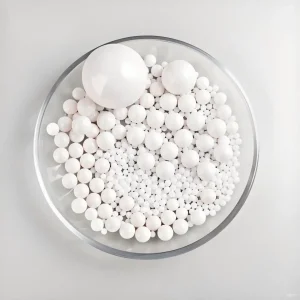
Furthermore, micro-roughness control via precision polishing beads (such as yttria-stabilized zirconia media) guarantees adhesion of protective glass coatings and metallic end-terminations (Nickel/Tin solder layers).
For high-vibration automotive sensors, oil-drilling telemetry, and aerospace actuators, standard ceramic cores can suffer from micro-cracking under intense mechanical shock. Advanced factories integrate Zirconia-Toughened Alumina (ZTA) substrates.
By leveraging phase-transformation toughening engineered through precise yttrium stabilization, ZTA substrates absorb mechanical stresses, ensuring that the embedded 4.7 K resistance track remains intact over decades of heavy service.
The global demand for high-reliability 4.7 kΩ resistors spans multiple multi-billion-dollar technology sectors. Procurement directors must analyze specific technical requirements and operational environments when selecting manufacturing suppliers:
Used extensively in Battery Management System (BMS) voltage balancing networks, inverter gate drive biasing, and CAN-bus termination circuits. Requirements demand AEC-Q200 qualification, zero-defect statistical process control (SPC), and proven resistance to sulfur contamination from ambient industrial pollutants.
Programmable Logic Controllers (PLCs), variable frequency drives (VFDs), and smart electric meters utilize 4.7 K resistors for 4-20mA current loop conversion, optocoupler input signal limiting, and high-voltage surge attenuation. Suppliers must provide robust pulse-withstand ratings.
High-density 5G massive MIMO antenna arrays require ultra-small footprint 0201 and 0402 SMD 4.7K thin-film resistors with negligible parasitic inductance and tight thermal tracking across extreme ambient outdoor temperature fluctuations (-40°C to +85°C).
Leading global factories employ automated production flows to maintain high yields and exceptional product uniformity across millions of units produced daily. Below is the technical roadmap enforced by top-tier suppliers:
After thick-film or thin-film deposition onto the ceramic substrate, high-speed YAG lasers trim L-shaped or serpentine cuts into the resistive element. Real-time electrical feedback loops halt the laser beam the instant the component reaches exactly 4,700.0 ohms, achieving production tolerances down to ±0.01%.
To prevent silver migration and sulfur corrosion in harsh industrial atmospheres (ASTM-B809 testing standard), factory processes incorporate nickel-barrier electroplating topped with 100% matte tin (Sn) solderable coatings, ensuring high shear strength on SMT assembly lines.
Addressing core technical questions from procurement teams, component engineering managers, and quality assurance specialists.
Looking for certified high-precision 4.7 K resistors or high-purity ceramic substrate solutions tailored to your production requirements? Request full technical specs, samples, and factory pricing.
Request Technical Data & Direct Factory QuoteFactory-direct industrial ceramic media, adsorbents, and high-density milling solutions.