Follow 


Factory-direct technical media & structural dielectric solutions (First 8 Items)
In the global HVAC and residential ventilation manufacturing sector, the single-phase permanent split capacitor (PSC) motor remains the dominant propulsion mechanism for ceiling fans. The operational stability, acoustic signature, and energy efficiency profile of these ceiling fans are directly dictated by the structural integrity and electrical tolerance of the start/run capacitor (predominantly standard CBB61 metallized polypropylene film constructions).
For ceiling fan assembly factories, OEM/ODM production lines, and international procurement directors, selecting high-grade capacitors is not merely an component procurement exercise—it is a critical field-reliability strategy. A capacitance degradation exceeding ±5% over 10,000 operational hours leads directly to fan torque breakdown, humming acoustic resonance, excessive thermal rise in motor windings, and complete fan operational failure.
This whitepaper establishes an engineering-grade framework covering dielectric breakdown limits, thermal aging mechanisms under tropical humidities, metallization layer self-healing dynamics, and high-purity inorganic dielectric substrate innovations (such as micro-ceramic insulation layers) that empower ceiling fan factories to achieve zero-defect field performance.
Utilizing high-purity bi-axially oriented polypropylene (BOPP) film ensuring tan δ ≤ 0.0015 at 1kHz. Minimizes internal joule heating and prevents dielectric thermal runaway under continuous high-ambient ceiling fan operations.
Advanced vacuum-deposited metallic film featuring edge-heavy micro-patterns. In the event of localized voltage spikes, the metallization vaporizes instantly, isolating micro-cleavages without causing short-circuit catastrophic failures.
Potted with high-adhesion resin epoxy inside flame-retardant PBT or aluminum shells. Provides robust moisture barriers, vibration dampening up to 10G, and complete fire protection certified under global safety directives.
When tier-1 fan factories source CBB61 motor run capacitors across major export hubs (China, India, Vietnam, Thailand, and Brazil), purchasing parameters extend far beyond basic nominal unit cost. B2B procurement strategies prioritize lifecycle cost performance, batch consistency, and compliance with severe climate duty cycles.
Understanding the engineering distinctions between low-cost commercial capacitors and OEM whitepaper-grade dielectrics.
| Performance Parameter | Standard Commercial Grade | Industrial OEM Export Grade | Ceramic-Enhanced High-K Dielectric |
|---|---|---|---|
| Dielectric Film Material | Recycled / Standard BOPP Film | Virgin High-Isotactic Metallized Polypropylene | Polypropylene + Ceramic Micro-Layer Coating |
| Dissipation Factor (tan δ) | ≤ 0.0035 (1 kHz, 20°C) | ≤ 0.0015 (1 kHz, 20°C) | ≤ 0.0008 (1 kHz, 20°C) |
| Insulation Resistance (I.R.) | ≥ 1,000 MΩ·µF | ≥ 3,000 MΩ·µF | ≥ 5,000 MΩ·µF |
| Expected Service Life (L10) | 3,000 – 5,000 Hours | 10,000 – 30,000 Hours (Class B/A) | > 50,000 Hours (Continuous Duty) |
| Voltage Endurance (1.25 UN) | 500 Hours at 70°C | 1,000 Hours at 85°C (Zero Breakdown) | 2,000 Hours at 105°C |
| Capacitance Drift Rate | > -10% after 2,000 hours | < -3% after 5,000 hours | < -1.5% after 10,000 hours |
How fully automated winding, vacuum impregnation, and precision testing prevent field degradation in international markets.
Automated Swiss-made winding machines maintain constant tension control (<0.1N deviation), eliminating air pockets and dielectric wrinkling within the film roll.
Specialized ultra-fine zinc wire atomization ensures optimum electrical contact between the end-face metallization and terminal lead wires, maintaining low Equivalent Series Resistance (ESR).
Capacitor elements undergo extended heat treatment under ultra-high vacuum conditions to remove moisture traces prior to potting with flame-retardant epoxy.
Every unit is subject to automatic testing for Capacitance, Dissipation Factor, Dielectric Strength (2.0 UN for 2 sec), and Insulation Resistance before final packing.
Ceiling fan exporters face diverse regional power grid environments. Exporting fans to North America requires capacitors engineered for 120V / 60Hz systems with strict UL 810 compliance. Conversely, exporting to South Asia, the Middle East, or Africa demands robust 220V–240V / 50Hz rated units capable of enduring grid voltage fluctuations up to 300VAC and ambient room temperatures exceeding 45°C.
Modern smart ceiling fans equipped with multi-speed RF remote controllers and BLDC (Brushless DC) auxiliary start circuits require specialized multi-value capacitors (e.g., 4.5µF + 6µF + 5µF in a 5-wire CBB61 housing). These integrated capacitor blocks save interior canopy space and streamline fan factory assembly line labor.
Our production facilities operate under ISO 9001:2015 Quality Management and ISO 14001:2015 Environmental Management systems. All ceiling fan capacitor series strictly adhere to global regulatory mark standards:
Direct solutions to common manufacturing, specification, and testing queries in ceiling fan assembly.
The CBB61 metallized polypropylene capacitor serves as a motor run capacitor in single-phase AC induction permanent split capacitor (PSC) motors. It creates an auxiliary phase by introducing a 90-degree electrical phase shift between the main winding and the auxiliary winding current. This phase separation produces the rotating magnetic field required to generate initial starting torque and maintain continuous, smooth rotor rotation.
Dissipation factor (tan δ) represents the ratio of active power lost as heat within the dielectric film to the reactive power flowing through the capacitor. A high tan δ (e.g., > 0.003) causes localized self-heating inside the potted capacitor shell. Over time, elevated thermal stress accelerates polypropylene film degradation, increases capacitance loss rate, causes motor speed reduction, and can trigger thermal thermal runaway or housing distortion.
The rotational speed (RPM) and airflow CFM of a PSC motor ceiling fan are directly proportional to the magnitude of the capacitive phase shift. If a nominal 2.5 µF capacitor strays to 2.0 µF (-20% drift), the auxiliary phase field weakens significantly, reducing motor torque, causing audible 100Hz/120Hz magnetic humming, and causing the fan to run noticeably slower on all speed settings.
The AC voltage rating indicates the maximum continuous root-mean-square (RMS) voltage the dielectric film can withstand without suffering electrical insulation breakdown. Due to back-EMF generated by the auxiliary winding of a ceiling fan motor during operation, the voltage across the capacitor terminals is often significantly higher than the incoming mains voltage. Utilizing a 400VAC or 450VAC rated CBB61 capacitor in 220V/240V mains regions provides a vital voltage safety margin, dramatically extending life expectancy.
In hot, humid climates, atmospheric moisture can slowly permeate low-quality epoxy potting compounds or plastic cases. Moisture ingress reacts with the ultra-thin aluminum/zinc metallized coating on the polypropylene film, causing localized electrochemical oxidation (corrosion). This reduces the active metallic electrode area, resulting in rapid capacitance drop. High-grade OEM capacitors utilize moisture-impermeable epoxy resins and PBT flame-retardant shells tested under Temperature-Humidity-Bias (THB 85°C/85% RH) conditions.
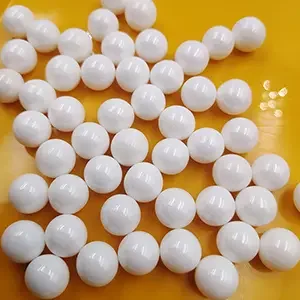
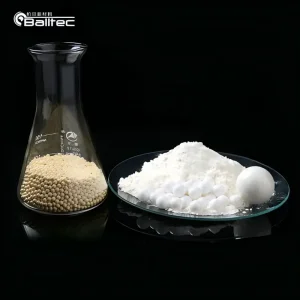
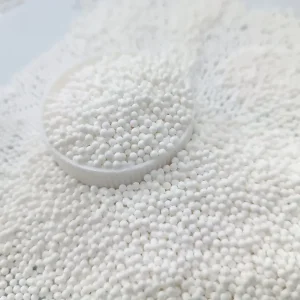
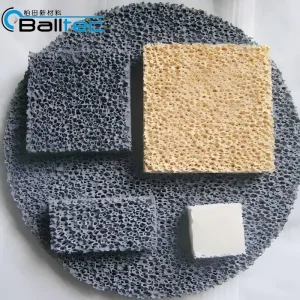
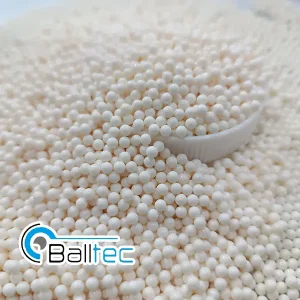
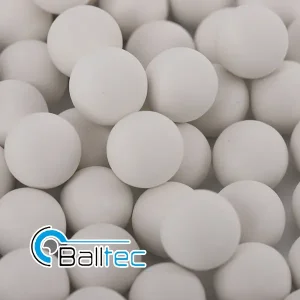
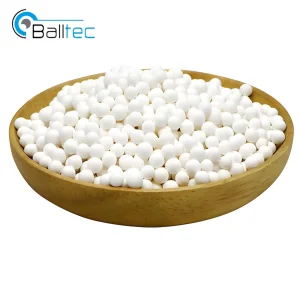
Advanced ceramic powders (such as high-purity alumina Al₂O₃ and zirconia ZrO₂) are integrated into high-temperature capacitor mounting hardware, ceramic substrate bases, and high-frequency noise suppression filters. They provide exceptional dielectric breakdown strength (>20 kV/mm), thermal dissipation enhancement, and mechanical stability in demanding commercial HVAC motor assemblies.
Factory-direct technical media & structural dielectric solutions (Remaining 8 Items)