Follow 


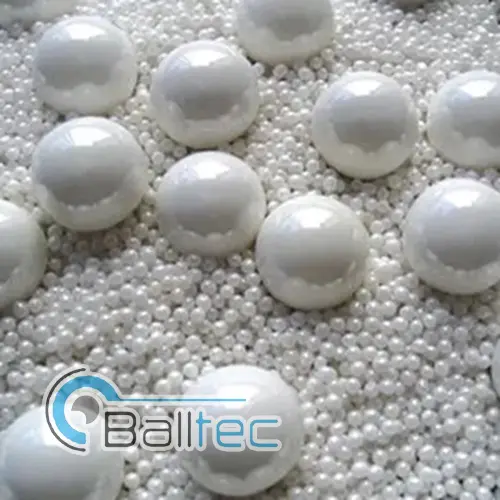
| Parameter Item | Technical Data |
|---|---|
| Main Composition | Yttria-stabilized Zirconia (ZrO2 ≥ 95%) |
| Bulk Density | ≥ 6.0 g/cm³ |
| Vickers Hardness | 1200–1350 HV |
| Particle Size Range | 0.1–10 mm (customizable) |
| Wear Rate | ≤ 0.01%/24h |
| Working Temperature | ≤ 1200℃ |
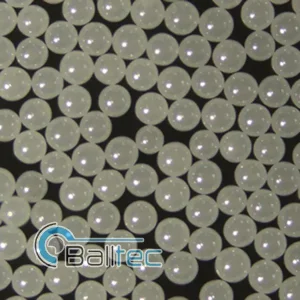
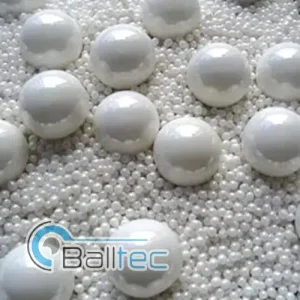
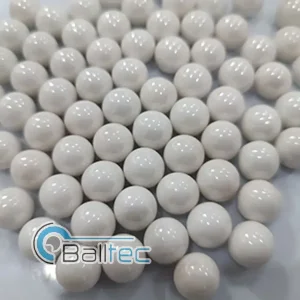
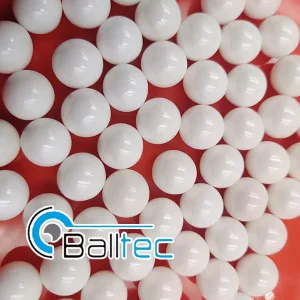
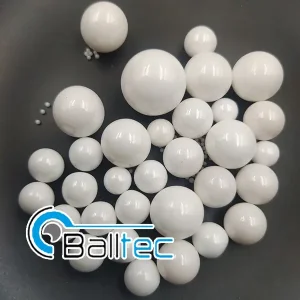
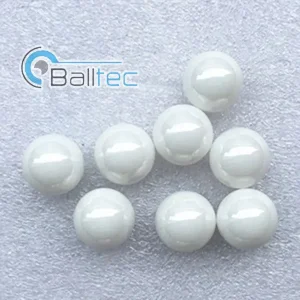
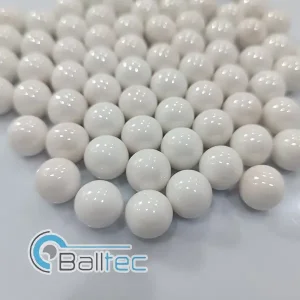
These ZrO2 beads boast outstanding comprehensive performance far superior to glass beads and alumina beads. Their high-density structure provides powerful kinetic energy transfer during ball milling, greatly improving ultra-fine grinding efficiency and shortening material refinement cycles. Excellent wear resistance and impact toughness effectively prevent bead cracking and powder shedding, avoiding impurity contamination to raw materials. Meanwhile, the beads feature ultra-smooth spherical surfaces and stable chemical inertness, resisting corrosion from acid, alkali, and organic solvents, adapting to long-term continuous high-intensity milling operations, and reducing equipment maintenance and media replacement costs.
Tailored for precision ball milling and material refinement, the beads cover multiple high-end industrial and scientific research fields. They are ideal for ultra-fine grinding of new energy battery materials, ceramic powders, and metal powders. They also apply to precision dispersion and refinement of coatings, inks, pigments, and cosmetic raw materials. In addition, they are widely used in pharmaceutical fine chemical processing, electronic material polishing, and laboratory nano-material preparation, stably realizing uniform particle size distribution and high-purity material refinement.
They fit most precision milling devices, including planetary ball mills, horizontal/vertical bead mills, and nano ultra-fine milling machines, suitable for both laboratory small-batch tests and industrial mass production.
For coarse refinement (1–10 μm), select 3–10 mm beads; for ultra-fine and nano refinement (≤1 μm), adopt 0.1–2 mm small-size beads to ensure optimal grinding fineness and efficiency.
Under standard working conditions, their service life is 8 times longer than zirconium silicate beads and 50 times longer than glass beads, with low wear loss and long-term stable performance.
Yes, they feature excellent chemical inertness and thermal stability (up to 1200℃), making them completely suitable for both wet milling in liquid solvents and dry dispersion processes.
With an extremely low wear rate (≤ 0.01%/24h) and high Vickers hardness (1200–1350 HV), these beads effectively prevent cracking and chipping, ensuring pure particle refinement without introducing impurities.
They can be easily cleaned using compatible solvents, acid/alkali wash solutions, or ultrasonic cleaners to remove residual slurries, followed by drying prior to storage.