Follow 


Explore our high-performance material matrix and industrial components designed for demanding milling, dielectric, and structural engineering applications.
Understanding the fundamental behavior of capacitors in series and parallel is the foundation of high-voltage system design, power factor correction, DC-link smoothing networks, and pulsed-power energy storage systems. When integrating capacitive components into complex industrial circuits, engineering teams must evaluate how voltage distribution, equivalent series resistance (ESR), equivalent series inductance (ESL), and dielectric thermal dissipation behave under combined configurations.
Connecting capacitors in a series topology splits the applied system voltage across each component while reducing the total network capacitance. This configuration is mandatory when operating voltages exceed the individual breakdown threshold ($V_{breakdown}$) of single dielectric units.
Engineering Gain: While total storage capacity decreases, the total withstand voltage increases linearly ($V_{total} = N \times V_{rating}$), provided active or passive voltage balancing resistor networks are placed in parallel across each unit to prevent catastrophic dielectric breakdown caused by capacitance tolerance drift.
Connecting capacitors in parallel aggregates individual storage values into a single massive charge reservoir while keeping the system voltage equal across all terminals. This configuration is widely deployed in DC-link banks for EV inverters and solar converters.
Engineering Gain: Placing identical capacitors in parallel dramatically scales current handling capacity and reduces the total system ESR ($ESR_{eq} = ESR / N$), minimizing $I^2R$ thermal dissipation losses during heavy current discharge cycles.
In high-power industrial equipment—such as High-Voltage Direct Current (HVDC) power lines, MRI pulse generators, and electric traction drives—systems require both high voltage tolerance and massive energy storage. Engineers utilize hybrid series-parallel capacitor matrices to tailor the exact system capacitance, voltage handling, and surge current endurance.
Arranging capacitors into an $M \times N$ matrix (where $M$ represents parallel branches and $N$ represents series nodes) ensures structural redudancy. If a single capacitor fails in an open-circuit mode, remaining branches absorb the load without dynamic system collapse.
Due to manufacturing tolerance variations ($\pm 5\%$ to $\pm 20\%$) and leakage current ($I_{leak}$) differentials, series-connected capacitors accumulate uneven voltage splits over extended operation. Manufacturers incorporate bleed-off resistors (passive) or operational amplifier control circuits (active) across series nodes to enforce uniform $V_{node} = V_{total} / N$.
In high ripple current environments, parasitic inductance (ESL) can create destructive voltage spikes during rapid switching operations ($V = L \cdot \frac{di}{dt}$). Symmetrical laminated busbar connections in parallel banks reduce loop inductance to under 15 nH while acting as heat sinks for the dielectric core.
As the global demand for energy transition infrastructure escalates, leading tier-1 OEMs rely on top-tier capacitor in series and parallel manufacturers in China. By combining complete raw material supply chains with state-of-the-art automated manufacturing, Chinese suppliers deliver world-class dielectric performance at highly competitive price points.
| Supply Chain Dimension | Traditional Regional Suppliers | Leading Chinese Integrated Manufacturers | OEM Buyer Value Benchmark |
|---|---|---|---|
| Raw Dielectric Sourcing | Subcontracted raw BOPP film & ceramic powders | Vertical integration with high-purity microcrystalline ZrO2/Al2O3 & metallized film plants | Up to 30% reduction in raw material lead-times |
| Winding & Sintering Tech | Semi-automated batch processing | Swiss/German-imported automated high-speed winding & cleanroom vacuum sintering | Sub-micron layer uniformity ($\pm 0.5\%$) |
| Quality Assurance & Testing | Sample-based batch inspection | 100% Automated Optical Inspection (AOI), partial-discharge testing & automated capacitance sorting | Defect rates under 5 PPM (Parts Per Million) |
| Customization & Scalability | High MOQ requirements, long tooling phase | Flexible OEM/ODM busbar routing, custom enclosures & rapid prototype turnarounds (2-3 weeks) | 60% faster time-to-market for custom assemblies |
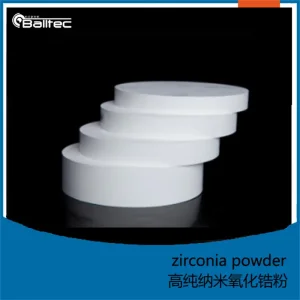
Chinese manufacturers maintain direct control over key precursor materials—from high-purity zirconia powders (ZrO2) and alumina (Al2O3) to high-temperature polypropylene films. This vertical integration mitigates global supply disruption risks and ensures lot-to-lot chemical purity.
By controlling sintering density and grain size distribution down to the nanoscale, manufacturers achieve superior breakdown field strength ($E_{bd} > 450 \text{ V}/\mu\text{m}$), essential for high-stress series capacitor arrays.
Modern Chinese factory floors feature multi-axis robotic assembly lines capable of creating complex series-parallel capacitor modules directly integrated with liquid-cooling plates. Whether your specification requires low-inductance terminal studs, specialized flame-retardant epoxy encapsulation, or custom busbars, China's manufacturing ecosystem scales seamlessly from prototype lots to high-volume production.
Procuring capacitive components for international deployment requires rigorous compliance with international standards and local grid codes. World-class capacitor manufacturers provide complete certification documentation and engineering support across North America, Europe, and Asia-Pacific markets.
All high-voltage series and parallel capacitor banks are certified under IEC 61071 (Power Electronics Capacitors), UL 810 (Safety Requirements for Capacitors), and IEC 60831 (Shunt Power Capacitors). Automotive series modules comply with strict AEC-Q200 stress testing protocols.
Our raw material formulations strictly conform to EU RoHS 3.0 and REACH mandates. Zero toxic heavy metals, lead, or halogenated flame retardants are utilized in dielectric potting or terminal construction, facilitating compliance for global exports.
Global procurement teams gain access to dedicated Field Application Engineers (FAEs) fluent in multi-lingual technical communication. FAEs assist with FEA thermal modeling, parasitics simulation, on-site installation audits, and local customs compliance.
Driven by the rapid growth of Electric Vehicles (EVs), 800V Ultra-Fast Charging Networks, Smart Grid Energy Storage Systems (ESS), and Industrial Pulsed Power, capacitive technology is undergoing rapid innovation.
As EV drivetrains shift from 400V to 800V and Silicon Carbide (SiC) switches push operating frequencies above 100 kHz, DC-link capacitor banks require customized series-parallel configurations featuring extremely high dielectric breakdown ratings and sub-10nH low-inductance busbars.
Material research is driving the replacement of traditional film media with advanced barium titanate (BaTiO3) and zirconia-doped nanocomposites. These high-dielectric-constant ($k > 3000$) materials dramatically shrink physical bank sizes while allowing higher volumetric energy densities ($J/\text{cm}^3$).
Discover how custom capacitor configurations engineered by leading manufacturers solve key power quality, voltage stability, and energy delivery challenges across diverse heavy industrial fields.
In mega-watt scale solar power plants and off-shore wind turbines, parallel capacitor banks provide essential ripple current smoothing and DC voltage stabilization, protecting sensitive IGBTs from damaging grid back-EMF transients.
Heavy-duty industrial motor drives utilize series-parallel capacitor banks in their DC buses to absorb peak regenerative braking energy while maintaining smooth voltage delivery during variable speed load changes.
Defibrillators, medical MRI equipment, industrial laser cutters, and electromagnetic launchers require instantaneous release of stored megawatt energy, achieved via high-voltage series capacitor banks configured for fast discharge rates ($dV/dt$).
Get clear, technical answers regarding capacitor in series and parallel selection, sizing calculations, failure mode prevention, and factory supplier selection.
Browse our full selection of specialized industrial ceramic media, grinding materials, and chemical processing supplies.