Follow 


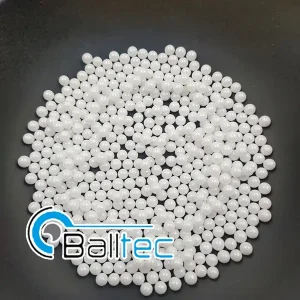
Precision-manufactured yttria-stabilized zirconia, ceria-stabilized zirconia, and high-purity alumina beads optimized for sub-micron particle reduction.
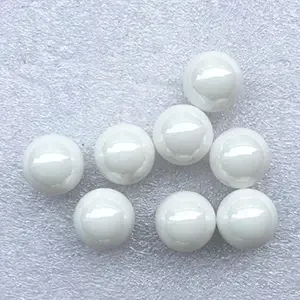
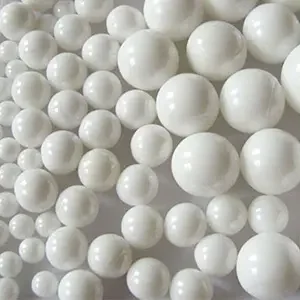
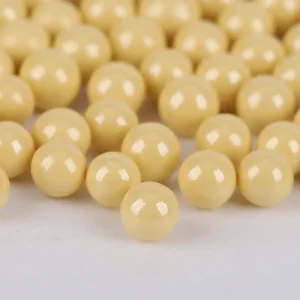
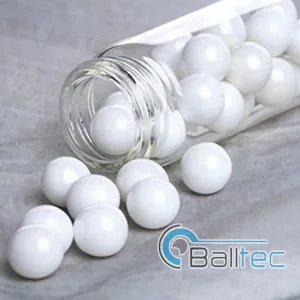
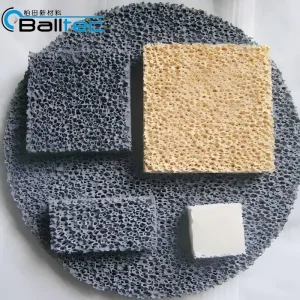
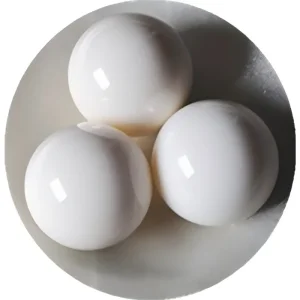
In modern industrial chemical engineering, energy storage production, and ultra-fine mineral processing, the choice of high-efficiency grinding media dictates operational profitability, throughput velocities, and final product purity. As global manufacturing transitions toward nano-scale dispersion—driven by next-generation lithium-ion battery cathodes ($LiFePO_4$, $NCM$), CMP (Chemical Mechanical Planarization) slurries for semiconductor fabrication, and solvent-free automotive coatings—the operational demands placed on ceramic grinding media exporters have shifted dramatically.
Historically, industrial wet milling relied heavily on natural silica sand, forged steel balls, and standard glass beads. However, the aggressive kinetic parameters of contemporary high-energy agitator bead mills (such as horizontal pin-type and disc-type mills with rotor tip speeds exceeding $14\text{ m/s}$) induce extreme hydrodynamic shear stress and mechanical impact forces. Low-density or poorly sintered media experience high wear rates, micro-fracturing, thermal shock failure, and severe batch contamination, leading to unacceptable process downtime and off-spec products.
As premier exporters of engineering ceramic media, our production facility integrates advanced powder synthesis, cold isostatic pressing (CIP), ambient-pressure droplet titrating, and high-temperature pressureless sintering to yield grinding beads characterized by near-theoretical microstructural density ($>98.5\%$), zero internal voiding, and ultra-fine grain matrix configurations ($<0.5\ \mu\text{m}$).
| Media Classification | Chemical Formula | Bulk Density (g/cm³) | Vickers Hardness (HV10) | Fracture Toughness (MPa·m^1/2) | Typical Wear Rate (% / 100h) | Primary Application Intent |
|---|---|---|---|---|---|---|
| Yttria-Stabilized Zirconia (Y-TZP) | $ZrO_2 + 5.2\% Y_2O_3$ | > 6.05 | 1,250 - 1,350 | 9.0 - 10.5 | < 0.005% | Lithium Battery Cathodes, CMP Slurries, Bio-Pharma |
| Ceria-Stabilized Zirconia (Ce-TZP) | $ZrO_2 + CeO_2$ | > 6.20 | 1,150 - 1,250 | 12.0 - 13.5 | < 0.008% | High-Viscosity Agro-Chemicals, Heavy Paints, Calcium Carbonate |
| Zirconium Silicate Media | $ZrSiO_4$ | 4.0 - 4.2 | 1,000 - 1,100 | 4.5 - 5.5 | < 0.05% | Paper Coatings, Metallic Ores, Ceramic Glaze Milling |
| High Purity Alumina (99.9%) | $\alpha-Al_2O_3$ | 3.68 - 3.80 | 1,400 - 1,600 | 4.0 - 5.0 | < 0.02% | White Pigments, Electronic Ceramics, Insulators |
Understanding the mechanical phenomenon behind stress-induced phase transformation in Y-TZP media and how grain boundary control governs export-grade reliability.
When a crack initiates under high kinetic impact within Y-TZP grinding beads, the stress concentration triggers a localized phase transformation from the metastable tetragonal phase to the monoclinic phase. This transformation is accompanied by a ~3 to 5% volumetric expansion, inducing compressive stress around the crack tip that actively halts crack propagation.
Media wear rates correlate directly with crystal grain boundary morphology. By utilizing nanometer co-precipitated feedstocks and controlling thermal soak cycles, our grinding beads maintain ultra-fine average grain sizes ($<0.3\ \mu\text{m}$). This prevents grain pull-out (spallation), ensuring that bead surfaces remain atomically smooth over thousands of operational hours.
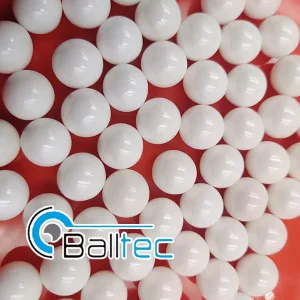
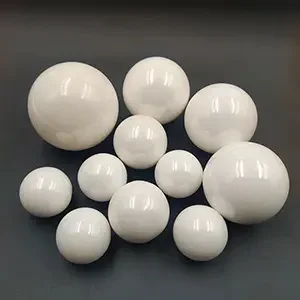
Traditional press-molding often traps air pockets, leading to internal voids that collapse under dynamic loading inside high-speed mills. Our proprietary sol-gel titration process forms spherical droplets in liquid medium, ensuring $100\%$ solid interior structures with exceptional roundness ($>98\%$) and consistent kinetic energy transfer.
The kinetic energy ($E_k$) transferred from a rotating mill agitator disc to a grinding bead, and subsequently to slurry particles, is defined by the classical equation:
E_k = \frac{1}{2} m v^2 = \frac{1}{12} \pi \rho d^3 v^2
Where $\rho$ represents the bead density, $d$ is the bead diameter, and $v$ is the velocity vector of the media at the point of impact. Because kinetic energy scales cubicly with diameter ($d^3$) and linearly with density ($\rho$), choosing a higher-density yttria-stabilized zirconia bead ($\rho \approx 6.05\text{ g/cm}^3$) over a standard glass bead ($\rho \approx 2.50\text{ g/cm}^3$) increases impact energy by more than $240\%$ at identical tip speeds. This allows processing engineers to reduce mill residence times, lower slurry temperatures, and achieve narrower particle size distributions (PSD).
Engineered media solutions tailored to chemical compatibility, viscosity profiles, and contamination limits across diverse industrial domains.
Ultra-fine wet grinding of Lithium Iron Phosphate ($LiFePO_4$), Nickel Cobalt Manganese ($NCM$), and Silicon-Carbon anodes requires zero metallic iron ($Fe$) contamination. Our high-purity Y-TZP beads ($0.1\text{mm} - 0.6\text{mm}$) deliver sub-micron particle reduction down to $D90 < 200\text{nm}$ while maintaining trace wear below detectable analytical limits.
Multilayer Ceramic Capacitors ($MLCC$) depend on uniform Barium Titanate ($BaTiO_3$) nano-powders. Low-impurity zirconia media eliminate dielectric distortion, providing strict batch consistency, high sphericity, and minimal surface roughness to preserve component capacitance characteristics.
High-grade metallic paints, inkjet printing inks, and UV-curable coatings require maximum color strength, transparency, and gloss. Precision-graded $0.3\text{mm} - 0.8\text{mm}$ zirconia beads achieve complete pigment deagglomeration without damaging sensitive organic pigment molecules.
Nano-crystallization of poorly soluble Active Pharmaceutical Ingredients (APIs) enhances bioavailability. Our bio-inert yttria-stabilized zirconia media are certified food-and-pharma compliant, withstanding CIP/SIP steam sterilization and aggressive sanitization protocols.
Ensuring flawless export compliance, batch-to-batch chemical reproducibility, and localized technical assistance across worldwide markets.
Our manufacturing operations adhere strictly to ISO 9001:2015 Quality Management Systems, ISO 14001 Environmental Management, and ISO 45001 Occupational Health and Safety. Every export lot undergoes X-ray Fluorescence (XRF) chemical composition analysis, ICP-OES trace element validation, and laser diffraction particle wear testing prior to dispatch.
To safeguard structural integrity during long-haul maritime transport, grinding media are sealed in heavy-duty 25kg multi-wall plastic-lined drums or reinforced vacuum-sealed bags, aggregated on fumigated ISPM-15 wooden or steel pallets. Bulk options (1,000kg super-sacks) are available with moisture-absorbent desiccant lining.
We provide end-to-end technical engineering support for global buyers, including mill charge calculation, bead filling ratio optimization (typically $75\% - 85\%$ of chamber volume), viscosity-matching algorithms, and on-site media wear-rate monitoring across North America, Europe, Asia-Pacific, and Latin America.
Advancing the boundaries of ceramic tribology, intelligent sintering automation, and sub-micron grinding capabilities.
Developing ultra-small yttria-stabilized zirconia micro-beads engineered for quantum dot synthesis, semiconductor CMP slurries, and solid-state electrolyte dispersions where conventional $0.1\text{mm}$ media reach kinetic dispersion limits.
Integrating real-time pyrometric sensors and machine-learning thermal algorithms inside continuous tunnel kilns to dynamically adjust sintering hold times, achieving microstructural grain uniformity within $\pm 0.02\ \mu\text{m}$.
Establishing global buy-back and re-sintering initiatives for spent non-contaminated ceramic media, converting worn beads into ultra-fine raw material feedstocks for structural engineering ceramics.
Detailed answers regarding bead selection, wear rate diagnostics, mill setup, and export handling.
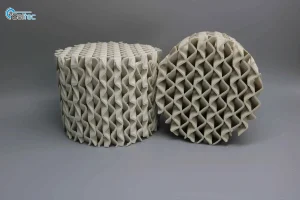
Explore our full industrial output including microcrystalline alumina, low-impurity electronic ceramic media, and structured packing solutions.