Follow 


Explore our engineering-grade grinding media, raw zirconia powders, and specialty ceramic bearing balls tailored for ultrafine wet/dry milling.
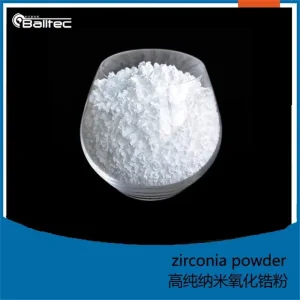
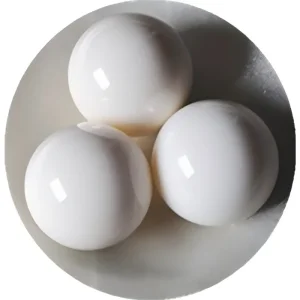
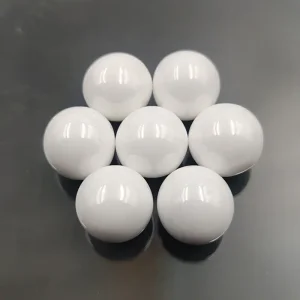
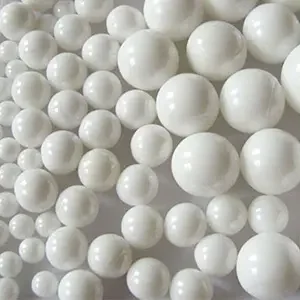
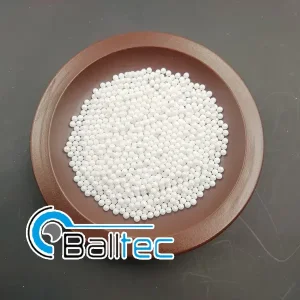
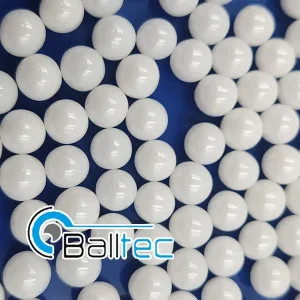
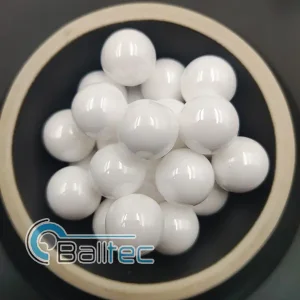
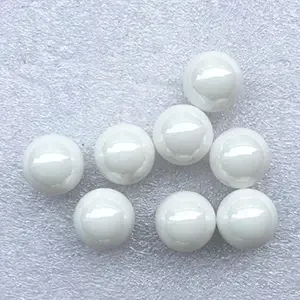
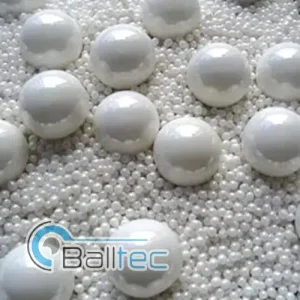
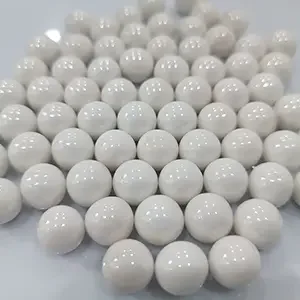
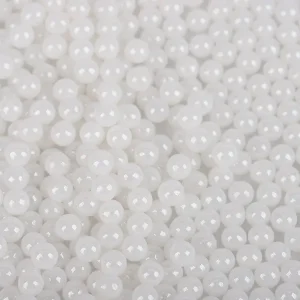
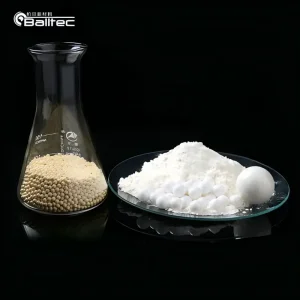
In modern high-precision comminution and nanoparticle dispersion processes, the quality of grinding media dictates overall mill performance, energy efficiency, and end-product purity. High Density High Purity Alumina Milling Balls have emerged as the foundational standard for demanding milling environments across electronic materials, advanced ceramics, lithium battery active materials, chemical catalyst synthesis, and mineral processing.
This technical whitepaper examines the microstructural dynamics, powder synthesis chemistry, cold isostatic pressing protocols, and thermodynamic sintering parameters required to engineer ultra-high-density ($\ge 3.92 \text{ g/cm}^3$) alpha-alumina ($\alpha-\text{Al}_2\text{O}_3$) spheres with near-zero self-wear rates.
Pingxiang Baitian (Ball-tec) New Materials Co., Ltd. operates a state-of-the-art 100,000 m² integrated production campus in the Ceramic Industrial Park, Development Zone, Pingxiang, Jiangxi Province, China—a world-renowned hub for industrial ceramic engineering.
Founded by ceramic scientists and senior processing executives with decades of experience at top-tier U.S. and Japanese ceramic research labs, Baitian integrates powder synthesis, cold isostatic pressing, high-temperature tunnel kiln sintering, and precision polishing under a unified ISO 9001, ISO 14001, and ISO 45001 certified quality control system.
Analyzing the shift toward zero-contamination, high-density grinding solutions across advanced energy, electronics, and chemical manufacturing sectors.
The global energy transition has created unprecedented demand for sub-micron particle size reduction in cathode (LFP, NCM, LMO) and anode active materials. Contamination by metallic iron ($\text{Fe}$) or heavy silica ($\text{SiO}_2$) degrades battery safety, causing internal micro-short circuits. High Purity Alumina (99.5% - 99.99%) milling balls deliver zero-iron contamination while enduring high shear forces in continuous wet circulation mills.
Multilayer Ceramic Capacitors (MLCC), piezoelectrics, and microwave dielectric resonators require nanometer-scale slurry milling where grain size distribution must remain extremely narrow ($D_{90} < 0.3 \ \mu\text{m}$). High density alumina balls prevent sphere fracture and spalling, ensuring uniform momentum transfer without introducing unwanted cations into electronic formulations.
In industrial sanitaryware, body tile slip milling, catalyst support preparation, and active pharmaceutical ingredient (API) micronization, traditional low-alumina balls (60-75% $\text{Al}_2\text{O}_3$) suffer high abrasion rates, causing significant mass loss. Transitioning to 92-99% density-optimized alumina media reduces media replacement cycles by up to 60%, drastically cutting total cost of ownership (TCO).
How precise phase transformation control ($\alpha-\text{Al}_2\text{O}_3$) and ultra-fine grain boundaries unlock exceptional mechanical strength and wear resistance.
The mechanical performance of alumina grinding media relies entirely on achieving complete phase transformation into hexagonal close-packed $\alpha-\text{Al}_2\text{O}_3$ (corundum phase). Lower grade media retain metastable gamma ($\gamma$) or theta ($\theta$) phases, which exhibit lower hardness ($HV_{10} < 1000$) and higher open porosity.
Baitian utilizes ultra-fine precursor powders ($D_{50} < 0.6 \ \mu\text{m}$) combined with trace dopants ($\text{MgO}, \text{Y}_2\text{O}_3$) to suppress grain growth during sintering at $1580^\circ\text{C}-1650^\circ\text{C}$. This creates a interlocking microcrystalline matrix with crystal grain sizes under $2.5 \ \mu\text{m}$, yielding a Mohs hardness of 9.0 and Vickers hardness exceeding $1550 \text{ HV}_{10}$.
Forming technology dictates the internal homogeneity of the milling ball. While traditional roll forming (pelletizing) is suitable for low-density media ($\le 3.60 \text{ g/cm}^3$), high-density balls require Isostatic Pressing (CIP) at pressures exceeding $150-200 \text{ MPa}$.
CIP eliminates internal density gradients, micro-voids, and structural cleavage planes. Consequently, when subjected to high-frequency impacts in planetary ball mills, stirred media mills, or continuous horizontal attritors, CIP-formed balls resist catastrophic cleavage fracturing, exhibiting purely micro-abrasive surface wear.
| Performance Parameter | 92% Alumina Balls | 95% High Density Alumina | 99.5% High Purity Alumina | 99.99% Ultra-Pure (4N) Alumina |
|---|---|---|---|---|
| Al2O3 Content (%) | $\ge 92.0\%$ | $\ge 95.0\%$ | $\ge 99.5\%$ | $\ge 99.99\%$ |
| Bulk Density (g/cm³) | $\ge 3.60 \text{ g/cm}^3$ | $\ge 3.70 \text{ g/cm}^3$ | $\ge 3.90 \text{ g/cm}^3$ | $\ge 3.96 \text{ g/cm}^3$ |
| Vickers Hardness (HV10) | $\ge 1150$ | $\ge 1300$ | $\ge 1550$ | $\ge 1700$ |
| Water Absorption (%) | $< 0.02\%$ | $< 0.01\%$ | $\sim 0.00\%$ (Virtually Zero) | $\sim 0.00\%$ (Impermeable) |
| Self-Wear Rate (‰ / 24h) | $< 0.15\text{ ‰}$ | $< 0.08\text{ ‰}$ | $< 0.02\text{ ‰}$ | $< 0.005\text{ ‰}$ |
| Forming Process | Rolling / Pressing | Isostatic Pressing | Cold Isostatic Pressing (CIP) | Advanced CIP + Vacuum Sintering |
| Primary Application | Ceramic body/glaze mills | Frit, mineral slurries | LFP batteries, MLCC powders | Semiconductor, Pharma, Phosphors |
Real-world evidence of energy savings, contamination reduction, and output optimization from global manufacturing facilities.
Operating Environment: A major East Asian battery cathode producer operated 600-liter vertical pin-type stirred mills to grind synthesized LFP precursors from $D_{50} = 12 \ \mu\text{m}$ down to target $D_{50} = 0.4 \ \mu\text{m}$.
Problem: Using standard 92% alumina media caused significant media loss (wear rate of 0.22 ‰/day), introducing trace silica impurities that altered calcination dynamics and reduced battery discharge capacity retention.
Baitian Solution: Replaced media charge with Baitian 99.5% High Purity Alumina Balls (0.8-1.2mm) formed via CIP.
Results: Media wear dropped by 88% to 0.026 ‰/day. Free silica contamination was completely eliminated, slurry viscosity stabilized, and mill throughput increased by 22% due to higher kinetic impact energy transfer ($3.92 \text{ g/cm}^3$ density).
Operating Environment: A large-scale European sanitaryware manufacturer operating continuous 45-ton ball mills loaded with natural flint pebbles and low-grade 68% alumina media.
Problem: High energy consumption ($78 \text{ kWh/ton}$ of dry slip milled) and excessive grinding time (18 hours per batch) due to low media bulk density ($2.4 - 2.7 \text{ g/cm}^3$).
Baitian Solution: Gradual replacement with a optimized charge gradient of Baitian 92% High Density Alumina Milling Balls (30mm, 40mm, 50mm, 60mm).
Results: Grinding cycle time was reduced from 18 hours to 11.5 hours (36% reduction). Electrical power consumption dropped to $51 \text{ kWh/ton}$, yielding annual electricity savings of over €140,000 across 4 continuous mill lines.
Pioneering advancements in grain refinement, AI-driven sintering optimization, and sustainable closed-loop ceramic manufacturing.
Next-generation grinding demands media capable of surviving extreme kinetic energy without surface micro-cracking. Baitian's R&D team is scaling sub-micron grain refinement technology ($\text{grain size} < 1.0 \ \mu\text{m}$) using nano-titania and rare-earth co-doping, driving Vickers hardness past $1800 \text{ HV}_{10}$.
By implementing real-time computer vision and thermal sensor arrays throughout our 120-meter tunnel kilns, machine learning models continuously dynamically adjust fuel-to-air ratios and zone hold times. This guarantees zero batch-to-batch variation in sphericity, density, and micro-porosity.
In alignment with global net-zero targets, Baitian has introduced closed-loop heat recovery systems across all firing kilns, reducing carbon intensity per ton of fired ceramic media by 34%. Furthermore, spent media recycling protocols allow re-processing of worn balls into structural refractory raw materials.
Optimizing media charge distribution, slurry density, and velocity profiles to maximize grinding kinetics and prevent ball breakage.
To determine the optimal mass of high-density alumina balls ($W_m$, in metric tons) required for a wet ball mill, apply the volumetric load equation:
Loading a single ball size leads to high void ratios and inefficient impact frequencies. A multi-stage size gradient ensures coarse feed particles are fractured by heavy impact while fine particles undergo shear attrition:
Addressing core technical queries regarding media selection, wear mechanisms, and operational best practices.
The theoretical density of pure alpha-alumina ($\alpha-\text{Al}_2\text{O}_3$) is $3.987 \text{ g/cm}^3$. For commercial high-purity alumina grinding media (99.5% to 99.99%), achieving a bulk density $\ge 3.92 \text{ g/cm}^3$ indicates an ultra-dense, non-porous microcrystalline structure (porosity < 0.01%). High density provides higher kinetic impact energy ($E_k = \frac{1}{2} m v^2$), enabling faster grinding rates, reducing slurry viscosity bottlenecks, and eliminating water absorption micro-cracks.
Yttria-stabilized zirconia beads (YSZ) possess a higher density ($\approx 6.0 \text{ g/cm}^3$) and higher fracture toughness, making them ideal for ultra-fine micro/nano bead milling ($< 0.5 \text{ mm}$ media size). However, high-purity alumina balls ($3.60 - 3.96 \text{ g/cm}^3$) offer superior cost-efficiency for medium-to-large ball mills, attritors, and slurries where trace alumina is completely compatible with the end product (e.g., electronic ceramics, battery cathodes, glazes). High-purity alumina is also substantially more economical per kilogram than YSZ.
Ball breakage is primarily caused by internal density voids, residual thermal stresses from improper kiln cooling, or improper ball-to-material ratios (dry hitting). Baitian eliminates breakage risks by utilizing Cold Isostatic Pressing (CIP) to ensure uniform green density, coupled with computer-controlled annealing cycles in 120-meter tunnel kilns. Every production batch undergoes drop-weight impact testing (dropping a 50mm ball from 6 meters onto a steel plate 100 consecutive times) with zero fracture tolerance.
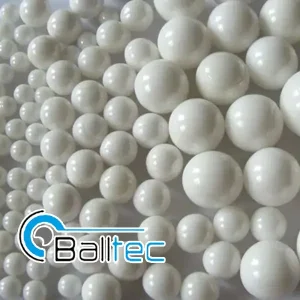
Yes. Baitian manufactures standard sphere diameters ranging from $0.5 \text{ mm}$ micro-beads up to $70 \text{ mm}$ large milling balls. Precision-ground bearing balls (G3, G5, G10 precision classes) are available with diameter tolerances under $\pm 0.001 \text{ mm}$. Comprehensive Batch Test Reports (COA), chemical XRF analyses, ICP-MS purity verifications, and ISO 9001/14001 certificates accompany every export shipment.
Explore our complete range of yttria-stabilized, ceria-stabilized, and food-grade zirconia grinding media engineered for high-speed dispersion.