Follow 


Engineered for rigorous industrial gas drying, hydrocarbon separation, and high-purity oxygen generation across Ontario's industrial facilities.
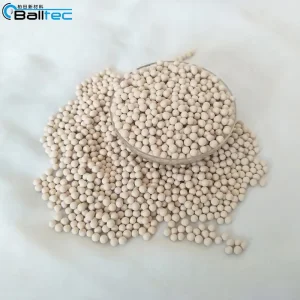
Pore opening ~3Å. Excludes hydrocarbons >3Å; specifically engineered for deep moisture removal in cracked gas and bio-ethanol plants.
View Product Details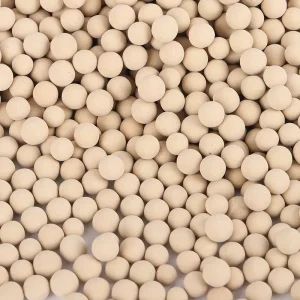
Pore opening ~4Å. Ideal for closed-loop air drying, refrigeration systems, and chemical solvent purification in Southern Ontario.
View Product Details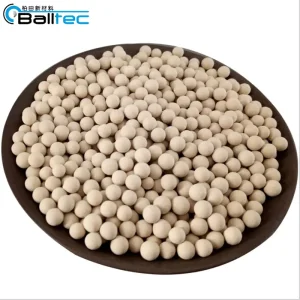
Calcium-exchanged type A zeolite (~5Å). Essential for PSA medical oxygen systems and normal-paraffin separation in refineries.
View Product Details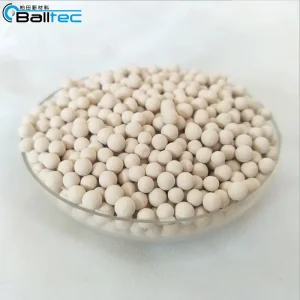
Type X crystal structure (~10Å). Highest mass transfer capability for removing moisture, CO2, and light mercaptans in cryo plants.
View Product DetailsFrom the bustling manufacturing corridors of Mississauga and Brampton to the clean-energy projects across the Greater Toronto Area (GTA), precise molecular separation is foundational to modern Ontario manufacturing.
Ontario’s aggressive transition toward Net-Zero heating and transport requires efficient biomethane upgrading. Our 4A and 13X molecular sieves deliver superior dew-point control (< -80°C) and H₂S/CO₂ co-adsorption to guarantee pipeline gas quality compliance with Enbridge specifications.
With Canada’s largest biomanufacturing ecosystem centered around Toronto, maintaining cleanroom relative humidity levels below 10% is non-negotiable. Our ultra-low attrition 3A molecular sieve beads eliminate fugitive desiccant dust in sensitive tablet packaging and API drying loops.
Driven by Toronto’s rigorous Green Standard v4 energy performance building codes, window manufacturers rely on specialized matrix 3A desiccants to prevent internal condensation and glass deflection under severe Canadian winter thermal gradients.
Understanding the molecular-level physics of hydrated alkali metal aluminosilicates allows engineers to maximize breakthrough capacity and bed operational longevity.
Molecular sieves are crystalline, porous aluminosilicates belonging to the zeolitic material class. The basic structural units are tetrahedral [SiO₄]⁴⁻ and [AlO₄]⁵⁻ groups, cross-linked through shared oxygen atoms to form three-dimensional networks with well-defined cavities and channels.
By altering the charge-balancing cations within the framework—such as replacing native sodium ($Na^+$) ions with potassium ($K^+$) or calcium ($Ca^{2+}$)—our chemical engineers precisely dial the effective pore diameter from 3Å to 10Å:
The following performance metrics demonstrate the engineering standards of our export-grade molecular sieve beads delivered directly to Toronto industrial ports:
| Property Parameter | Type 3A Zeolite | Type 4A Zeolite | Type 13X Zeolite |
|---|---|---|---|
| Pore Diameter | ~3 Ångströms | ~4 Ångströms | ~10 Ångströms |
| Bulk Density (g/mL) | 0.70 – 0.74 | 0.72 – 0.76 | 0.64 – 0.68 |
| Static H₂O Capacity (25°C, 80% RH) | ≥ 21.5% wt | ≥ 22.0% wt | ≥ 27.0% wt |
| Crush Strength (N/bead, 3-5mm) | ≥ 85 N | ≥ 80 N | ≥ 100 N |
| Attrition Rate (% wt) | ≤ 0.05% | ≤ 0.08% | ≤ 0.05% |
| Residual Moisture (Fired) | < 1.0% | < 1.0% | < 0.8% |
As industrial processes transition toward lower carbon footprints and higher energy efficiency, molecular sieve adsorbents must evolve alongside process engineering innovations.
Pre-purification units (PPU) in air separation plants require complete removal of $H_2O$ and $CO_2$ down to sub-ppm levels before air enters the cold box. Our low-voidage 13X APG molecular sieves prevent hazardous acetylene and carbon dioxide freezing on cryogenic heat exchangers, ensuring uninterrupted gas plant uptime across Ontario energy facilities.
Biofuel plants around Southern Ontario rely on pressure-swing adsorption (PSA) vapor-phase ethanol dehydration beds. Operating under demanding temperature cycles, our high-durability 3A beads exhibit zero co-adsorption of ethanol molecules, maximizing alcohol yields while delivering dry ethanol compliant with ASTM D4806 standard specifications.
As clean hydrogen projects scale in Canada, ultra-pure $H_2$ production requires high-efficiency PSA multi-bed units. Our 5A and 13X adsorbents cleanly extract methane, carbon monoxide, and nitrogen, yielding fuel-cell grade $H_2$ (>99.999% purity) with minimal pressure drop.
Our R&D centers are actively advancing adsorbent science to meet the demanding requirements of net-zero emissions policies in North America:
Integrating engineered mesopores into microporous crystal lattices to dramatically accelerate mass transfer rates and cut thermal desorption energy by up to 18%.
Reducing inert clay binders from 20% down to <5%, expanding volumetric adsorption capacity while increasing bead crush strength under severe pressure swings.
Developing functionalized amine-modified zeolite frameworks optimized for carbon dioxide capture directly from ambient atmosphere under fluctuating Canadian weather conditions.
Operating a 100,000 m² state-of-the-art production campus in Pingxiang Industrial Park, our facilities integrate automated powder synthesis, precision spheroidization, and continuous rotary kiln sintering monitored by real-time computer vision systems.
For procurement directors and chemical engineers in Toronto and Ontario, partnering directly with an established manufacturer yields clear structural advantages:
Navigating North American regulatory requirements is essential for smooth plant maintenance and continuous operation:
Fully compliant Canadian WHMIS 2015 Safety Data Sheets provided with every shipment.
Our adsorbents feature precise bulk densities calculated for standard Canadian pressure vessel designs.
Rigorous quality management certified for international trade and industrial application safety.
Explore our full engineering line including specialty molecular sieves, inert tower packing, and high-density grinding media serving global process industries.
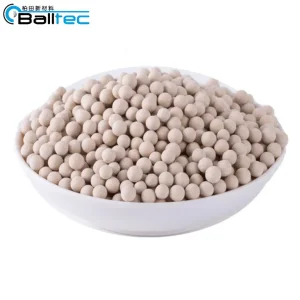
Optimized for deep dehydration of liquid streams, air systems, and static drying units across Canadian municipal and industrial plants.
View Product Details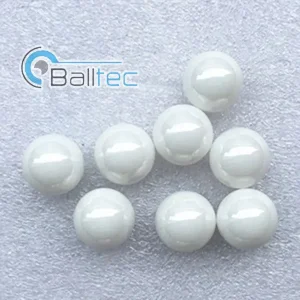
Microstructure engineered with 95% ZrO₂ for ultra-fine nano grinding in paint, ink, and electronic material production in GTA.
View Product Details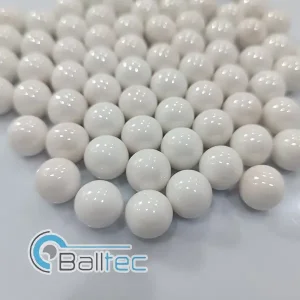
Cost-effective high-density ceramic grinding beads for medium-fine particle dispersion in industrial agitator mills.
View Product Details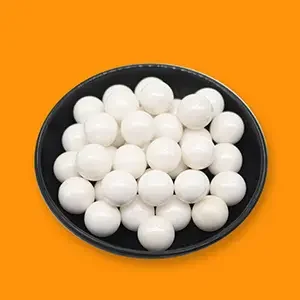
Delivers ultra-low wear rates and zero surface contamination for high-purity pharmaceutical and battery chemical synthesis.
View Product Details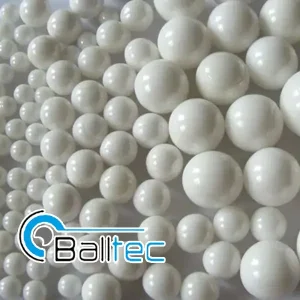
Exceptional impact toughness and fracture resistance, tailored for heavy-duty mineral and advanced ceramic milling.
View Product Details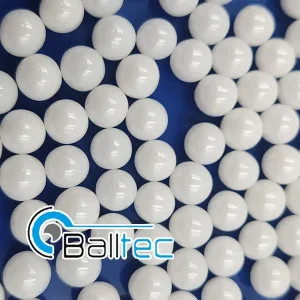
Sintered at ultra-high temperatures to guarantee maximum theoretical density, excellent roundness, and minimal surface defects.
View Product Details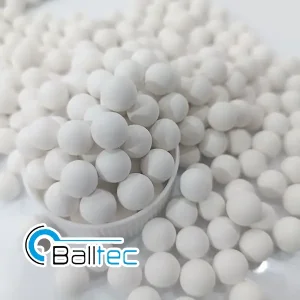
Inert catalyst bed support media designed for chemical reactors, thermal shock resistance, and high-pressure gas beds.
View Product Details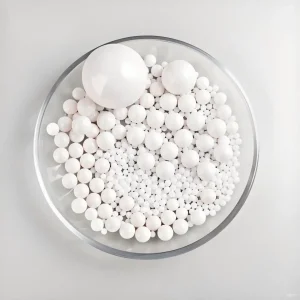
High hardness Al₂O₃ grinding media, engineered specifically for coating, glaze, and chemical pigment processing facilities.
View Product DetailsPrice per metric ton is only one component of desiccant purchasing. True procurement cost accounts for bed lifetime, attrition loss, pressure drop, and thermal regeneration energy consumption.
Low-grade molecular sieves fracture under rapid pressure swings, generating fine zeolitic dust that clogs downstream filters and damages compressors. Our double-sintered beads keep attrition below 0.05% wt, protecting million-dollar turbomachinery.
Repeated thermal regeneration cycles at 200°C–300°C can collapse fragile zeolitic frameworks over time. Our optimized binder matrix preserves crystalline porosity, retaining over 85% dynamic capacity after 1,000 regeneration cycles.
Desorbing bound water requires significant thermal energy. Thanks to narrow particle size distribution, our molecular sieve beds achieve uniform heat transfer, lowering steam/gas regeneration duty and cutting plant energy expenditures.
Expert answers regarding sieve selection, Canadian shipping logistics, pressure drop calculations, and custom adsorbent formulation.
Connect directly with our engineering team for technical data sheets, custom quotes, and sample testing tailored to your Toronto process facility.
Send Inquiry Now