Follow 


Engineered for extreme wear resistance, chemical inertness, and thermal stability in South American industrial environments.
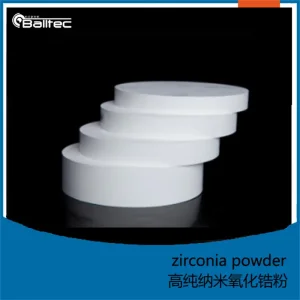
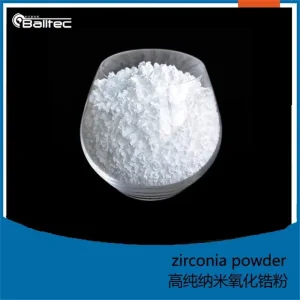
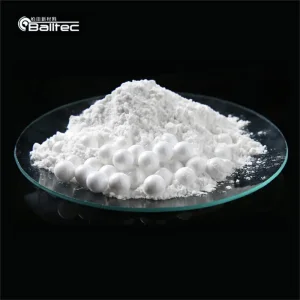
As Chile advances its national lithium strategy, copper extraction processing, and modern biomedical sectors, high-grade zirconium dioxide (ZrO₂) plays a indispensable role.
In the Salar de Atacama region (Antofagasta, Atacama), processing lithium carbonate and lithium hydroxide into battery-grade precursors requires ultra-pure Yttria-stabilized Zirconia (Y-TZP) grinding beads and ceramic lined agitator mills to eliminate iron contamination entirely.
Chilean copper mining giants (Codelco, Antofagasta Minerals) require ZTA and Mg-PSZ powders to press ultra-tough hydraulic valve inserts, hydrocyclone liners, and slurry pump seals capable of enduring severe abrasive slurries under high altitudes.
Rapid growth in Santiago, Concepción, and Valparaíso's dental laboratories has spiked demand for 3Y-TZP spray-dried powders optimized for CAD/CAM disc cold-isostatic pressing (CIP) with translucencies ranging from HT to ultra-high translucency (3D Multilayer).
Pure zirconium dioxide (ZrO₂) undergoes phase transformations during heating and cooling that cause severe volume changes, leading to cracking in structural elements. At room temperature, pure ZrO₂ exists in a monoclinic (m) phase. Upon heating to approximately 1,170°C, it transforms into a tetragonal (t) phase (with a ~4-5% volume shrinkage), and above 2,370°C, it enters the cubic (c) phase.
To overcome this destructive transformation, our factory utilizes chemical co-precipitation and hydrothermal synthesis routes to incorporate stabilizer oxides—primarily Yttria (Y₂O₃), Magnesia (MgO), or Alumina (Al₂O₃). This locks the high-strength tetragonal phase at room temperature, creating the phenomenon known as Stress-Induced Phase Transformation Toughening.
Technical Insight for Chilean Engineers: When a crack propagates through our 3Y-TZP material, the stress field at the crack tip induces the metastable tetragonal grains to transform into the monoclinic phase. This transformation incurs a ~4% localized volume expansion, putting the crack tip under compressive stress and effectively clamping the crack shut. This gives our materials a fracture toughness ($K_{IC}$) of up to 8-10 $MPa\cdot m^{1/2}$, far outperforming standard industrial alumina ceramics.
The following dataset outlines our main powder grades exported directly to manufacturing facilities across San Antonio, Valparaíso, and Antofagasta ports:
| Grade Code | Stabilizer Type | Primary Phase | Primary Particle Size (D50) | Specific Surface Area (BET) | Sintering Temp (°C) | Primary Chilean Target Industry |
|---|---|---|---|---|---|---|
| BT-Y3-BIO | 3 mol% Y₂O₃ | Tetragonal (Y-TZP) | 40 - 90 nm | 12 ± 2 m²/g | 1,450 - 1,530 | CAD/CAM Dental Blocks & Bioceramics |
| BT-Y3-IND | 3 mol% Y₂O₃ | Tetragonal (Y-TZP) | 0.2 - 0.6 µm | 8 ± 1.5 m²/g | 1,500 - 1,550 | Lithium Grinding Media & Pump Components |
| BT-Y8-SOFC | 8 mol% Y₂O₃ | Fully Cubic (8YSZ) | 0.3 - 0.8 µm | 10 ± 2 m²/g | 1,550 - 1,600 | Green Hydrogen Oxygen Sensors & SOFC Electrolytes |
| BT-MONO-N | Unstabilized (0%) | Monoclinic (100%) | 30 - 50 nm | 18 ± 3 m²/g | 1,300 - 1,400 | Electronic Pigments & Refractory Coatings |
| BT-ZTA-20 | 20% ZrO₂ / 80% Al₂O₃ | Mixed Phase | 0.4 - 0.8 µm | 6 ± 1 m²/g | 1,580 - 1,650 | Chilean Copper Mining Heavy Wear Plates |
Real-world operational enhancements delivered through direct factory-engineered ceramic materials across Chile's key industrial hubs.
Challenge: A major lithium processing plant near San Pedro de Atacama experienced severe batch contamination and rapid wear of steel milling media when grinding lithium carbonate slurry down to sub-micron sizes for battery cathode synthesis.
Solution: Baitian supplied custom 0.6mm Yttria-Stabilized Zirconia (Y-TZP) beads paired with BT-Y3-IND microcrystalline structural ceramic liners. Wear rate dropped by 94%, iron impurities fell to < 2 ppm, and media consumption decreased by 4.2x compared to conventional glass and alumina beads.
Challenge: A premier Chilean dental manufacturing plant in Santiago struggled with micro-cracking during fast-sintering cycles of high-translucency (HT) zirconia blank discs.
Solution: Transitioning to Baitian’s spray-dried BT-Y3-BIO nano-powder provided ultra-uniform granulate flowability with precise binder system integration. Isostatic pressing yield rose to 99.4%, achieving an exceptional flexural strength of 1,250 MPa and translucent aesthetics matching natural dentin shade spectrums.
Explore our full line of specialized stabilization formulas, grinding beads, and structural packing engineered for heavy industrial throughput.
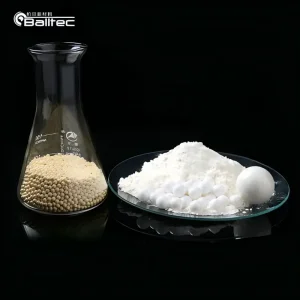
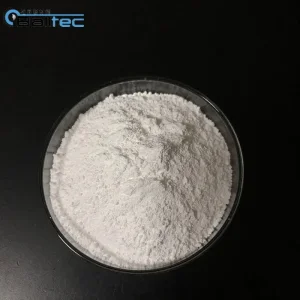
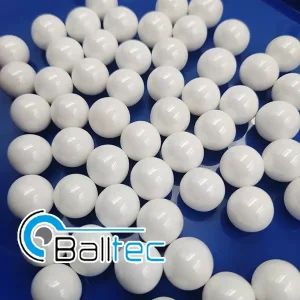
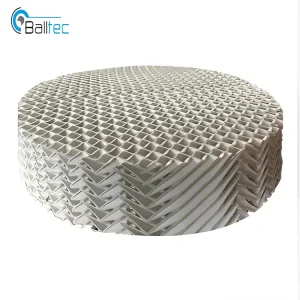
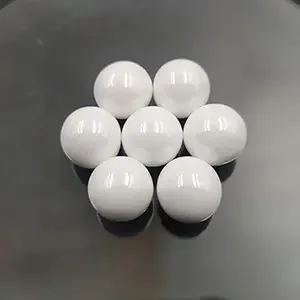
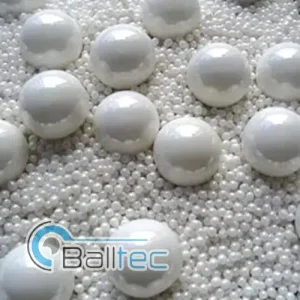
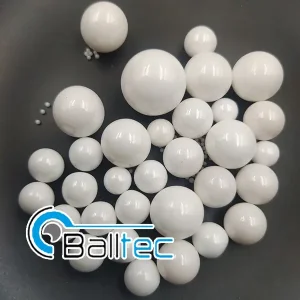
From customs certification to maritime moisture protection, our dedicated export infrastructure ensures seamless integration into South American production lines.
Full operational compliance under ISO 9001:2015, ISO 14001, and ISO 45001 management systems. Every batch ships with an individual Certificate of Analysis (CoA) verified via X-Ray Fluorescence (XRF) and laser diffraction particle size analysis.
To combat humidity fluctuations during trans-Pacific shipping to Valparaíso and San Antonio ports, powders are vacuum-sealed in double-layer aluminum foil bags within 25kg fiber drums or 1,000kg heat-treated fumigated wooden pallets.
We assist Chilean importers with Form F / China-Chile FTA Certificate of Origin documentation to enable tariff-free or preferential duty entry, fully aligned with Servicio Nacional de Aduanas rules.
Expert answers regarding specification selection, shipping timelines, and custom formulation parameters.
Maritime shipments directly to the Port of Valparaíso or Port of San Antonio typically take 28 to 35 days. For urgent laboratory or sampling batches in Santiago or Antofagasta, air freight delivery via Comodoro Arturo Merino Benítez International Airport (SCL) takes 5 to 7 business days.
3Y-TZP features a high density of approximately ~6.0 g/cm³, compared to ~3.6-3.9 g/cm³ for high-purity alumina. This provides significantly higher kinetic impact energy inside horizontal bead mills, speeding up particle size reduction to the sub-micron scale while demonstrating an ultra-low wear rate that prevents chemical contamination in battery-grade lithium production.
Yes, our R&D center customizes particle size distribution (D10, D50, D90) using jet-milling and wet-grinding systems. We also offer ready-to-press (RTP) spray-dried powders containing organic binders (PVA/PEG) specifically tailored for dry pressing or cold-isostatic pressing (CIP) of ceramic shapes.
Every shipment includes a detailed Batch Certificate of Analysis (CoA), Safety Data Sheet (SDS/MSDS), Commercial Invoice, Packing List, Bill of Lading, and China-Chile FTA Certificate of Origin (Form F) for customs duty reduction.
Request factory-direct technical consultations, custom powder formulation trials, or instant bulk quotations for your Chilean manufacturing operations.
Send Inquiry Now