Follow 


Next-Generation Engineered Zirconia Syntheses, Nanostructured Solutions, and Industry 4.0 Supply Resiliency for High-Tech Manufacturing Clusters across Vietnam
Specially synthesized for precision dental blocks, structural ceramic components, ultra-fine electronic dispersions, and high-wear industrial applications in Vietnam.
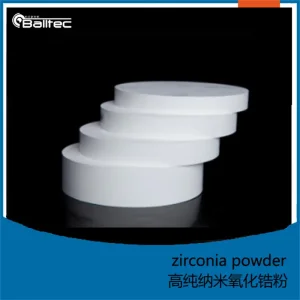
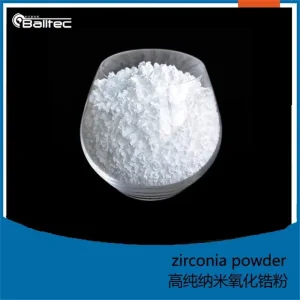
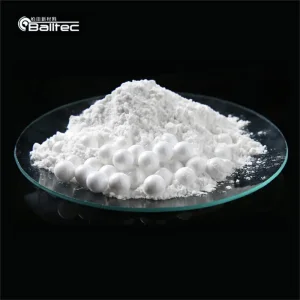
Over the past decade, Vietnam has rapidly emerged as Southeast Asia’s epicenter for advanced electronics manufacturing, semiconductor assembly, high-end dental prostheses, and heavy industrial machinery processing. Industrial hubs stretching across Bac Ninh, Thai Nguyen, Dong Nai, Binh Duong, and Hai Phong have shifted from labor-intensive assembly lines to automated, high-precision manufacturing. This industrial upgrade has created unprecedented structural demand for advanced ceramic precursor powders—specifically high-purity, nanostructured Zirconium Oxide (ZrO₂).
As tier-1 global OEMs and EMS suppliers build out facilities in northern and southern Vietnam, the operational requirements for engineering materials have intensified. Advanced ceramics are replacing traditional metal alloys in microelectronics packaging, high-speed bearing systems, corrosive chemical valve seals, and high-frequency MLCCs (Multi-Layer Ceramic Capacitors). Achieving reliable mechanical strength, fracture toughness, bio-inertness, and high dielectric breakdown thresholds requires consistent, batch-to-batch standardized Zirconia powders.
Northern tech corridors (Bac Ninh, Thai Nguyen) demand nano-scale monoclinic and Y-TZP powders for substrate insulation, ceramic capacitors, and precision robotic grippers operating in high-vacuum environments.
Ho Chi Minh City and Hanoi are fast becoming regional centers for CAD/CAM dental block manufacturing, requiring ultra-translucent 3YSZ to 8YSZ bio-compatible powders with tailored grain boundary physics.
To support this high-value manufacturing ecosystem, Vietnamese procurement managers and metallurgical engineers require direct supply relationships with primary material manufacturers capable of offering tailored chemical doping, customized surface area metrics (BET), and verified supply chain resilience.
Understanding the technological shift from macro-scale industrial ceramics to nanostructured, phase-stabilized Zirconia matrices across global supply chains.
The global Zirconium Oxide market is undergoing a transition driven by two primary vectors: decarbonization technologies (such as Solid Oxide Fuel Cells, or SOFCs) and high-speed electronic miniaturization. Vietnam is uniquely positioned at the intersection of these trends. As international companies diversify their manufacturing footprints under China+1 strategies, Vietnam serves as a pivotal bridge. However, the domestic raw material supply for refined, sub-micron ceramic powders remains limited, making dependable import partnerships with specialized Chinese synthesis plants a strategic imperative.
Zirconia (ZrO₂) exhibits three crystallographic polymorphs across temperature ranges: Monoclinic (room temperature up to 1170°C), Tetragonal (1170°C to 2370°C), and Cubic (above 2370°C up to the melting point of 2715°C). The phase transition from tetragonal to monoclinic involves a volume expansion of approximately 3% to 5%, which typically induces catastrophic micro-cracking in pure un-stabilized ceramics.
To harness Zirconia’s exceptional mechanical properties, chemical stabilizers such as Yttria (Y₂O₃), Magnesia (MgO), or Ceria (CeO₂) are introduced into the crystal lattice. This produces Partially Stabilized Zirconia (PSZ) or Tetragonal Zirconia Polycrystals (TZP). When a micro-crack attempts to propagate through a Y-TZP ceramic matrix under mechanical stress, the stress field at the crack tip triggers a stress-induced phase transformation from the metastable tetragonal phase to the monoclinic phase. The associated volumetric expansion places the crack tip under compressive stress, effectively arresting crack propagation. This phenomenon—known as Stress-Induced Transformation Toughening—gives Yttria-stabilized Zirconia fracture toughness values exceeding 8 to 10 MPa·m¹/².
The performance of sintered Zirconia components relies heavily on the powder synthesis process. Standard mechanical crushing yields wide particle size distributions, irregular morphology, and high impurity levels. In contrast, Baitian utilizes advanced Chemical Co-Precipitation and Hydrothermal Synthesis routes:
| Zirconia Powder Grade | Stabilizer Mol % | Sintered Density (g/cm³) | Flexural Strength (MPa) | Fracture Toughness (MPa·m¹/²) | Primary Vietnam Application |
|---|---|---|---|---|---|
| 3YSZ (Y-TZP) | 3 mol% Y₂O₃ | ≥ 6.05 | 1,000 - 1,200 | 7.0 - 9.0 | Structural Components, Dental Substructures, Grinding Media |
| 4YSZ / 5YSZ | 4 - 5 mol% Y₂O₃ | ≥ 6.02 | 700 - 900 | 4.5 - 5.5 | High-Translucency Dental Full-Contour Crowns & Bridges |
| 8YSZ (Cubic) | 8 mol% Y₂O₃ | ≥ 5.90 | 250 - 400 | 2.0 - 2.5 | SOFC Electrolytes, Oxygen Sensors, Thermal Barrier Coatings |
| Mg-PSZ | 8 - 10 mol% MgO | ≥ 5.75 | 600 - 800 | 9.0 - 12.0 | Heavy Industrial Valve Balls, Molten Metal Extrusion Dies |
| ZTA (Zirconia Toughened Alumina) | 10 - 20 wt% ZrO₂ in Al₂O₃ | 4.10 - 4.50 | 600 - 850 | 5.0 - 6.5 | High-Impact Grinding Beads, Pump Seals, Ceramic Cutting Tools |
Engineered powder solutions tailored to specific regional industrial mandates from North to South.
Electronic component manufacturers in Vietnam’s northern provinces require high-purity sub-micron monoclinic ZrO₂ (purity ≥99.9%) as an essential precursor for BaTiO₃-based Multi-Layer Ceramic Capacitors (MLCCs). Precise particle sizing (d50 < 0.3μm) ensures consistent dielectric constants, minimal lattice distortion, and high volumetric capacitance in compact mobile device circuitry.
Vietnam’s expanding medical manufacturing sector relies on ready-to-press (RTP) Yttria-stabilized Zirconia powders complete with organic binder systems (PEG/PVA). These powders provide controlled compaction behavior during cold isostatic pressing (CIP), delivering uniform shrinkage (typically 20% ± 0.5%) during final sintering at 1450°C to achieve ideal translucency and flexural integrity.
Chemical processing plants, textile dyeing operations, and oil refining facilities in southern Vietnam utilize Magnesia-Stabilized Zirconia (Mg-PSZ) and ZTA powders for manufacturing anti-corrosive pump sleeves, mechanical seal rings, and check valve balls capable of resisting strong acidic environments, abrasive slurries, and extreme thermal cycling.
Vietnam’s automotive and EV battery ecosystem demands ultra-fine wet grinding solutions. High-density Y-TZP micro-beads synthesized from ultra-pure 3YSZ powders enable nanometer-scale milling of Lithium Iron Phosphate (LFP) cathode materials down to d90 < 100nm, delivering high grinding efficiency with zero metallic ion contamination.
In high-tech ceramic manufacturing, raw material consistency directly governs production yield. A slight drift in powder specific surface area or a fraction-of-a-percent deviation in Y₂O₃ concentration can cause significant density variations, warpage, or cracking during kiln firing. Pingxiang Baitian (Ball-tec) New Materials Co., Ltd. operates a 100,000 m² state-of-the-art manufacturing campus integrated with Industry 4.0 automated process control systems.
Every step of powder synthesis—from wet chemical dosing, co-precipitation, continuous hydrothermal pressure control, calcination temperature profiling, to spray drying encapsulation—is monitored via SCADA and PLC control loops. Quality assurance processes include:
Located in Jiangxi, China, Baitian provides direct transport corridors via rail and sea to key Vietnamese entry ports, including Haiphong Port (Northern Region) and Cat Lai Port / Ho Chi Minh City (Southern Region). Transit times are streamlined down to 5–9 days, ensuring minimal buffer stock requirements for factory operations.
Furthermore, under the Regional Comprehensive Economic Partnership (RCEP) and China-ASEAN Free Trade Agreement (ACFTA), Vietnamese buyers importing Baitian Zirconia powders benefit from preferential tariff treatment (Form E Certificate of Origin), reducing import tariffs to 0% for qualified industrial raw materials. This cost advantage, combined with factory-direct pricing, ensures optimal Total Cost of Ownership (TCO) for Vietnamese partners.
Purchasing Zirconia powder requires evaluating key physical, chemical, and morphological metrics beyond basic price-per-kilogram figures. Incorrect powder selection can lead to die sticking during pressing, poor green strength, internal lamination, or incomplete densification during sintering.
If your plant utilizes automated dry pressing or cold isostatic pressing (CIP) for high-volume component shaping, choose Ready-to-Press (RTP) powders pre-blended with organic binders (PVA/PEG) and lubricants. These exhibit spherical spray-dried granules (100–150 μm) with high bulk density and excellent flowability, preventing void formation.
For complex 3D shapes produced via Ceramic Injection Molding (CIM) or slip casting, un-binderized nanometer powders with tailored surface chemistry permit high solid loadings in thermoplastic binder matrices, ensuring low viscosity and defect-free molded green bodies.
Comprehensive technical guidance from our ceramic engineering team for procurement leads, process engineers, and plant managers in Vietnam.
For standard 3YSZ (3 mol% Yttria-Stabilized Zirconia), the optimal sintering temperature range is between 1450°C and 1530°C, with a dwell time of 2 hours. Heating rates should be controlled at 3°C to 5°C/minute up to 600°C to ensure complete organic binder burn-out (if using RTP powder) without inducing internal gas expansion cracks. Full densification (≥6.05 g/cm³) is routinely achieved with linear thermal shrinkage of approximately 20%.
As Yttria content increases from 3 mol% to 5 mol% and 8 mol%, the proportion of isotropic cubic phase within the sintered ceramic increases. The cubic crystal phase lacks optical birefringence, significantly reducing light scattering at grain boundaries and yielding high optical translucency (ideal for anterior dental crowns). However, because cubic zirconia does not undergo stress-induced phase transformation toughening, flexural strength decreases from ~1200 MPa in 3YSZ down to ~600 MPa in 5YSZ and ~300 MPa in 8YSZ. Selecting the right grade depends on balancing aesthetic translucency against mechanical load requirements.
Zircon mineral ores naturally contain trace amounts of Uranium (U) and Thorium (Th) isotopes. For dental and medical-grade bio-zirconia, stringent chemical refining processes are applied to remove naturally occurring radionuclides. Baitian bio-zirconia powders undergo multi-stage chemical extraction to ensure total specific activity of U-238 and Th-232 is well below 0.02 Bq/g, adhering to ISO 6872 and ISO 13356 medical standards for surgical implants and restorative dentistry.
To prevent moisture absorption and agglomeration in Vietnam’s high-humidity climate, all powders are double-sealed in heavy-duty moisture-barrier aluminum foil vacuum bags (25 kg per drum) enclosed within reinforced steel or fiber drums. Bulk shipments can be configured on heat-treated ISPM-15 compliant wooden pallets with stretch-wrap protective covers for ocean freight.
Yes. Our R&D center provides custom doping capabilities, including Al₂O₃ micro-doping for enhanced hydrothermal aging resistance, Er₂O₃ / Fe₂O₃ / Pr₆O₁₁ inorganic pigment co-doping for pre-colored VITA-shade dental powders, and MgO/CeO₂ stabilization for specialized industrial structural ceramics.
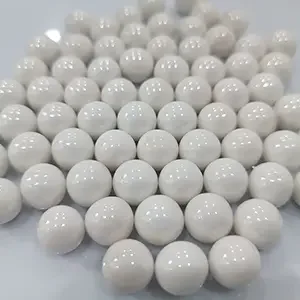
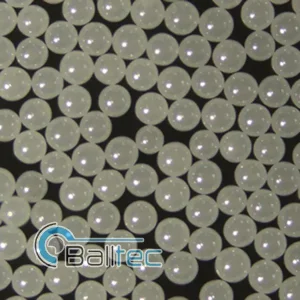
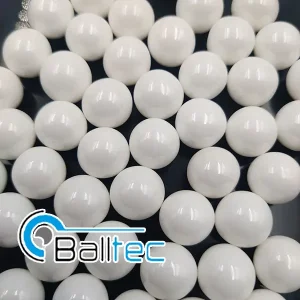
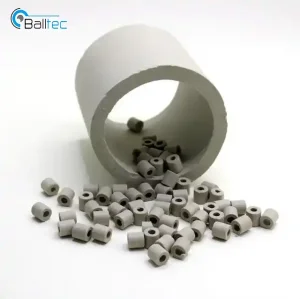
Explore our complete manufacturing lineup supporting Vietnamese industrial enterprises, grinding operations, and chemical plants.
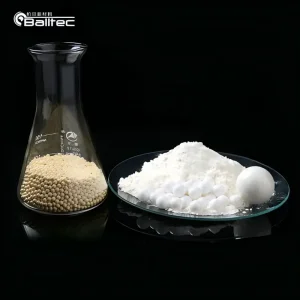
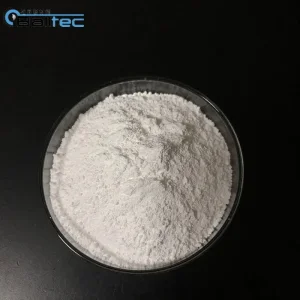
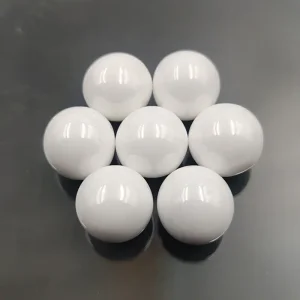
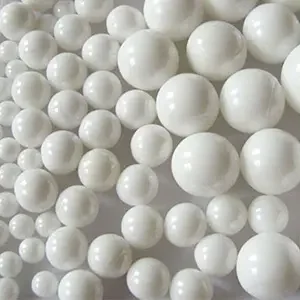
Looking for reliable, batch-standardized Zirconia powders tailored to your specific sintering profile, particle distribution, or application in Vietnam? Request technical data sheets, COA samples, and direct factory pricing today.
Send Inquiry Now