Follow 


Explore factory-direct ceramic bearing components, sub-micron grinding beads, and functional materials optimized for high-voltage dielectric preparation and industrial automation.
Demystifying dielectric strength, capacitance stability, breakdown voltage thresholds, and the critical role of China's advanced ceramic powder processing in modern electronic systems.
Capacitor voltage rating ($V_R$) is primarily dictated by the dielectric material's breakdown strength ($\text{kV/mm}$). China’s leading capacitor voltage factories utilize ultra-pure Barium Titanate ($\text{BaTiO}_3$), Zirconia-stabilized matrices ($\text{ZrO}_2$), and Alumina ($\text{Al}_2O_3$) powders ground down to nanometer scale to prevent internal micro-voids that trigger electrical treeing and partial discharge breakdown under high DC and AC voltage stress.
Maintaining a predictable Temperature Coefficient of Capacitance (TCC) across Class 1 (C0G/NP0) and Class 2 (X7R, X8R, Y5V) dielectrics requires rigorous stoichiometric control. Low dissipation factor ($\tan \delta < 0.1\%$) ensures minimal dielectric self-heating during high-frequency ripple current handling in pulse-power networks, smart grid breakers, and EV traction inverters.
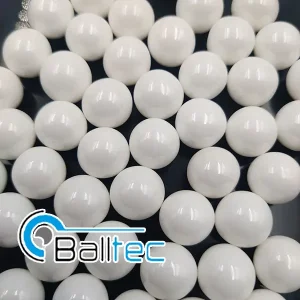
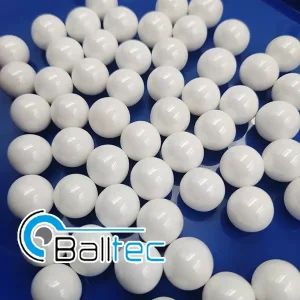
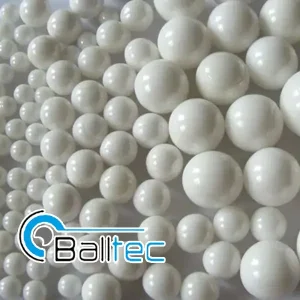
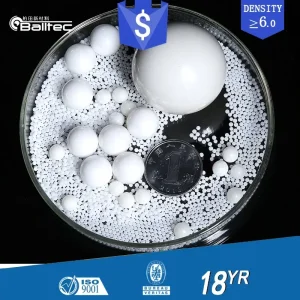
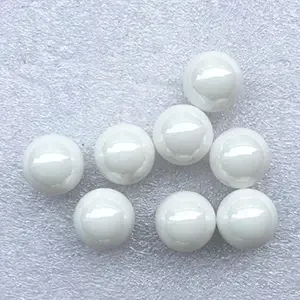
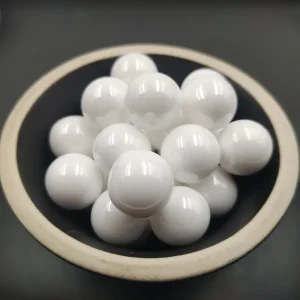
Under ultra-high voltage conditions ($>10\text{ kV}$), partial discharge ($\text{PD} < 5\text{ pC}$) can cause cumulative insulation degradation. By leveraging ultra-fine Yttria-stabilized Zirconia grinding media (Y-TZP Beads) during wet milling, manufacturers eliminate agglomerates, producing dense ceramic microstructures with uniform grain boundaries.
| Dielectric Class / Ceramic Type | Dielectric Constant (εr) | Breakdown Voltage (kV/mm) | Operating Temp Range (°C) | Primary Industrial Application |
|---|---|---|---|---|
| Class 1: Ultra-Stable NPO / C0G | 15 – 100 | 35 – 50 kV/mm | -55°C to +150°C | High-Voltage Resonators, RF Power Amplifiers, Medical Lasers |
| Class 2: High-K X7R / X8R | 2,000 – 4,500 | 15 – 25 kV/mm | -55°C to +125°C (+150°C) | EV Inverters, Industrial Power Supplies, DC-Link Buffering |
| Semiconducting Barrier Layer (Y5V) | 8,000 – 18,000 | 8 – 12 kV/mm | -30°C to +85°C | Energy Storage Pulse Capacitors, Bypass & Decoupling Networks |
| High-Purity Alumina Matrix (99.99%) | 9.8 – 10.5 | 20 – 30 kV/mm | -60°C to +1600°C | High-Temperature Substrates, High-Voltage Insulating Bushings |
From renewable energy conversion to robotic automation and aerospace power distribution, robust capacitor voltage performance underpins global electrification.
Photovoltaic central inverters and wind turbine pitch control systems demand capacitor voltage ratings exceeding 1,500 VDC. High-reliability film and ceramic capacitor voltage modules maintain stable energy buffering, absorbing high voltage spikes generated during grid switching and fast transient power shifts.
800V EV architectures require capacitors with compact dimensions, exceptional energy density, and high voltage endurance. Ceramic dielectric powder milled via high-density ZrO2 Balls supports ultra-thin multilayer ceramic capacitor (MLCC) manufacturing for EV powertrain modules.
Precision robotic joint controllers depend on clean DC bus filtering. Integrated with high-precision Ceramic Bearing Balls, heavy automated assembly lines run smoothly without electrical interference or mechanical wear under severe vibration environments.
High Voltage Direct Current (HVDC) transmission towers and pulsed power research labs demand sub-station capacitor banks operating reliably at 50kV up to 500kV. Ceramic dielectric discs ensure rapid energy release within nanoseconds without insulation degradation.
Discover how integrated raw powder synthesis, automated sintering kilns, and ISO-managed batch testing provide an unshakeable competitive edge for global buyers.
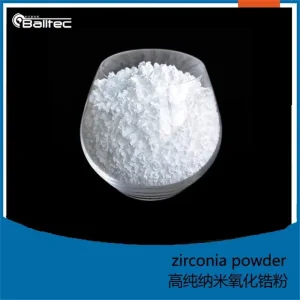
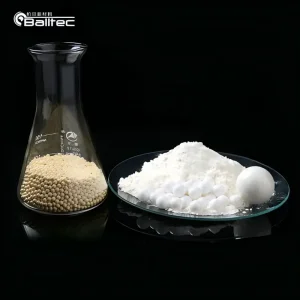
From chemical synthesis of high-purity zirconia powder (3mol%-8mol% Y-TZP) to precision ball milling, spray drying, automated pressing, and atmospheric pressure sintering, Chinese capacitor voltage factories eliminate intermediary supply chain risks. This yields consistent lot-to-lot reliability and reduced lead times.
Modern factories deploy multi-camera machine vision inspection lines capable of scanning 100% of finished ceramic elements. Defective discs, micro-cracks, surface pitting, or dimensional deviations exceeding ±0.005mm are automatically purged, ensuring zero-defect shipments for critical high-voltage assemblies.
Pioneering lead-free ceramics, solid-state dielectric nanocomposites, and extreme-temperature materials for next-generation energy conversion.
With tightening RoHS and REACH regulations, global supply chains are replacing lead-zirconate-titanate (PZT) with Lead-Free Bismuth Sodium Titanate ($\text{BNT-BT-KNN}$) matrices. Chinese research hubs lead the commercial scaling of lead-free high-voltage dielectric ceramics, achieving breakdown field strengths over $40\text{ kV/mm}$.
Next-gen pulsed power applications demand energy storage densities exceeding $10\text{ J/cm}^3$. Polymer-ceramic nanocomposites, reinforced with sub-micron zirconia (Ultra-Fine ZrO2 Beads) and core-shell dielectric fillers, are enabling ultra-compact capacitor banks for defense and medical equipment.
Deep-well oil exploration, aerospace turbines, and SiC power modules require capacitor voltage components operating steadily above 200°C without thermal runaway. Advanced microcrystalline ceramics offer continuous high-K stability and minimal leakage current across extreme temperature swings.
A practical evaluation framework for procurement heads, quality assurance engineers, and OEM component buyers selecting China capacitor manufacturers.
Expert answers to common technical queries submitted by power systems engineers and procurement professionals.
Sub-micron particle sizes achieve higher green body packing density during pressing. Fine ceramic grain size (controlled via ultra-fine ceramic grinding beads) reduces inter-granular void spaces, raising the dielectric breakdown field strength ($\text{kV/mm}$) by up to 40% compared to coarse-grain formulations.
Rated Voltage ($V_R$) is the maximum continuous voltage at which a capacitor can operate safely under specified temperature conditions. Breakdown Voltage ($V_B$) is the absolute electrical threshold at which the dielectric fails destructively. China manufacturers typically engineer a safety margin of $V_B \ge 2.5 \times V_R$.
Yttria-Stabilized Zirconia (Y-TZP) features extreme fracture toughness and zero metallic contamination. Unlike steel media, Y-TZP beads do not introduce conductive metal impurities into high-voltage ceramic formulations, preventing micro-short circuits in finished capacitors.
Yes. Leading factories in industrial ceramic clusters (such as Pingxiang, Jiangxi) offer custom thickness, diameter, silver electrode plating, epoxy encapsulation, and tailored temperature coefficients to match specific OEM voltage and capacitance targets.
Mitigation involves three key processes: 1) High-vacuum degassing during slurry mixing, 2) Isostatic pressing to eliminate micro-cavities, and 3) Smooth encapsulation coatings with high dielectric strength resins to prevent surface corona discharge.
Discover high-performance powders, chemical packing, bearing balls, and precision grinding solutions supplied worldwide.