Follow 


In high-frequency power conversion systems, the filter capacitor serves as the fundamental stabilization anchor across DC-link circuits, AC output filtering stages, and EMI suppression networks. As modern power grids shift toward renewable energy integration and industrial electrification rapidly adopts Wide Bandgap (WBG) semiconductors such as Silicon Carbide (SiC) and Gallium Nitride (GaN), the operational demands on filtering components have escalated exponentially. Selecting a top-tier China filter capacitor manufacturer & supplier is no longer merely a commercial sourcing decision; it is a critical engineering partnership that dictates system reliability, thermal management headroom, and overall electromagnetic compatibility (EMC).
Filter capacitors operate by storing transient energy and smoothing voltage fluctuations caused by switching topologies (PWM, LLC, Phase-Shifted Full Bridge). Their performance is primarily governed by equivalent series resistance (ESR), equivalent series inductance (ESL), dissipation factor ($\tan \delta$), and dielectric self-healing attributes. Understanding the microscopic behavior of advanced dielectrics—ranging from nanometer-scale metallized polypropylene films to ultra-pure microcrystalline ceramic formulations—allows power engineers to eliminate destructive resonance modes, minimize thermal stress, and achieve MTBF (Mean Time Between Failures) thresholds exceeding 100,000 operational hours under harsh environmental conditions.
China’s manufacturing ecosystem for passive electronic components and industrial ceramics has undergone a systemic revolution. Driven by massive capital expenditure in Industry 4.0 automation, vertically integrated material refining, and rigorous statistical process control (SPC), leading Chinese production bases now provide global original equipment manufacturers (OEMs) with unmatched supply chain resilience and cost efficiency.
Utilizing Swiss and German high-speed automated winding machines alongside computer-controlled vacuum sintering kilns, physical density and layer uniformity are controlled to within sub-micron tolerances. This eliminates micro-voids, significantly mitigating Partial Discharge (PD) risks under high operational voltages.
Every component undergoes dynamic visual and electrical screening. In-line laser interferometers and high-frequency vector impedance analyzers evaluate capacitance value, dissipation factor, and ESR in real time, automatically ejecting out-of-spec units to achieve near-zero DPPM (Defective Parts Per Million) output.
From optical-grade polypropylene film and high-purity aluminum foil to sub-micron yttrium-stabilized zirconia and ultra-pure alumina ceramic carriers, direct control over upstream raw materials minimizes lead-time volatility and ensures raw chemical consistency across multi-ton production runs.
As power density requirements escalate in electric vehicle power units, aerospace converters, and grid-scale energy storage systems (ESS), filter capacitor design is undergoing a profound paradigm shift. The ongoing evolution centers on dielectric miniaturization, thermal resilience elevation, and intelligent health monitoring capabilities.
| Technology Generation | Dielectric Innovation | Max Temp (°C) | Energy Density (J/cm³) | Primary Target Applications |
|---|---|---|---|---|
| Legacy Standard | Standard Metallized Polypropylene (BOPP) | 85°C | 1.2 – 1.8 | Standard UPS, Industrial Drives, Grid Transformers |
| Current High-Gain (2024+) | High-Crystallinity Thin Film & Hybrid Nanocomposites | 105°C – 125°C | 2.5 – 3.8 | SiC Inverters, EV Traction Drives, Solar String Inverters |
| Next-Gen Roadmap (2028-2035) | Glass-Ceramic Matrix & Fluoropolymer Nanofibers | 150°C – 175°C | > 6.0 | Aerospace WBG Converters, Deep-Well Drilling, Fusion Power |
Wide-bandgap switches operate at dv/dt slew rates exceeding 50 kV/μs and frequencies over 100 kHz. Future filter capacitors incorporate segmented, self-healing zinc-aluminum heavy-edge metallization to withstand intense harmonic currents without catastrophic dielectric breakdown.
Smart DC-link capacitors are emerging with embedded fiber-optic or thin-film temperature and leakage-current sensors. This enables predictive maintenance frameworks in critical installations such as off-shore wind turbines and high-speed rail lines.
Filter capacitors must be tailor-engineered to match the specific thermal, mechanical, and electrical stresses of their operating environment. Below is a detailed matrix of industry solutions engineered by modern Chinese manufacturing lines.
Requiring ultra-low ESL (< 10 nH) DC-link film capacitors capable of sustaining extreme ripple currents under 800V/1200V architecture. Engineered with customized busbar terminals and flame-retardant dry resin encapsulation meeting UL94-V0 and AEC-Q200 standards.
Designed for 1500V DC operating voltages with THB (Temperature Humidity Bias) Class III Grade B testing (85°C / 85% RH, rated voltage for 1000 hours). Ensures continuous 25-year solar farm operational life without performance degradation.
Heavy-duty AC filtering units designed to absorb switching harmonics, smooth voltage ripple, and enhance power factor across steel mills, mining equipment, and automated manufacturing lines subjected to frequent mechanical shock and vibration.
International procurement teams require more than off-the-shelf components; they need fully customizable form factors, low MOQ prototype rapid-response, and robust Bill of Materials (BOM) cost reduction strategies without compromising on quality or thermal headroom.
Direct CAD/CAM design integration allows custom heavy-copper laminated busbar terminals, specialized aluminum can geometry, and bespoke mounting brackets designed to seamlessly match unique IGBT or SiC module layouts.
In-house testing laboratories deliver full DVT (Design Verification Testing) documentation, including thermal imaging profiles, step-stress surge testing, resonant frequency scans, and vibration resistance up to 20G (IEC 60068-2-6).
To mitigate global shipping disruption, flexible Vendor-Managed Inventory (VMI), safety buffer stock contracts, and regional warehousing solutions ensure stable supply continuity for tier-1 industrial clients.
International trade mandates absolute compliance with environmental, electrical, and safety standards. Top Chinese suppliers maintain comprehensive certification portfolios while delivering localized engineering support across North America, Europe, and the Asia-Pacific region.
All manufacturing facilities operate under strict compliance with ISO 9001:2015 (Quality Management), ISO 14001:2015 (Environmental Management), and IATF 16949 (Automotive Quality Standards). Products conform to UL, CE, RoHS, and REACH directives.
Global buyers receive direct technical access to Field Application Engineers capable of performing circuit simulations (SPICE, ANSYS Maxwell electro-thermal modeling) to assist in thermal design optimization and parasitic inductance reduction.
L_x = L_0 \times 2^{\frac{T_{max} - T_{hotspot}}{10}} \times \left( \frac{V_n}{V_{op}} \right)^n
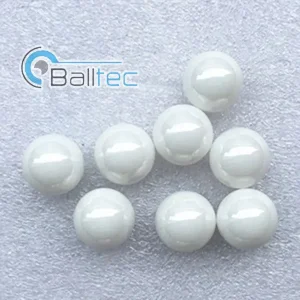
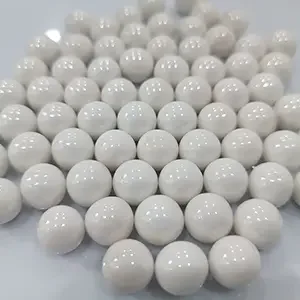
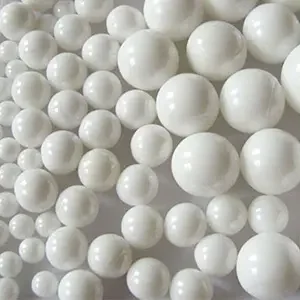
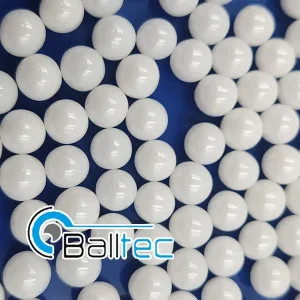
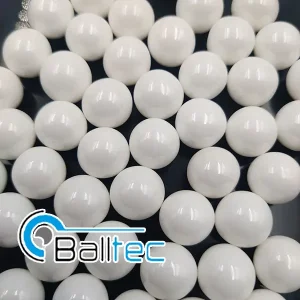
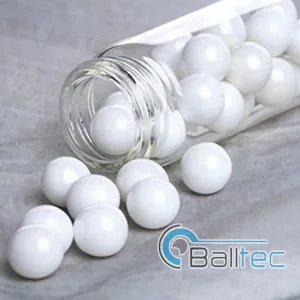
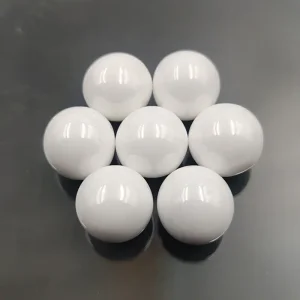
High-Quality Yttrium Stabilized Zirconia Ceramic Ball Mill Grinding Media Zirconia Polishing Beads
View DetailsPingxiang Baitian (Ball-tec) New Materials Co., Ltd. integrates high-tech R&D, advanced precision forming, and automated sintering for industrial ceramic media, ceramic bearing components, molecular sieves, and custom micro-milling media. Operating a 100,000 m² state-of-the-art production campus in the Ceramic Industrial Park, Development Zone, Pingxiang, Jiangxi Province, China, our team delivers factory-direct engineering materials compliant with ISO 9001, ISO 14001, and ISO 18001 standards.