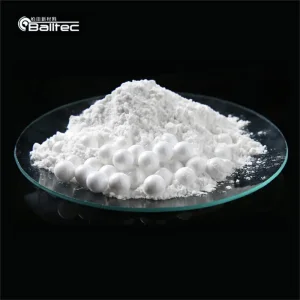
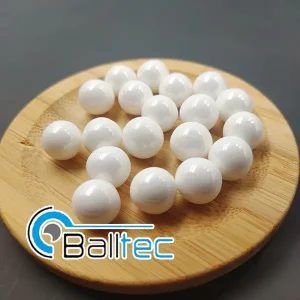
China High-Purity Alumina Ceramic Balls Supplier & Factories

Technical Engineering Guide, Material Innovations, and Industrial Supply Chain Advantage for Ultra-Pure Microcrystalline Alumina Media & Catalyst Beds

Featured Precision Ceramic Media Solutions

Engineered for low-contamination ultra-fine wet grinding, ball milling, high-speed dispersion, and harsh petrochemical catalytic bed support applications.
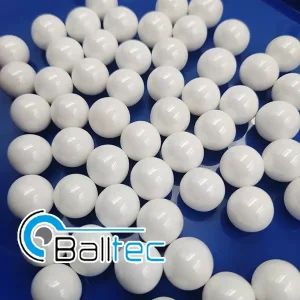
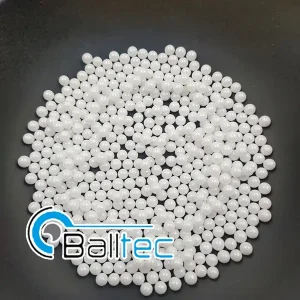
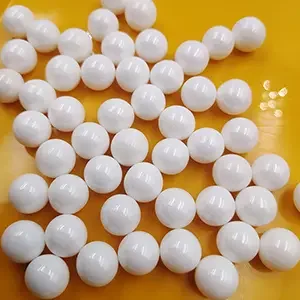
China ZrO2 Bead for Grinding High Efficiency Fine Powder Processing
China ZrO2 Bead for Grinding High Efficiency Fine Powder Processing Manufacturers, Suppliers
View Product Details
China Zirconia Bead for Grinding High Performance Precision Grinding Media
China Zirconia Bead for Grinding High Performance Precision Grinding Media Factory, Factories
View Product Details
Wholesale ZrO2 Grinding Ball for Efficient Material Grinding
Wholesale ZrO2 Grinding Ball for Efficient Material Grinding and Homogenization Manufacturer, Factory
View Product Details
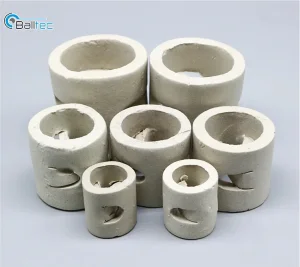
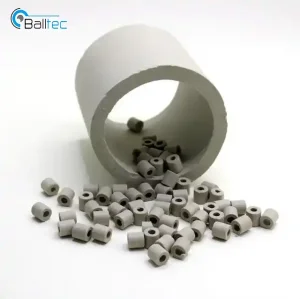
High-Quality Ceramic Pall Rings Tower Packing
High-Quality Ceramic Pall Rings Tower Packing for Distillation Column Packing Manufacturer, Exporters
View Product Details
China Low-Impurity Zirconia Grinding Media for Electronic Ceramic Production
China Low-Impurity Zirconia Grinding Media for Electronic Ceramic Production Manufacturers, Exporter
View Product Details
China Zirconium Oxide Grinding Ball for High Density Efficient Powder Processing
China Zirconium Oxide Grinding Ball for High Density Efficient Powder Processing Manufacturers, Exporter
View Product Details
High-Quality Zirconia Grinding Ball High Purity Stable Performance
High-Quality Zirconia Grinding Ball High Purity Stable Performance Grinding Media Manufacturers, Exporters
View Product Details
Wholesale Zirconium Oxide Ball for Grinding Long Life Wear Resistant
Wholesale Zirconium Oxide Ball for Grinding Long Life Wear Resistant Grinding Media Factory, Exporters
View Product Details

Technical Fundamentals & Material Science of High-Purity Alumina Balls

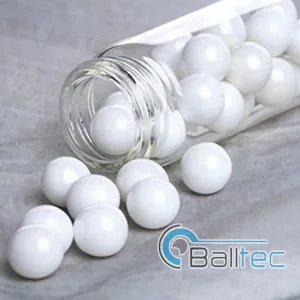
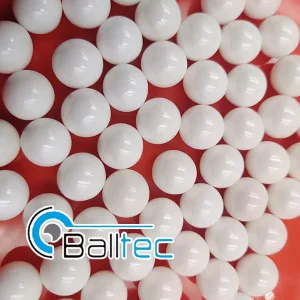
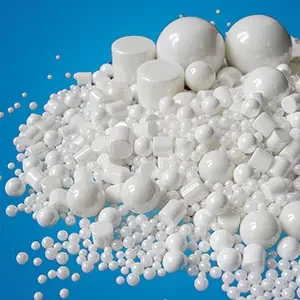
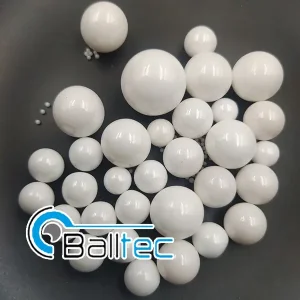
In modern ultra-fine powder metallurgy, lithium-ion battery material synthesis, advanced ceramics manufacturing, and aggressive chemical processing, High-Purity Alumina (HPA) Ceramic Balls serve as an essential cornerstone. Defined primarily by an $\alpha-Al_2O_3$ (alpha-alumina) content ranging from 92% up to 99.99% (4N purity), these industrial spheres are specifically sintered to achieve near-theoretical crystal density, extreme wear resistance, and high chemical inertness.

Information Gain Benchmark: Microcrystalline grain structure ($\le 5\ \mu\text{m}$) achieved via high-pressure Cold Isostatic Pressing (CIP) reduces volumetric wear rates to under $0.005\% / \text{hour}$, significantly extending operational lifecycles while safeguarding batch purity in high-precision milling operations.

The synthesis of high-purity alumina spheres relies on meticulous raw material selection. Calcined sub-micron alumina powders undergo spray drying to form homogenous, free-flowing granules. Forming techniques—such as automated roll compaction or high-pressure isostatic pressing—ensure isotropic density distribution across the sphere diameter. Sintering takes place in high-temperature computer-controlled tunnel kilns at temperatures ranging from $1600^\circ\text{C}$ to $1720^\circ\text{C}$, converting phase-unstable precursors into dense, hexagonal close-packed $\alpha-Al_2O_3$ crystal lattices.

Performance Parameter 92% Alumina Grade 95% - 99% Alumina Grade 99.99% (4N) Ultra-Pure Grade
Chemical Formula / Purity $Al_2O_3 \ge 92\%$ $Al_2O_3 \ge 95\% - 99\%$ $Al_2O_3 \ge 99.99\%$
Bulk Density (g/cm³) $\ge 3.60$ $3.68 - 3.85$ $\ge 3.95 - 3.98$
Mohs Hardness / Vickers (GPa) Mohs 9.0 / ~14 GPa Mohs 9.0 / ~15-16 GPa Mohs 9.0 / ~17.5 GPa
Self-Wear Rate (%/hr) $\le 0.015\%$ $\le 0.008\%$ $\le 0.003\%$
Water Absorption (%) $\le 0.02\%$ $\le 0.01\%$ $0.00\%$ (Impermeable)
Primary Target Applications Ceramic glazes, mineral grinding Electronic ceramics, pigments Lithium LFP/NCM, CMP slurry, SOFC

China Supply Chain Advantages & Manufacturing Ecosystem

China has established itself as the global epicenter for industrial ceramic production, with clusters such as Pingxiang in Jiangxi Province demonstrating integrated value chains. Sourcing High-Purity Alumina Ceramic Balls directly from tier-1 Chinese manufacturers provides quantifiable strategic advantages to global enterprise buyers:

Upstream Raw Material Integration

Direct proximity to synthetic high-purity aluminum hydroxide and calcined $\alpha-Al_2O_3$ refineries eliminates raw material bottlenecks, guaranteeing stable chemical compositions batch after batch.

State-of-the-Art Forming Technology

Utilizing high-tonnage Cold Isostatic Pressing (CIP) and automated multi-channel sphere rolling machinery, Chinese facilities achieve precise dimensional tolerances, high sphericity, and non-porous microstructures.

Total Cost of Ownership (TCO) Efficiency

Economies of scale, continuous tunnel-kiln sintering, and optimized thermal management systems lower energy costs per ton, yielding high-performance media at competitive market price points.

100,000+
Sqm Production Base
99.99%
Max Purity Grade
< 0.003%
Ultra-Low Wear Rate
800+
Global Enterprise Clients

Global Procurement Criteria & Total Cost of Ownership (TCO) Matrix

When global procurement officers and chief process engineers evaluate ceramic grinding media or inert bed packing, looking strictly at the upfront cost per metric ton often leads to distorted total cost evaluations. Wear rate, cross-contamination risks, power consumption, and thermal shock resistance directly affect mill throughput and process uptime.

Key Evaluation Factors for Quality Verification

To systematically mitigate supply risks, industrial procurement programs must incorporate rigid technical benchmarks:

  • Chemical Impurity Limits: Silica ($SiO_2$), Iron Oxide ($Fe_2O_3$), and Sodium Oxide ($Na_2O$) contamination can ruin semiconductor slurries or battery cathode conductivity. 99.99% alumina media caps total trace metal impurities below 100 ppm.
  • Sphericity & Radial Deviation: Non-spherical media leads to irregular stress concentration, uneven wear, mill liner abrasion, and premature media fracturing (spalling). High-grade spheres keep radial deviation under 0.05 mm.
  • Grain Size Distribution: Scanning Electron Microscopy (SEM) analysis ensures microcrystalline grain sizes stay beneath $3-5\ \mu\text{m}$. Coarse grain boundaries allow micro-chipping, causing elevated media wear.
  • Crush Strength Performance: Inert bed support spheres must endure heavy static pressure and thermal cycles in catalytic reactors without collapsing. Single-ball crush strength for a 50mm inert alumina sphere must exceed 25 kN.
Engineering Recommendation: For ultra-fine wet grinding in high-energy horizontal agitator bead mills (e.g., Netzsch, Buhler), select high-purity alumina beads sized between 0.1mm and 2.0mm with a bulk density $> 3.80\ \text{g/cm}^3$ to maximize kinetic impact while protecting internal mill components.

Industry Trends & Next-Generation Material Innovations

Driven by global energy transitions, high-density energy storage, advanced semiconductor packaging, and decarbonization mandates, the technical requirements for industrial ceramic media are evolving rapidly.

Lithium-Ion Battery Cathode Processing (LFP/NCM)

Next-gen EV battery production requires sub-micron dispersion of Lithium Iron Phosphate ($LiFePO_4$) and NCM precursors. Ultra-pure 99.99% alumina media prevents iron/silica leaching, preserving electrochemical stability and battery longevity.

Semiconductor CMP Slurry Polishing

Chemical Mechanical Planarization (CMP) slurries for advanced microchip wafers mandate defect-free nanometer particles. High-purity micro-beads ensure uniform particle size distributions without introducing trace metallic contaminants.

Green Hydrogen & SOFC Electrolytes

Solid Oxide Fuel Cells (SOFC) and high-temperature water electrolyzers depend on fine YSZ/Alumina ceramic powders. Producing these high-grade powders requires zero-contamination grinding environments.

Localized Application Scenarios & Industrial Field Benchmarks

High-Purity Alumina Ceramic Balls fulfill dual structural and operational roles across diverse industrial manufacturing sectors:

Scenario A: Ultrafine Grinding Media

Used extensively in continuous wet bead mills and attritors for grinding zircon flour, titanium dioxide ($TiO_2$), calcium carbonate, mineral glazes, electronic ceramics (MLCC), and battery electrode materials.

Scenario B: Catalyst Bed Support Media

Inert alumina spheres act as support and topping media for catalyst beds in hydrocracking, desulfurization, catalytic reforming, and ammonia synthesis columns, resisting pressure drops and thermal shocks up to $1500^\circ\text{C}$.

Scenario C: Thermal Storage & Heat Exchange

High thermal capacity and density make alumina spheres ideal regenerative packing media in Regenerative Thermal Oxidizers (RTO) and high-temperature gas heat exchangers, reducing fuel energy consumption.

Quality Control Framework, Compliance & Export Protocols

Leading Chinese manufacturing hubs adhere to rigorous global certification standards. Ensuring full traceability from raw powder reception to final export loading guarantees operational consistency.

  • ISO Management System Integration: Full compliance with ISO 9001:2015 (Quality Management), ISO 14001:2015 (Environmental Management), and ISO 45001:2018 (Occupational Health & Safety).
  • International Regulatory Compliance: Certified free of hazardous substances in compliance with EU REACH (EC 1907/2006) and RoHS 3 directives, supporting seamless integration into European and North American supply chains.
  • Rigorous Laboratory Testing: Chemical compositions verified via X-ray Fluorescence (XRF) and Inductively Coupled Plasma (ICP) spectroscopy. Microstructure examined via Scanning Electron Microscopy (SEM).
  • Export Packaging Standards: Shipped in heavy-duty moisture-proof woven bags, steel drums, or reinforced wooden crates on fumigated pallets to guarantee zero contamination or physical damage during ocean freight.

Frequently Asked Questions (Technical & Procurement FAQ)

In-depth technical answers addressing long-tail buyer queries and operational engineering requirements.

What is the primary technical difference between 92% and 99.99% (4N) alumina balls?
The fundamental distinction lies in crystal phase purity, density, hardness, and impurity levels. 92% alumina contains small percentages of silica and fluxing agents to lower sintering temperatures, making it suitable for general ceramic glaze milling. 99.99% (4N) alumina is virtually pure $\alpha-Al_2O_3$, sintered at higher temperatures to achieve a bulk density above $3.95\ \text{g/cm}^3$, zero silica contamination, and exceptional wear resistance ideal for battery materials and electronic ceramics.
How does media density affect wet grinding mill efficiency?
Kinetic energy transferred during grinding impacts is directly proportional to media density ($E_k = \frac{1}{2} m v^2$). Higher density media ($3.80 - 3.98\ \text{g/cm}^3$) allow mill operators to either shorten milling times or grind higher-viscosity slurries to sub-micron particle sizes without increasing agitator shaft RPM, resulting in substantial energy savings.
What size alumina ball should be selected for fine particle grinding?
A general rule of thumb is that the starting feed particle size should be roughly 10 to 15 times smaller than the grinding media diameter, while the target output size should be 100 to 1000 times smaller. For sub-micron down to nano-scale dispersion, small beads between 0.1mm and 1.5mm are recommended. For coarse ball mill feeds, larger spheres from 20mm to 60mm are appropriate.
Why are inert alumina spheres preferred for petrochemical bed support?
Inert alumina spheres provide extreme chemical resistance to acids, alkalis, and organic solvents, alongside high thermal stability (resisting temperatures above $1400^\circ\text{C}$). They support heavy catalyst beds without thermal degradation or catalytic poisoning, ensuring optimal fluid dynamics and low pressure drop across reactor columns.

Complete Advanced Ceramic & Media Product Catalog

Explore our extended portfolio of zirconia grinding beads, chemical column packing, micro-porous ceramic filters, and nano-powders manufactured under strict ISO quality controls.
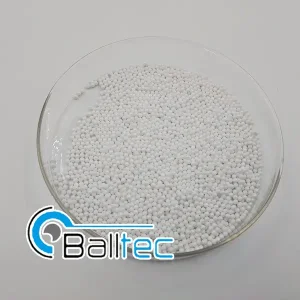
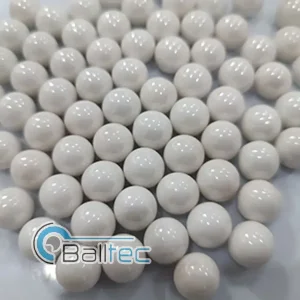
China High-Purity Zirconia Grinding Media for Fine Chemicals Processing
China High-Purity Zirconia Grinding Media for Fine Chemicals Processing Supplier, Factories
View Product Details
Wholesale ZrO2 Grinding Bead for Precision Ball Milling
Wholesale ZrO2 Grinding Bead for Precision Ball Milling and Powder Processing Supplier, Factory
View Product Details
Wholesale Factory Price Industrial Ceramic Raschig Ring
Wholesale Factory Price Industrial Ceramic Raschig Ring Acid Resistant Random Packing Manufacturers, Exporters
View Product Details
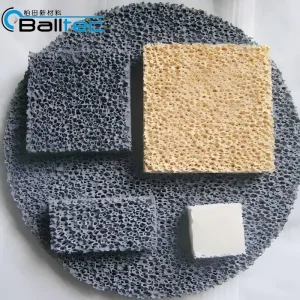
High-Quality Ceramic Foam Filter High Strength Heat Resistant
High-Quality Ceramic Foam Filter High Strength Heat Resistant Honeycomb Porous Zirconia Ceramic Foam Filter Manufacturers, Exporter
View Product Details
China Zirconium Oxide Bead for Grinding Durable Stable Grinding Media
China Zirconium Oxide Bead for Grinding Durable Stable Grinding Media Manufacturers, Factories
View Product Details
High-Quality Nanometer Zirconia Powder Monoclinic Zirconium Oxide Powder
High-Quality Nanometer Zirconia Powder/ Monoclinic Zirconium Oxide Powder /ZrO₂ Factories, Exporter
View Product Details
China Zirconia Grinding Ball for High Hardness Material Processing Applications
China Zirconia Grinding Ball for High Hardness Material Processing Applications Supplier, Factories
View Product Details
High-Quality Zirconia Grinding Ball for Fine Particle Grinding
High-Quality Zirconia Grinding Ball for Fine Particle Grinding and Uniform Dispersion Manufacturers, Exporters
View Product Details