Follow 


Delivering advanced ceramic housings, insulating media, and precision structural components for next-generation electromechanical relays and HVDC contactors.
Analyzing the technical trajectory, market forces, and material innovations positioning Chinese relay exporters as premier tier-1 component suppliers globally.
The rapid transformation toward 800V and 1000V electric vehicle platforms requires High Voltage Direct Current (HVDC) relays capable of handling high inrush currents without contact welding. Chinese relay manufacturers lead this transition through ceramic-sealed vacuum technologies, ensuring gas-tight arc suppression with hydrogen/nitrogen gas mixes.
Traditional epoxy resin sealing is being systematically replaced by high-purity microcrystalline alumina ($Al_2O_3$) and zirconia ($ZrO_2$) ceramic seals. Ceramic-to-metal brazing creates a permanent thermal barrier capable of enduring continuous operating temperatures beyond 200°C without degassing or dielectric breakdown.
Modern smart grids, telecommunication hubs, and aerospace systems demand compact form factors with ultra-high contact ratings. China's top relay exporters leverage ultra-fine ceramic micro-grinding technologies to produce dense structural insulators, drastically cutting relay dimensions while maintaining >10kV isolation performance.
The global electromechanical relay market has undergone a dramatic technological evolution over the past decade. China has transformed from a high-volume low-cost assembly hub into an innovative epicenter for precision switching systems, high-voltage direct current (HVDC) contactors, and ceramic-encapsulated relay solutions. Key drivers behind this technological leap include the exponential expansion of global Battery Energy Storage Systems (BESS), modern photovoltaic inverters, ultra-fast charging stations, and smart grid automation protocols.
Central to modern relay performance is the engineering of the arc chamber and contact mechanism. When switching high-voltage DC circuits under load, electric arcs generated upon contact separation can reach temperatures exceeding 5,000 K. Without rapid arc quenching, catastrophic contact degradation or sustained plasma bridges occur. Leading Chinese relay exporters utilize high-density toughened ceramic housings (incorporating Yttria-stabilized Zirconia and 95%+ Alumina ceramics) combined with hermetic gas encapsulation. This design rapidly cools and quenches the plasma arc within milliseconds, dramatically expanding mechanical and electrical service lifetimes up to 500,000 switching cycles under full rated load.
How tier-1 buyers, industrial OEMs, and systems integrators evaluate and partner with China relay suppliers to de-risk supply chains and guarantee product quality.
Global buyers are shifting focus from unit price to long-term operational TCO. Chinese suppliers offering complete vertical integration—from raw ceramic powder formulation and sintering to automated contact assembly—deliver up to 35% overall cost efficiency without compromising dielectric reliability.
With centralized industrial clusters in Jiangxi, Zhejiang, and Guangdong, Chinese exporters guarantee reliable raw material access (high-purity alumina, silver-tin oxide $AgSnO_2$, magnetic copper wire), maintaining steady lead times of 2-4 weeks compared to global industry averages of 12+ weeks.
International procurement teams increasingly require bespoke pin configurations, specific coil voltages (12V, 24V, 48V, 110V DC), custom mounting brackets, and tailored auxiliary contacts. Premium Chinese exporters provide full engineering co-design via 3D simulation and rapid prototyping.
To ensure long-term system stability, global procurement engineers must verify: 1) Hermeticity testing using helium mass spectrometers ($<1\times10^{-9} Pa\cdot m^3/s$ leak rate); 2) Contact resistance stability under pulse currents; 3) Flame retardancy compliance (UL94 V-0 ceramic/polymer housings); 4) Complete material traceability back to raw powder batches.
Discover how high-reliability relay electronics and advanced ceramic components power critical infrastructure across four core global industries.
Main battery disconnect units (BDUs), pre-charge relays, and DC fast-charging piles (350kW+) requiring high-current continuous switching (100A-1000A) under extreme thermal ambient conditions.
Commercial string inverters, central grid tie systems, and containerized battery storage (BESS) where safety isolation relays prevent catastrophic short-circuit feedback into the grid.
PLC output modules, CNC machine safety circuits, and robotic controllers demanding low-power coil consumption, high vibration resistance (20G), and rapid mechanical response times (<10ms).
Reclosers, distribution automation terminals (DTUs/FTUs), and smart metering relays engineered for lightning surge withstand capabilities (>10kV impulse voltage) and decades of field operation.
The performance limits of modern high-power switching electronics are fundamentally dictated by material science. As operating voltages escalate from legacy 400V systems to 800V, 1200V, and higher in renewable microgrids, traditional polymer insulators experience dielectric tracking, thermal softening, and outgassing under heavy electrical stress. High-performance ceramic materials—specifically Yttria-Stabilized Tetragonal Zirconia Polycrystals (Y-TZP) and High-Purity Alumina ($Al_2O_3$)—have emerged as indispensable elements in high-reliability relay manufacturing.
In high-voltage relay contactors, the ceramic housing functions not merely as a structural shell, but as a pressure vessel containment for pressurized gas mixtures (predominantly Hydrogen and Nitrogen). Hydrogen possesses high thermal conductivity, allowing it to absorb intense heat energy from the electric plasma arc during contact opening. The non-porous microcrystalline structure of ceramic components ensures zero gas permeation over 15 to 20-year service spans, preventing atmospheric oxygen infiltration that would otherwise oxidize silver-alloy contacts and cause thermal runaway.
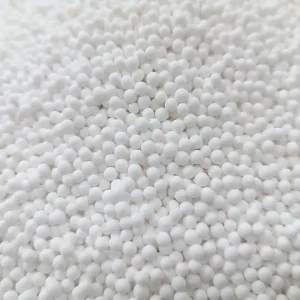
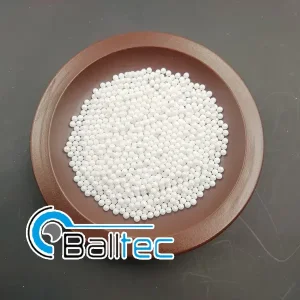
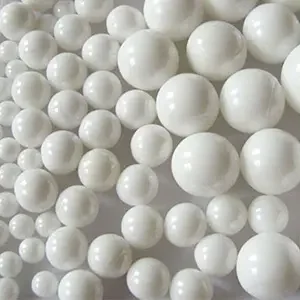
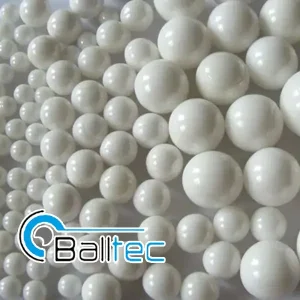
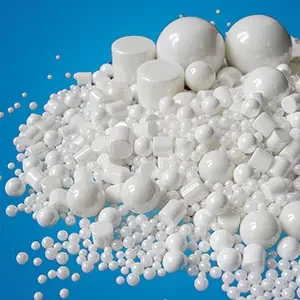
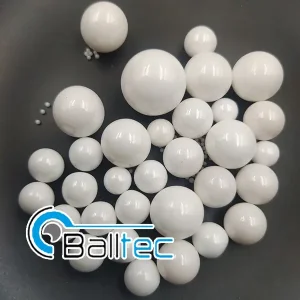
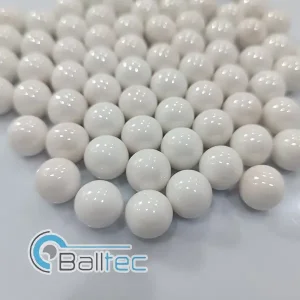
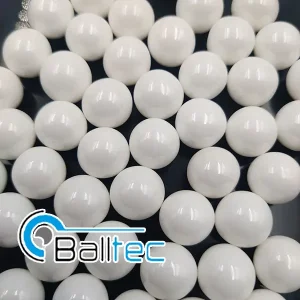
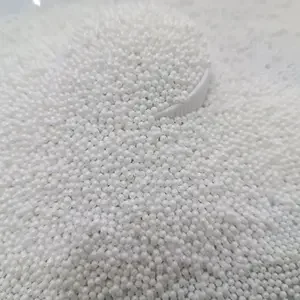
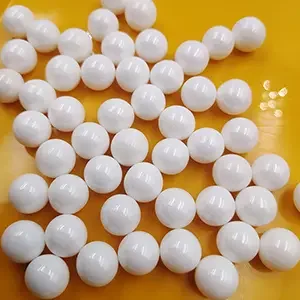
The quality of relay contact tips (such as Silver Tin Oxide $AgSnO_2$, Silver Nickel $AgNi$, or Silver Cadmium Oxide $AgCdO$) directly governs contact resistance and resistance to arc erosion. These contact materials are synthesized via powder metallurgy, requiring sub-micron powder refinement. High-density Zirconia ($ZrO_2$) grinding beads and Yttria-stabilized ceramic media play a pivotal role in ball milling these raw metallic and oxide powders without introducing metal impurities. The ultra-low wear rate of $ZrO_2$ beads ensures high-purity contact microstructures, suppressing material transfer and welding during high-inrush current surges.
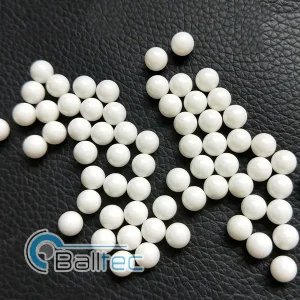
Advanced high-frequency relays, reed switches, and specialized aerospace contactors incorporate ceramic bearing components (such as Silicon Nitride $Si_3N_4$ and Zirconia balls) within their mechanical pivot structures. Ceramic bearing balls feature high elastic modulus, extremely low density ($3.2 - 6.0 g/cm^3$), and superior surface smoothness (G3/G5 precision grade). By reducing mechanical friction, these components allow electromagnetic armatures to actuate with microsecond precision while eliminating risk of galling or cold-welding under zero-lubrication cleanroom conditions.
China's premier relay exporters adhere to rigorous global quality frameworks, ensuring frictionless integration into international supply chains.
Production facilities operate under IATF 16949 for automotive component management, ISO 9001 for quality control, ISO 14001 for environmental management, and ISO 45001 for occupational health. Products are certified under UL 508, VDE, TUV, CE, and CCC safety standards.
Full compliance with EU RoHS (Restriction of Hazardous Substances) and REACH directives. Heavy metals such as cadmium and lead are systematically eliminated through advanced $AgSnO_2$ composite contact technology and eco-friendly lead-free ceramic glazes.
Established field engineering and logistics distribution networks across Europe, North America, Southeast Asia, and South America provide localized customer support, consignment inventory warehousing, and rapid RMA replacement procedures.
Anticipating the convergence of electromechanical design, solid-state switching hybrids, and intelligent diagnostic sensors over the next decade.
Next-generation relay architectures incorporate miniature piezo-electric and temperature sensors within the ceramic housing to measure contact wear, real-time temperature rise, and cycle counts, feeding health data via IoT protocols into predictive maintenance software.
Combining Wide Bandgap (WBG) semiconductors (Gallium Nitride GaN and Silicon Carbide SiC) with traditional ceramic-sealed mechanical contacts. Semiconductors handle arc-free zero-voltage turn-on/turn-off, while mechanical contacts provide zero-loss continuous current conduction.
Leading Chinese suppliers are transitioning high-temperature ceramic kilns to green hydrogen fuel and renewable electric power, reducing the carbon footprint of industrial ceramic relay components by up to 80% to meet global corporate ESG benchmarks.
Supporting chemical processing, gas purification, and ultra-fine powder preparation essential for electromechanical component manufacturing.
Expert answers regarding relay specification, ceramic material selection, custom manufacturing capabilities, and quality assurance.