Follow 


Explore our premium selection of advanced ceramic substrates, precision grinding media, and high-efficiency material dispersion components manufactured under strict ISO guidelines.
In modern surface-mount technology (SMT) and printed circuit board (PCB) design, the zero-ohm resistor (also known as a zero-ohm jumper or link) serves as an indispensable passive component. Despite nominal zero-resistance designation, these components possess finite parasitic properties, precise thermal parameters, and structural substrates engineered from ultra-pure alumina (Al₂O₃) ceramics.
Standard thick-film zero-ohm resistors feature maximum DC resistance specs of <50 mΩ. However, high-precision automotive and industrial grade jumpers manufactured in China achieve ultra-low residual resistance thresholds of <0.5 mΩ to <0.2 mΩ. This dramatic reduction minimizes I²R thermal dissipation in high-current power stages.
Zero-ohm jumpers allow high-speed single-sided or double-sided SMT lines to route electrical traces across intervening PCB tracks without adding expensive multilayer stack-ups. They facilitate automated optical inspection (AOI), automated pick-and-place assembly, and single-pass wave or reflow soldering.
The core structural backbone of chip resistors relies on 96% High-Purity Alumina (Al₂O₃) ceramic substrates. The mechanical strength, dielectric insulation, and thermal dissipation metrics of ceramic bases directly influence current rating capacity, dielectric withstand voltage, and pulse-load reliability.
When selecting surface-mount zero-ohm jumpers for industrial or automotive electronics, hardware engineers must evaluate current-carrying limits ($I_{max}$), peak pulse endurance, and operating temperature profiles. China's leading factories adhere to global standards such as IEC 60115-8 and AEC-Q200 Grade 0.
| EIA Package Size | Metric Size | Standard Resistance Rating | Ultra-Low Resistance Jumper | Standard Rated Current ($I_r$) | Max Current Rating ($I_{max}$) | Operating Temp Range |
|---|---|---|---|---|---|---|
| 0201 | 0603 metric | < 50 mΩ | < 1.0 mΩ | 0.5 A | 1.0 A | -55°C to +155°C |
| 0402 | 1005 metric | < 50 mΩ | < 0.5 mΩ | 1.0 A | 2.5 A | -55°C to +155°C |
| 0603 | 1608 metric | < 50 mΩ | < 0.2 mΩ | 1.5 A | 6.0 A | -55°C to +155°C |
| 0805 | 2012 metric | < 50 mΩ | < 0.2 mΩ | 2.0 A | 10.0 A | -55°C to +155°C |
| 1206 | 3216 metric | < 50 mΩ | < 0.2 mΩ | 2.5 A | 15.0 A | -55°C to +155°C |
| 2512 | 6432 metric | < 20 mΩ | < 0.1 mΩ | 5.0 A | 50.0 A | -55°C to +170°C |
Leveraging dense industrial clusters in Guangdong (Shenzhen, Dongguan) and Jiangsu, Chinese passive component manufacturers provide unparalleled end-to-end production scale, strict quality control, and rapid lead times for global original equipment manufacturers (OEMs).
Supply chain resilience, cost optimization, and compliance with international environmental directives drive global Tier-1 automotive and industrial electronics manufacturers to establish direct procurement channels with Chinese factories.
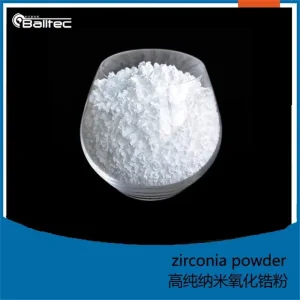
Chinese component ecosystems integrate every processing step under unified regional industrial parks—from raw mineral powder refinement (zirconia and high-purity alumina ceramics) to thick-film paste formulation, laser trimming, automated plating, and tape-and-reel packaging. This vertical integration drastically reduces lead times and logistics overhead.
Leading Chinese exporters maintain comprehensive quality management systems accredited to ISO 9001, IATF 16949 (Automotive), and ISO 14001. All zero-ohm chip resistor lines conform fully to EU RoHS 3.0 (Directive 2015/863), REACH SVHC candidate lists, and Halogen-Free requirements (IEC 61249-2-21).
Beyond standard thick-film jumpers, Chinese manufacturers excel in custom metal plate zero-ohm shunts. Utilizing copper-manganese alloy or pure copper elements, these jumpers provide heavy-duty current handling capability (up to 100A) with virtually zero thermal EMF for battery management systems (BMS).
Zero-ohm resistors are far more than mere jumpers. They play strategic structural and functional roles across diverse electronic circuits:
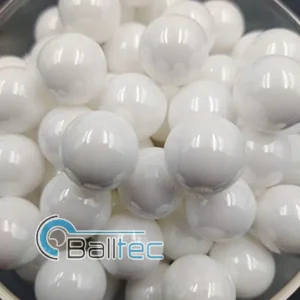
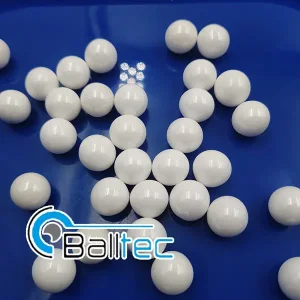
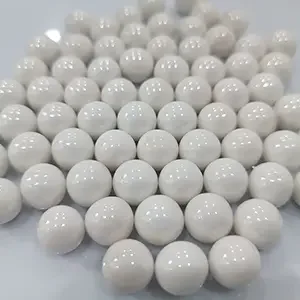
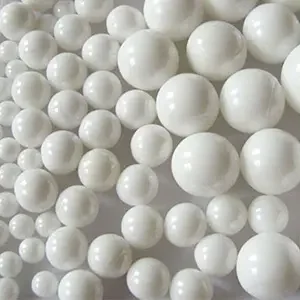
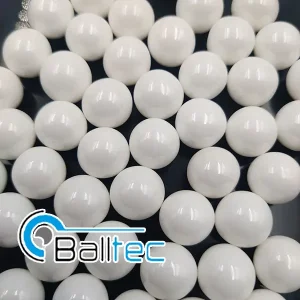
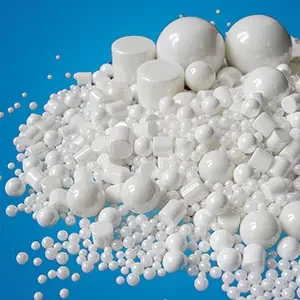
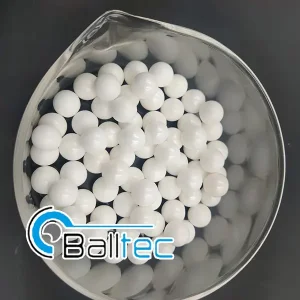
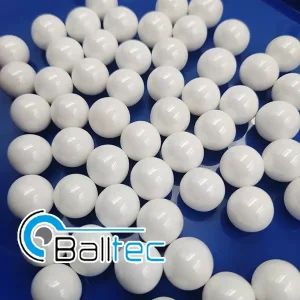
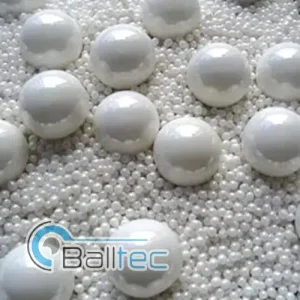
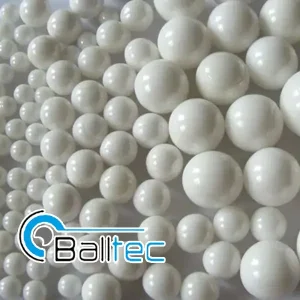
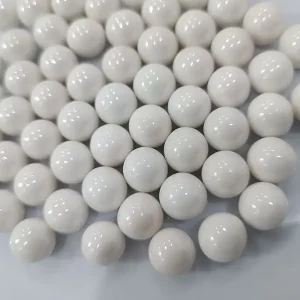
The microstructural integrity of zero-ohm chip resistors relies on flawless ceramic substrates. Advanced ceramic grinding media—including high-density zirconia beads (ZrO₂) and high-purity alumina spheres (Al₂O₃)—are crucial for ultra-fine powder reduction during substrate raw material synthesis.
To achieve substrate flatnesses within sub-micron tolerances and dielectric break-down strengths surpassing 15 kV/mm, raw ceramic powders must undergo high-efficiency attritor or horizontal mill wet grinding. Utilizing 95% Yttria-Stabilized Zirconia (YTZP) media ensures ultra-low wear rates (<0.01 g/kg) and prevents metallic contamination during slip preparation, ensuring high thermal conductivity for passive components under continuous load.
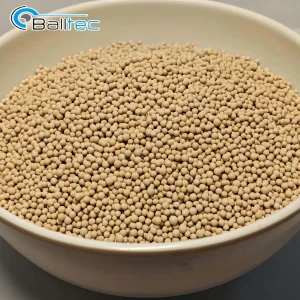
Browse our certified industrial materials engineered for high-durability ball milling, catalytic processing, and precision component manufacturing.
As automotive electrification (EVs), 5G telecommunications, and industrial automation accelerate globally, zero-ohm resistor manufacturing is undergoing fundamental technological shifts:
Driven by ultra-dense consumer electronics, wearable devices, and advanced SiP (System-in-Package) modules, Chinese factories are expanding high-yield mass production of 01005 (0402 metric) zero-ohm jumpers. These micro-components require sub-micron precision laser trimming and ultra-flat ceramic substrates.
Traditional thick-film jumpers are constrained by current saturation limits. Emerging trend favors electron-beam welded metal plate jumpers capable of continuously handling 30A to 100A with minimal resistance values (<0.05 mΩ), essential for EV traction inverters, solar micro-inverters, and server power supplies.
Under-the-hood automotive electronics require operation up to +155°C or +170°C. Leading Chinese manufacturers incorporate anti-sulfurated inner electrodes (utilizing gold, palladium, or high-density silver-alloy terminations) to withstand harsh atmospheric sulfur exposure and thermal cycling shocks.
Detailed technical guidance curated by our application engineering team regarding zero-ohm resistor specification, thermal limits, and procurement options.
In physical manufacturing, a zero-ohm resistor cannot have absolute zero DC resistance. Standard commercial thick-film zero-ohm jumpers generally specify a maximum resistance threshold of < 50 mΩ (0.05 Ω). However, high-precision industrial jumpers and ultra-low resistance metal plate jumpers manufactured by top Chinese factories achieve residual resistance values as low as < 0.5 mΩ or < 0.2 mΩ.
Because zero-ohm resistors do not carry a nominal power rating ($P = I^2 R$), their power handling capacity is rated directly in maximum continuous current ($I_{max}$). This rating is determined by the maximum allowable temperature rise of the ceramic substrate (typically $\Delta T \le 40^\circ\text{C}$ above ambient) and the trace conductor width. For instance, an 0805 standard jumper is rated at 2.0 A, while an 0805 high-current metal jumper can handle up to 10.0 A continuously.
Thick-Film Jumpers: Formed by screen-printing ruthenium oxide or conductive pastes onto an alumina ceramic substrate. They are highly cost-effective for general signal routing, low-power bridging, and BOM configuration (<2A continuous).
Metal Plate Jumpers: Constructed from solid copper or copper-alloy stamped elements. They deliver ultra-low resistance (<0.2 mΩ), high current endurance (up to 50A–100A), lower parasitic inductance, and superior pulse-surge resistance, making them ideal for automotive BMS, motor drives, and power distribution.
Yes. At frequencies above 1 GHz, surface-mount chip jumpers exhibit parasitic inductance (typically 0.5 nH to 1.5 nH depending on package size) and stray capacitance to the ground plane. For high-speed digital lines or RF transmission paths (Wi-Fi 6E/7, 5G NR), engineers should select smaller package sizes (such as 0201 or 0402) with low residual resistance to minimize impedance degradation and reflection loss.
Standard thick-film resistors use silver (Ag) inner terminations, which react with atmospheric sulfur compounds to form silver sulfide ($Ag_2S$), causing open circuits. China's AEC-Q200 certified factories utilize sulfur-resistant inner electrodes composed of silver-palladium (Ag-Pd) alloys or protective gold barriers, allowing components to pass ASTM B809-95 sulfur vapor testing under high humidity environments.
Every production batch shipped from our factory includes a Certificate of Analysis (CoA), full Material Composition Data Sheets (MDS), RoHS 3.0 & REACH SVHC compliance statements, and halogen-free test reports. Automotive-grade part numbers also include PPAP Level 3 documentation and AEC-Q200 qualification test summary reports upon request.